
Planeswalker's Guide to Nauctis: The Sunken Realm

Beneath the waves of Nauctis, colossal whale gods sing the currents into motion and merfolk civilizations span vast stretches of the ocean. But something stirs in the deep. Nauctis: The Sunken Realm will take us into Magic's first underwater plane, with the story of the set beginning on January 4, 2027, on DailyMTG at MTGStory.com and on The Magic Story Podcast.
To prepare you for this journey, we've compiled the Planeswalker's Guide to Nauctis: The Sunken Realm. Below, you'll meet many inhabitants of Nauctis and explore some of its deepest depths. But this submarine expanse is nearly endless, so you'll have to read the story to discover more!
Follow the story of Nauctis: The Sunken Realm when the first episode arrives on January 4. Nauctis: The Sunken Realm releases on February 5, 2027, and is available for preorder now from your local game store, TCGplayer, Amazon, and elsewhere Magic is sold.
 YOUR LOCAL STORE
 TCGPLAYER ↗
 AMAZON ↗
NAUCTIS
Nauctis is a place of endless ocean. Bright, beautiful waters span the entire plane, concealing within them all manner of curiosity: treasures, secrets, magic, monsters, and worlds both old and new. Opulent and bustling merfolk civilizations command grand swaths of the ocean at the height of their golden age. Stubborn air-breathing strongholds fight for rugged survival on the water's surface. Colossal whale gods command the currents as they journey the seas, disseminating rich mana in their wake. And lurking in the plane's dark underbelly, leviathan threats wend their way toward the light above.
GODS
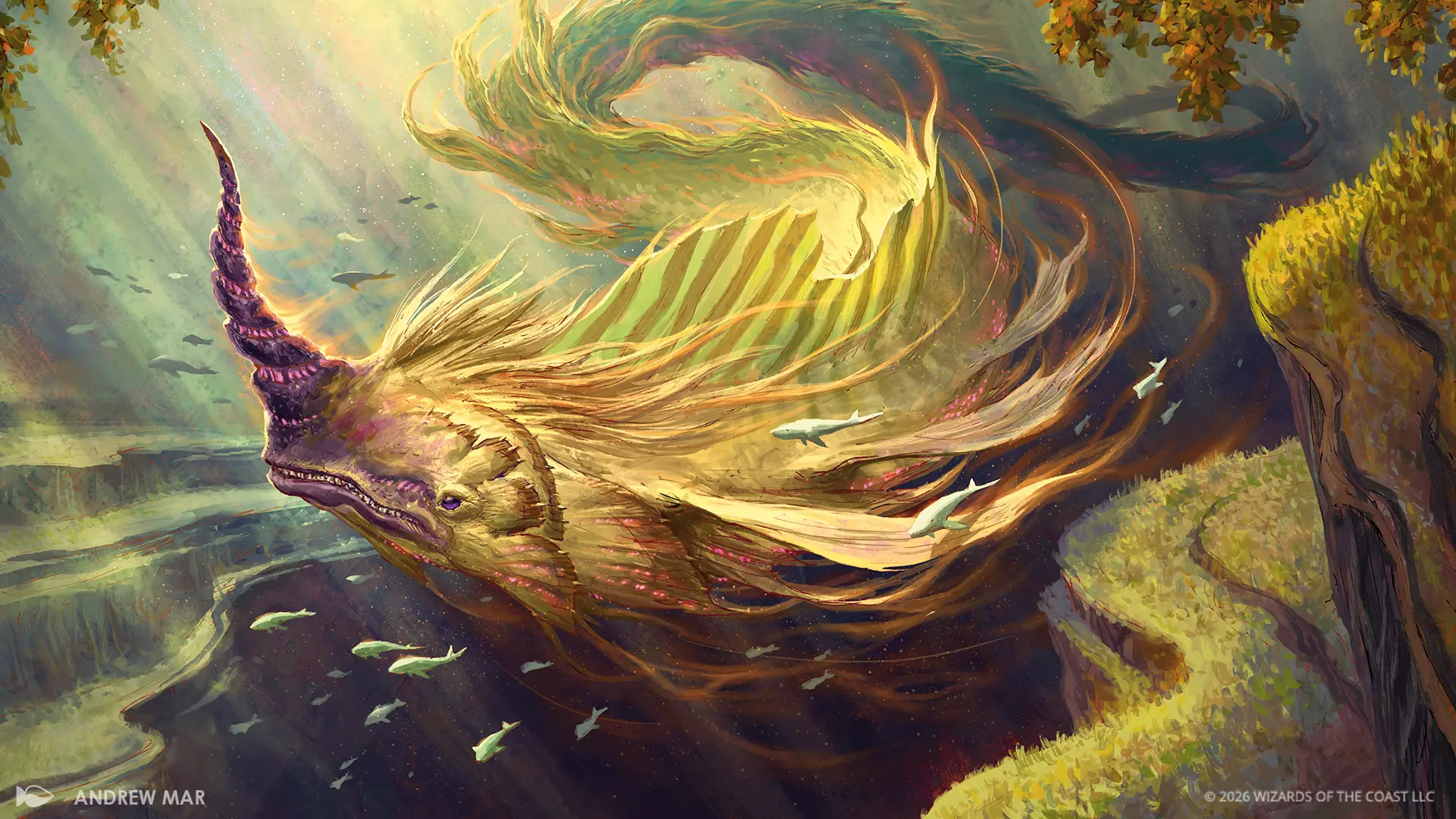
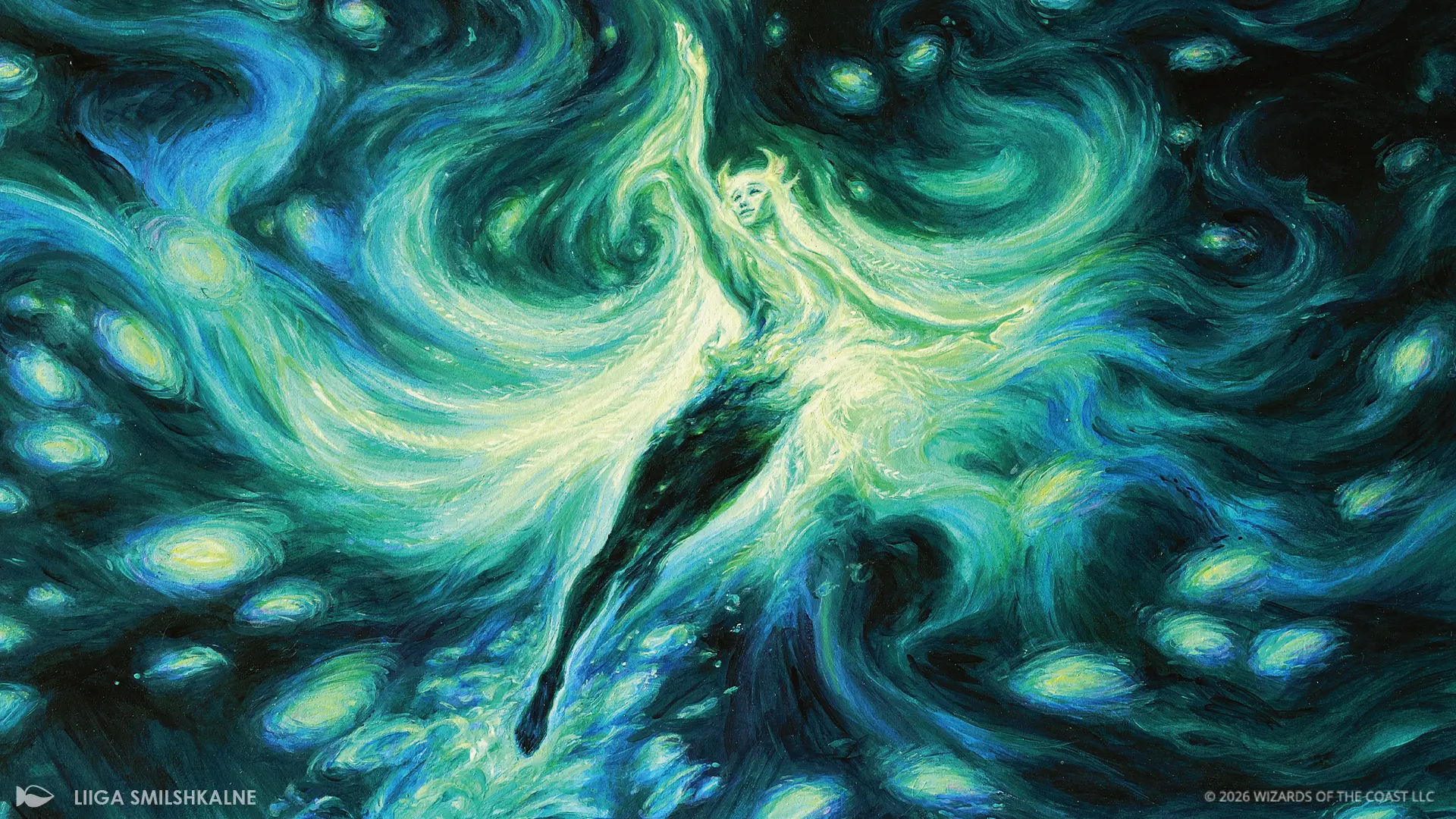
The unending waters of Nauctis live and breathe by the will of the five whale gods. These colossal beings are spun from raw mana, having emerged from leylines near the dawn of the plane. Their voices touch every corner of the ocean in ceaseless melody: These are the godsongs, which grant the ocean its currents. The godsong tides keep Nauctis in balance; they regulate its temperature, oxygenation, cleanliness, and the flow of its magic. Without them, the ocean withers. The whale gods are tireless, forever singing along the same cyclical paths.
All of Nauctis knows these gods in some capacity. Their circumnavigation is so consistent that the merfolk use them to mark their seasons. Cities are built upon their paths, the trajectories of which are religiously studied and mapped. Though the gods rarely address mortals directly, they attract synods of oracles and scholars who attempt to decipher their messages. They are forces of nature given corporeal form; they are the ocean, and the ocean is them.
MAGIC
Magic is by and large granted by the whale gods, the strength of which waxes and wanes with their proximity. Each of the five gifts their own form of power upon mortals. Purist merfolk would consider these the only true magics, and that faith is the only appropriate way to access them. They would categorize the magics thusly: air magic, granted by Cambra, who surfaces for breath once in a decade; tide magic, granted by Salinae, who leads the moon across its path; brine magic, granted by Lodea, whose cadaverous form brings with it certain death; sonic magic, granted by Ruptra, whose song becomes a bellowing cry in times of war; and algae magic, granted by Ethuo, whose path erupts with overgrowths of life.
Air Magic
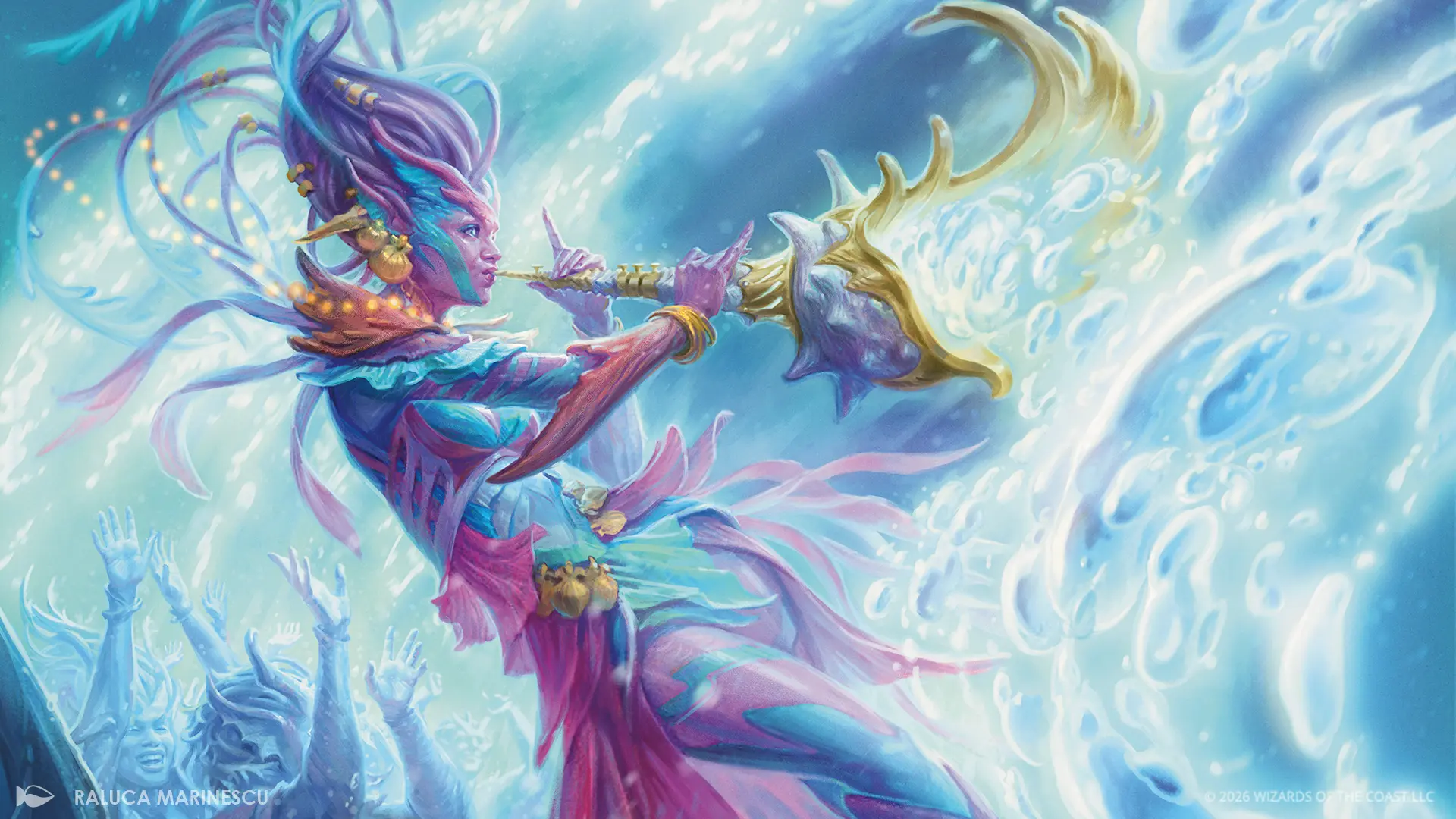
Air magic is a lifesaving magic for the aerobic inhabitants of Nauctis and a suffocating death for its obligate water-breathers. It is favored by pinneon: sealfolk who use it to stoke their forges and dive on a scant few breaths for hours at a time. Merfolk, meanwhile, use it in combat. Air bubbles can trap enemies, distort vision, or cavitate into a powerful shockwave.
Tide Magic
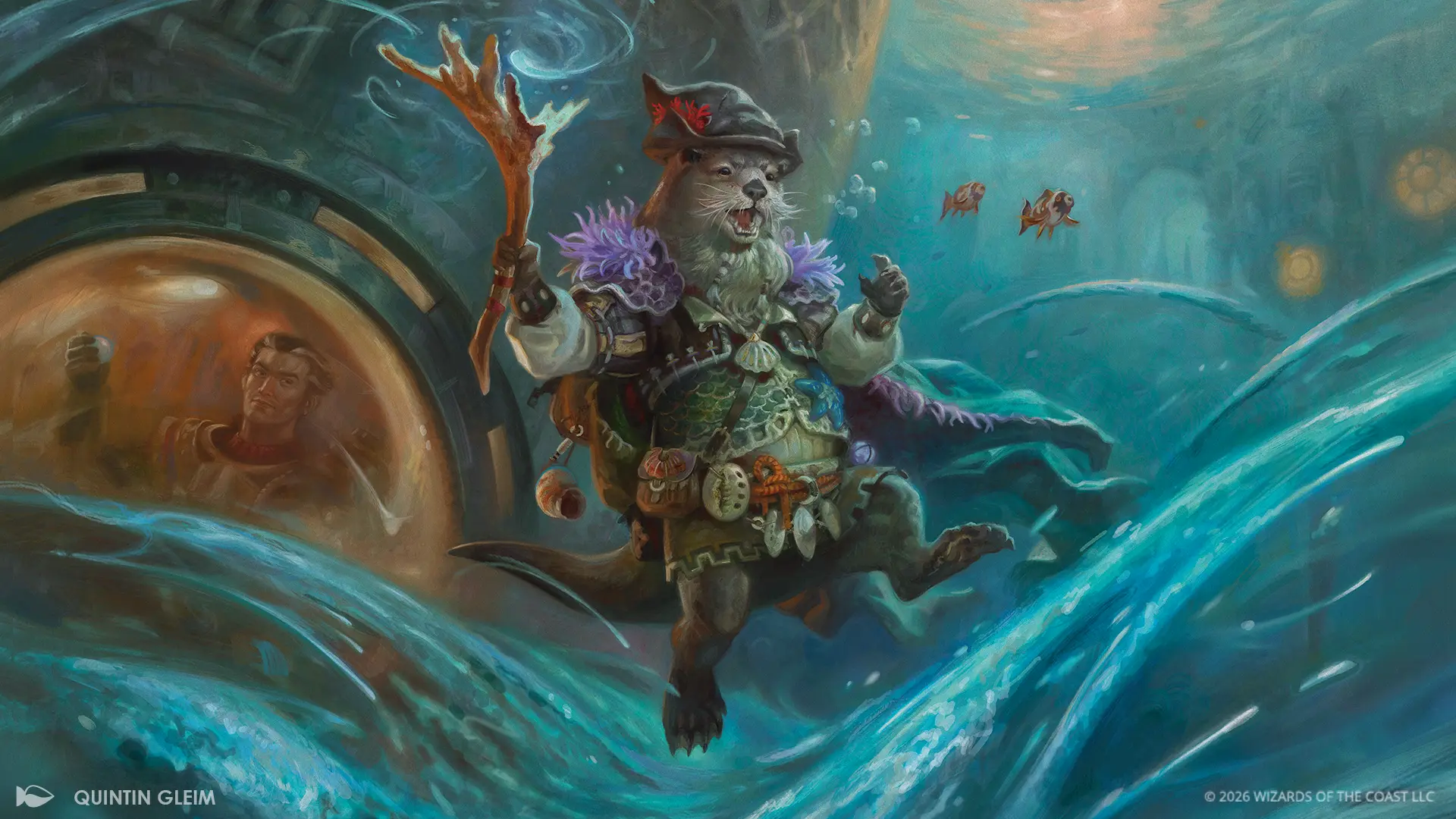
Tide magic can be gentle or vicious depending on its caster. It can redirect an assault, soften a blow, or hasten an ally forward. It can also crash and churn with brutal force, enough to erode and crumble the sturdiest of reefs and seabeds. Most famously, merfolk are known to use tide magic for mass transit, imbuing rings of coral with an artificial current that can be ridden at top speeds from one destination to the next.
Brine Magic
Brine magic is a swift and toxic death and is considered taboo by most merfolk. Though they try to bury its secrets, the curious, the calculating, and the ambitious maintain its knowledge and practice, heedless of consequence. And seasonally, Lodea's approach floods the ocean with its mana, ripe for casting.
Sonic Magic
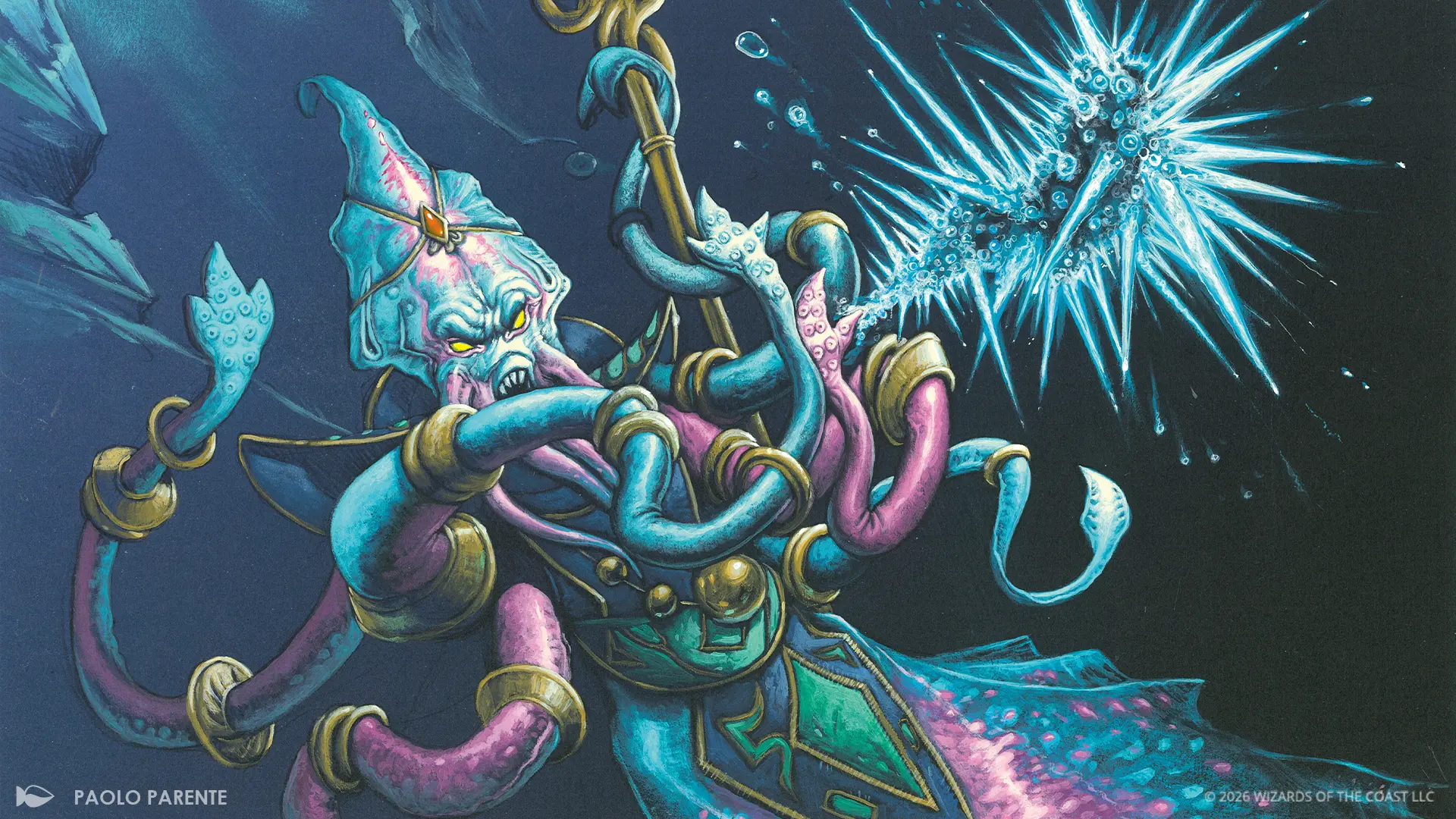
The multifaceted sonic magic encompasses everything from offensive shockwaves to echolocation to song in its utility. Thanks to the speed at which it propagates through water, it can be used to transmit simple messages across vast distances—war summons, distress calls, intimidations—so long as the sender doesn't mind broadcasting their message across a wide and public range.
Algae Magic
Algae magic is the magic of life and growth. It can be harnessed to heal wounds, encourage plant growth, and imbue elemental constructs, among other uses. However, it must be carefully measured, for abundance can lead to overgrowth that chokes itself.
Other Magics
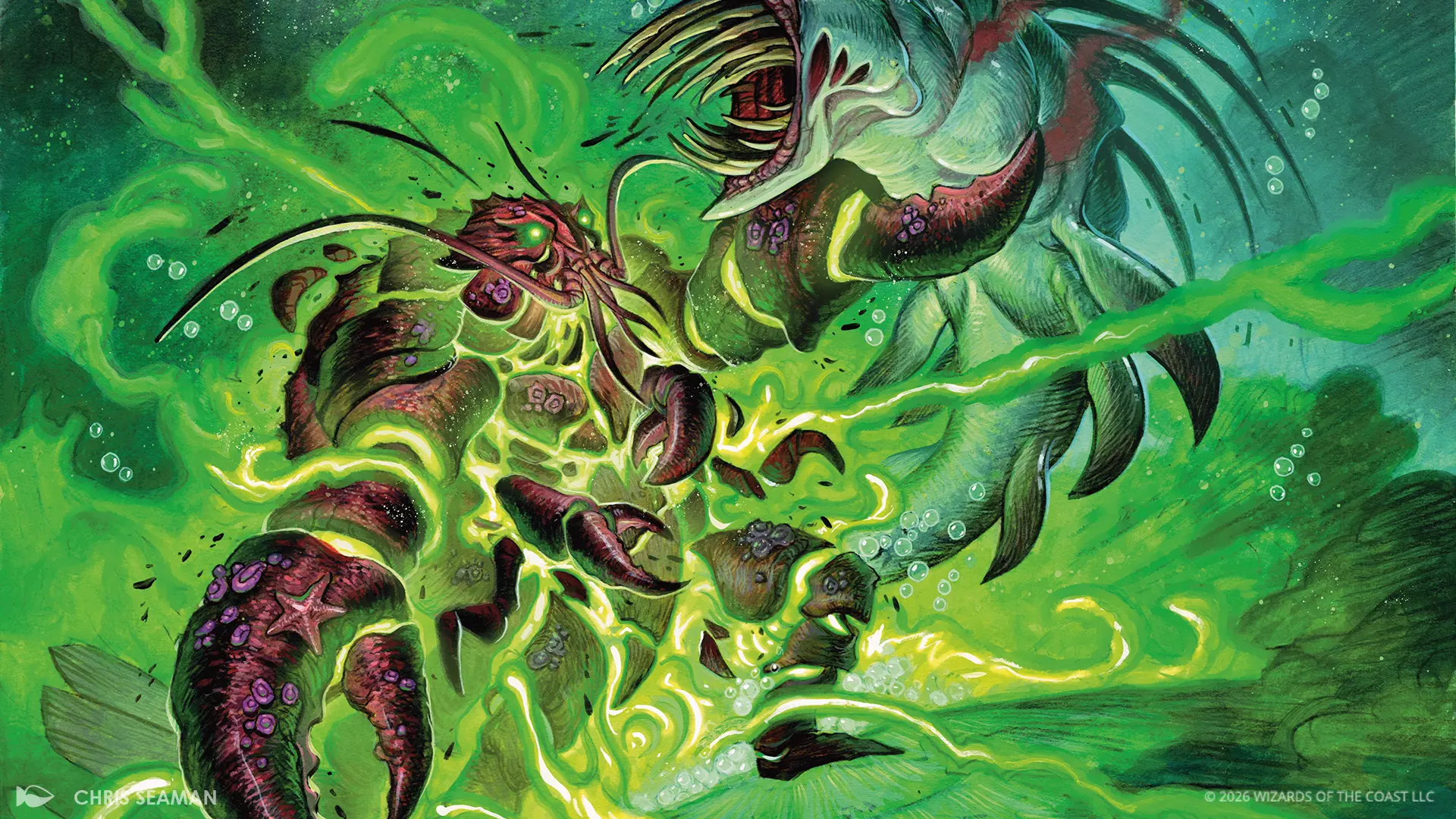
Despite the dogmatic claims of traditional merfolk, there are many more than these five magics. Some magics, such as fire magic, are crafted. Pinneon have perfected the practice of fire magic as an offshoot of air magic, igniting oxygen with a spark of mana. Likewise, some merfolk have devised pressure magic in the space between air and sonic, allowing them to create crushing force beneath the waves. Other magics derive from more sinister sources: the Abyss and the dead gods. Chordatans wield blood magic extracted from the littered teeth of their deceased goddess. Revenists have devised complex rituals for the art of deepcalling, a magic which allows them to summon and command colossal monsters of the Abyss.
HISTORY
Lost History
Merfolk will tell you that the ocean's history belongs to them, and from a certain perspective, they are correct. Their kingdoms have dominated the ocean for many centuries. Recorded history begins with them, percolating up from humble beginnings into the massive empires of the recent past. But Nauctis is far more ancient than its written word would lead you to believe. Some of its inhabitants whisper lost tales of a time before oceans ruled over land. Others still remember these times.
Nowadays, the air-breathers of the plane scrape out a meager existence on the water's surface. These are the Stranders, the last remnants of what they believe to have been a mighty civilization. They believe the world once catered to their needs: It was a place of dry soil, forests, and sprawling cities built upon a sturdy foundation. But truth and fiction have blurred and eroded over time, leaving them nothing but the legend to stake their hope on.
Decalids, the squidfolk of Nauctis, have a patchy memory of their own empire. It rose and fell in a time before merfolk were anything more than the glimmer of an idea. Their might surged alongside that of the ocean—an avaricious expansion that swiftly fell apart under its own weight. Reticent by nature, they now covet the secrets of their history as they once coveted territory.
History of the Merfolk
Merfolk, the patrician masters of the waters, ordain their legacy as they do their supremacy, down to the last detail. They claim the god Salinae as their creator and Cambra as their patron. Their origins have been elevated to mythological stature by virtue of their obscurity. First was the Wandering Era, a time populated by legends of heroes and savants whose stories are still immortalized in the very bones of merfolk culture. From there arose the first settlements. These merfolk populations brutally clashed for territory and influence, building over seasons and strife into mighty kingdoms. Thus rose the Diluvian Empire.
The Empire maintained its reach for three ages, during which time it spread a unifying infrastructure, language, currency, legal system, faith, and bureaucracy. Throughout, it bid for expansion, ever seeking greater strength. But in the end, overreach once again took its claim. Civil conflict flared in a period now known as the Years of Crying Bells. A campaign of cataclysmic violence broke out between traditionalists and revolutionaries. Both sides beseeched Ruptra, god of war, believing themselves deserving of her favor. But she rejected all claims, raging across their battlefields without bias, and eventually forced a ceasefire by virtue of leaving nothing behind to fight over.
The Diluvian League rose from the ruins of the Empire, now led by a senate rather than a monarch. The city-state Halsia split from their control at the same time and declared its independence. Meanwhile, traditionalists of the old monarchical power gathered under the name "Revenist," biding their time for the Empire's return.
NAUCTIS WATER COLUMN
The Surface
If there was ever dry land on Nauctis, its existence has long since faded to myth. Now, the surface of the plane is entirely water. A scarce few air-breathers can be found here living a bare existence in stilt cities. These are the Stranders: primarily humans and pinneon, with the occasional gull aven. They live most populously in the Walking Sea, once a name for the shallowest portions of the ocean, now grown to encompass all the Stranders' territorial claim. As well, chordatan pirates live above the ocean as often as below, raiding Stranders and merfolk in equal measure.
Shallow Ocean
The highest reaches of the ocean are as warm and sunlit as the open air above them. These areas are rich in sea life, kelp forests, and rural merfolk cities. Strander divers venture here in search of resources, and chordatan fleets fight for supremacy with expanding merfolk borders.
The Grand Marine
In deeper territories still graced by light is the dominion of the merfolk. The vast bulk of life on Nauctis dwells here—everything from rich merfolk cities to nomadic homarid traders to reclusive decalid warlocks living atop the graves of their ancestors. The whale gods swim these waters, permeating mana throughout.
The Abyss
Skulking below the Grand Marine is the Abyss. This is a dark and cruel place where temperatures plummet, pressure grows unforgiving, and the last rays of sunlight expire. Very little can survive here. Only the bravest of merfolk and humans don pressurized suits, which allow them to explore the dark depths. And seething beneath the very crust of the ocean floor is an ancient evil that threatens the sanctity of the entire ocean.
THE SURFACE
Humans
"There is nothing left for us but to survive and hunt for our history. We must drag the old world back with our own salt-cracked nails, and we must never let it go."
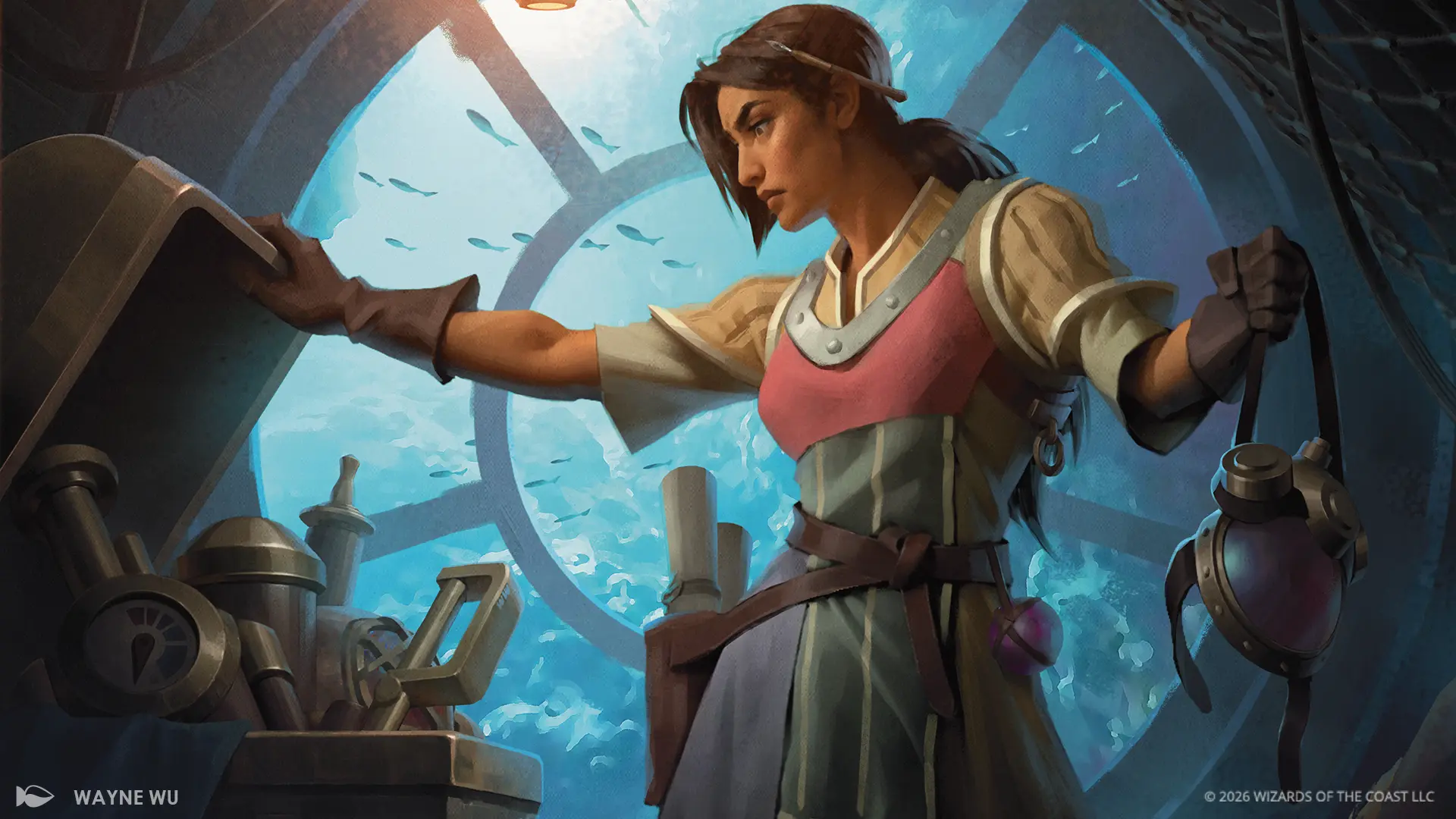
Humanity refuses to perish, even when every aspect of their world pushes back. They are proud survivors fueling themselves with nothing but spite and legends of a long-lost paradise. These Stranders seek to recreate the world from their fables—one of dry and steady ground they can rule as they did in the days of old. To this end, they plumb even the deepest bedrock of the ocean in search of relics, treasures, and secrets. Much of their technology has been lost to time, but scraps, which they use to fuel their never-ending expeditions, still litter the ocean floor.
Society
Strander humans settle anywhere they can eke out a living: some on floating settlements, others in nomadic vessels, and others on stilt cities. They are sunburnt, wind-chapped, salt-stained, and most of all, stubborn. They subsist off seafood—fish, mollusks, and crustaceans—supplemented with what little brine-tolerant grains they can grow. Free divers swim the shallows with buoyancy devices, air hoses, and weaponry best adapted for underwater use. Humans favor knives, spears, spear guns, and flechette guns—things that can be stabbed and not swung.
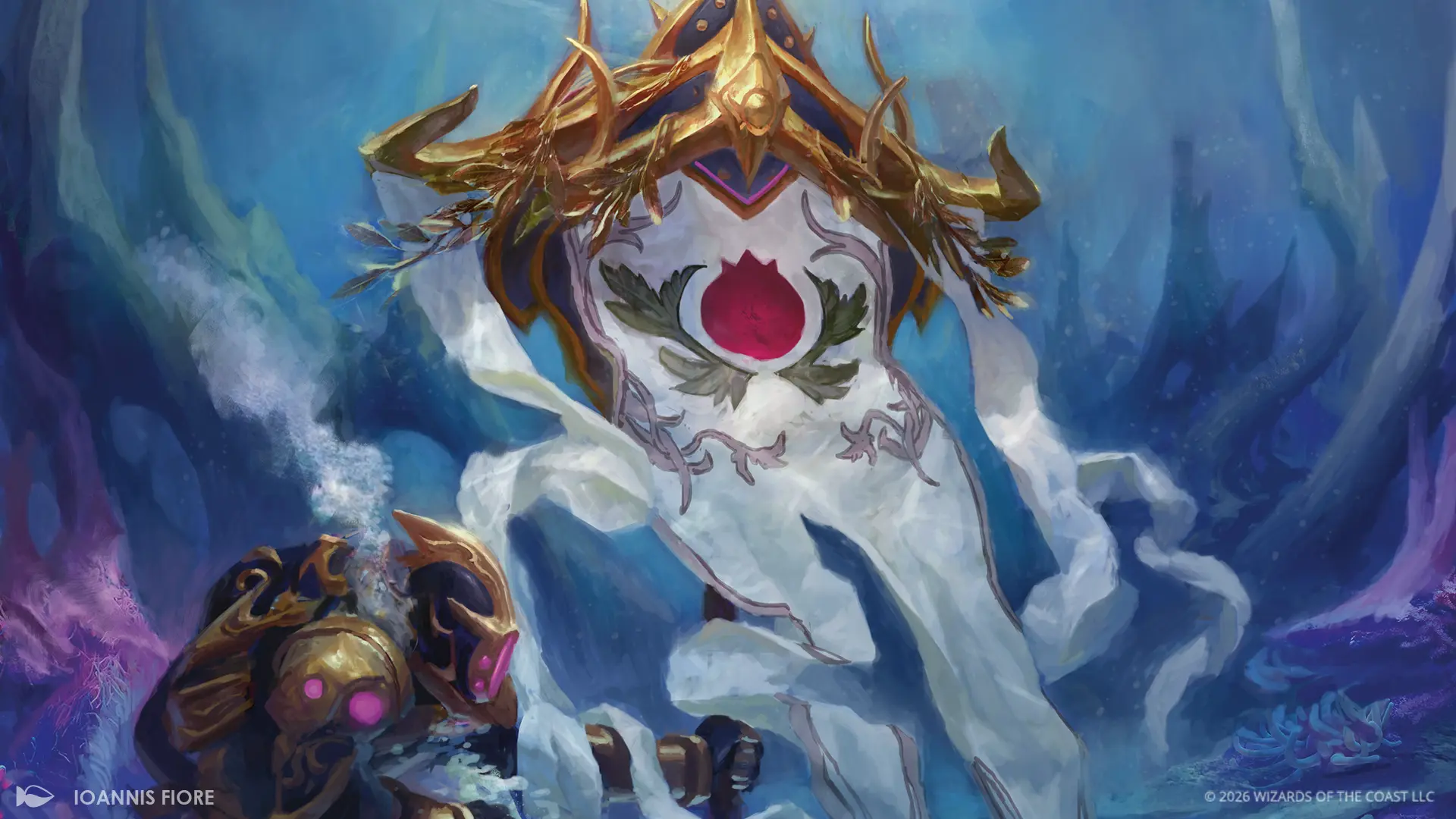
The human faction of the Stranders unites under a pomegranate symbol—a reminder of the fruiting trees and other fabled flora that they claim once dotted the lands. This symbol is a torchlight hope they carry toward a better future, where the oceans have receded and the waters are replaced with fertile soil. Dry earth temples dot their cities, their altars adorned by small piles of sacred dirt. At the center of their faith is the One Tree found in the capital city—a sapling, a miracle, and the only tree that remains on the entire plane.
Fathom Knights
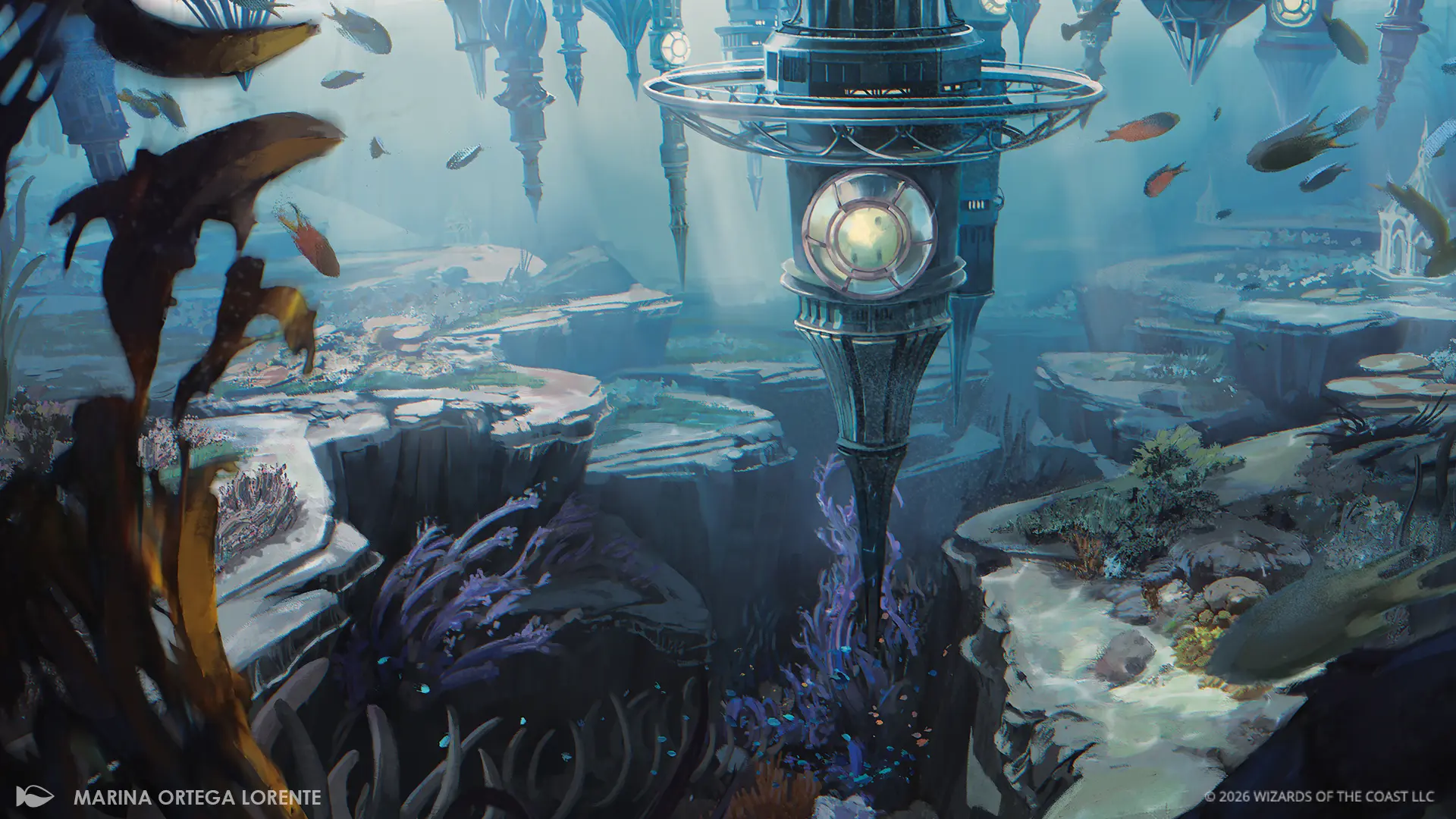
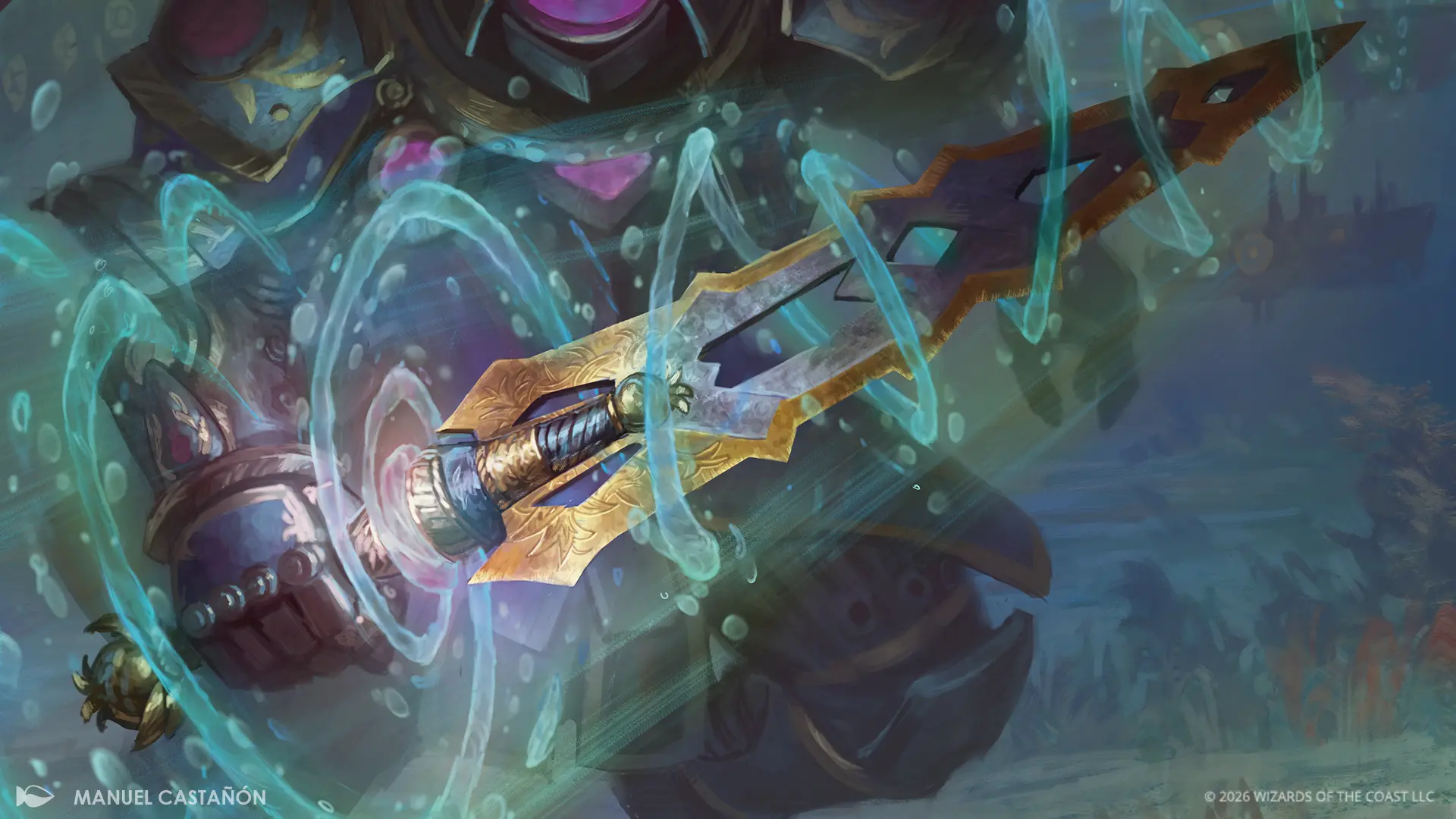
The fathom knights are an order of deep-sea divers who wear specialized suits scavenged from the old world. Their suits are constructed of hard metal, ceramic plates, and tough, flexible fabrics. They're equipped with air bladders for emergency flotation and are often paired with a cavitation sword—a blade that assists in propelling their heavy suits through the water. Humanity has long since lost the means to create these suits; thus, maintenance and recollection are paramount. As these suits are passed down the generations, they invariably accrue a unique suite of upgrades and repairs that differentiate one from the other.
A rare few people qualify to be a fathom knight—not just in terms of skill but physical compatibility. Fathom knights must undergo an invasive surgery to properly interface with their suits. An augment replaces a lung, which lets them breathe Hyper-Ox—the liquid oxygen that allows them to dive for extended periods at deep fathoms. Even for those knights whose bodies take to the procedure, it's still taxing.
Magic
Humans have long lost all but a tenuous connection to magic. Most of their use comes from what they can scavenge: magic woven into tools that they wield and maintain.
Locations
- The Walking Sea: A region of the ocean where the average depth is only a few feet, though the name is now associated with the whole of the Stranders' territory. Some portions, as the name implies, are shallow enough to be waded through.
- Aribamar: The capital city of the Strander humans, and the largest above-water settlement. It can be found in the heart of the Walking Sea.
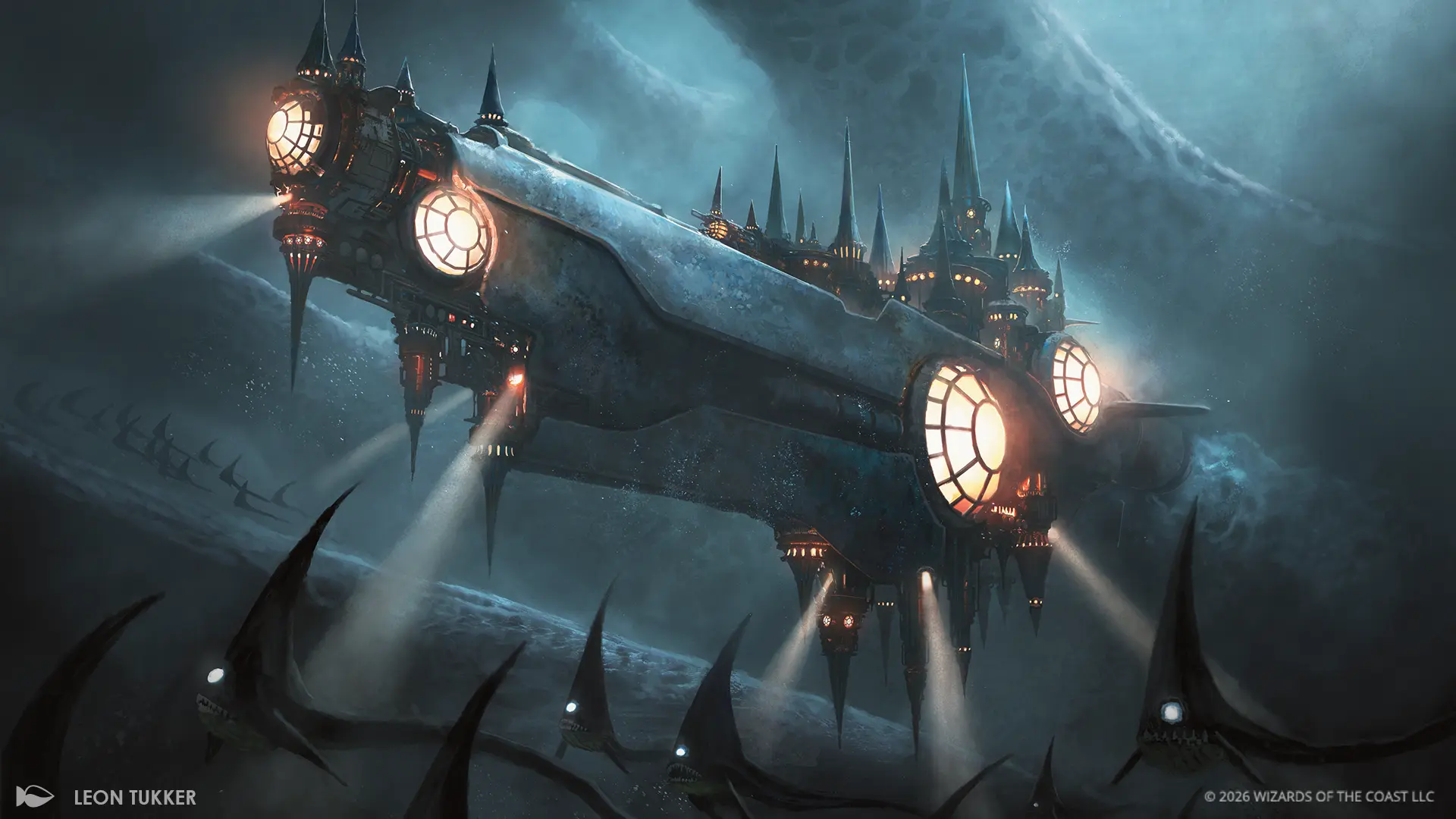
- The Ferroan: A massive submarine that acts as a Strander settlement and a mobile command post. It is dispatched to seek out and recover sunken resources. This vehicle is one of a kind, its complex machinery having been scavenged from the depths.
- The Blessed Grove: An offshoot vessel of Aribamar and the home of the One Tree, the last remaining hope for dry land among Stranders. This is a place of reverence, where geotenders ensure the tree's growth and pray for a hospitable world.
Pinneon
"Let the forges burn hot and burn high! Let the far currents carry our cry! May the vast waters forever know pinneon strength whichever way we go!"
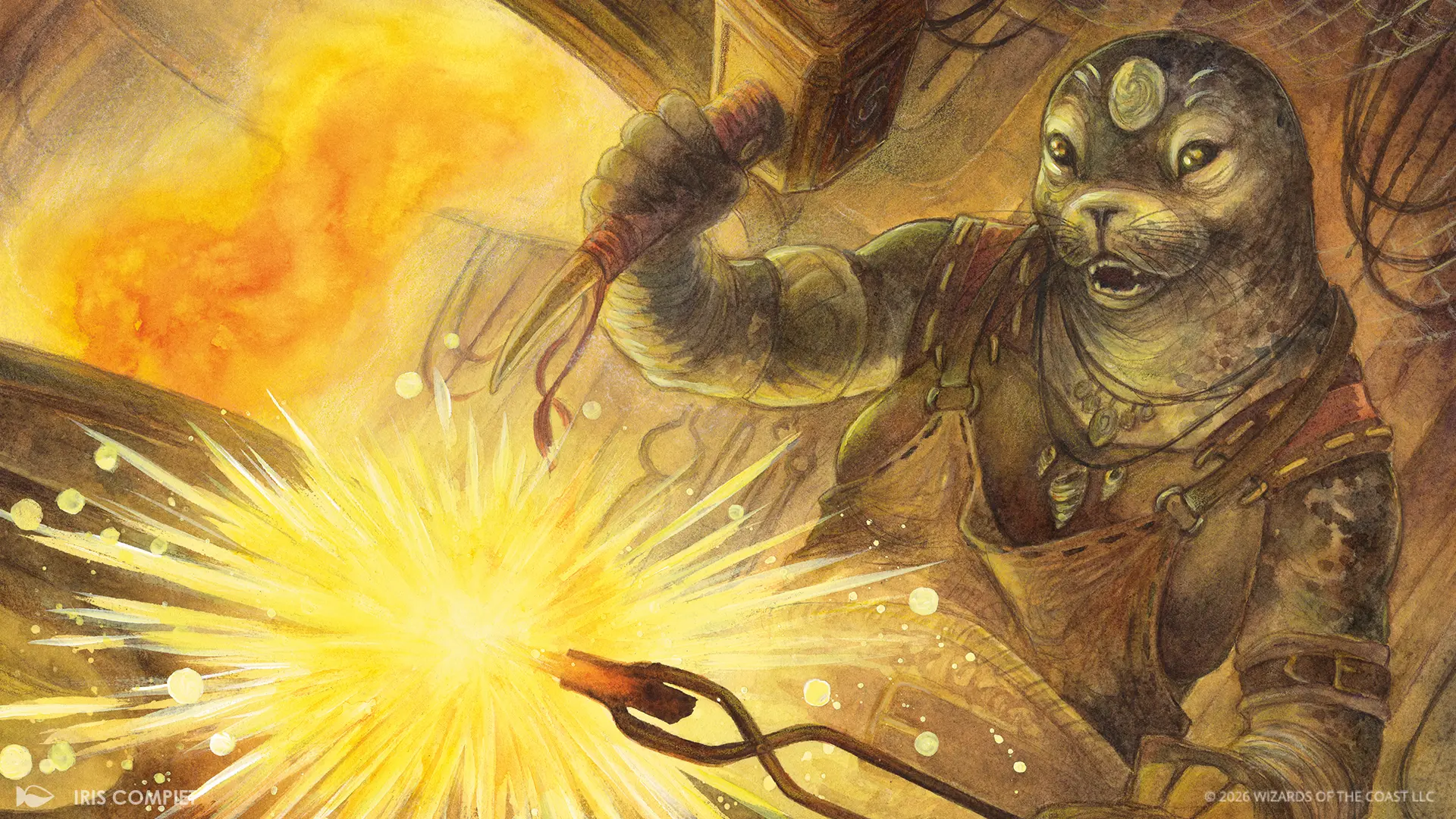
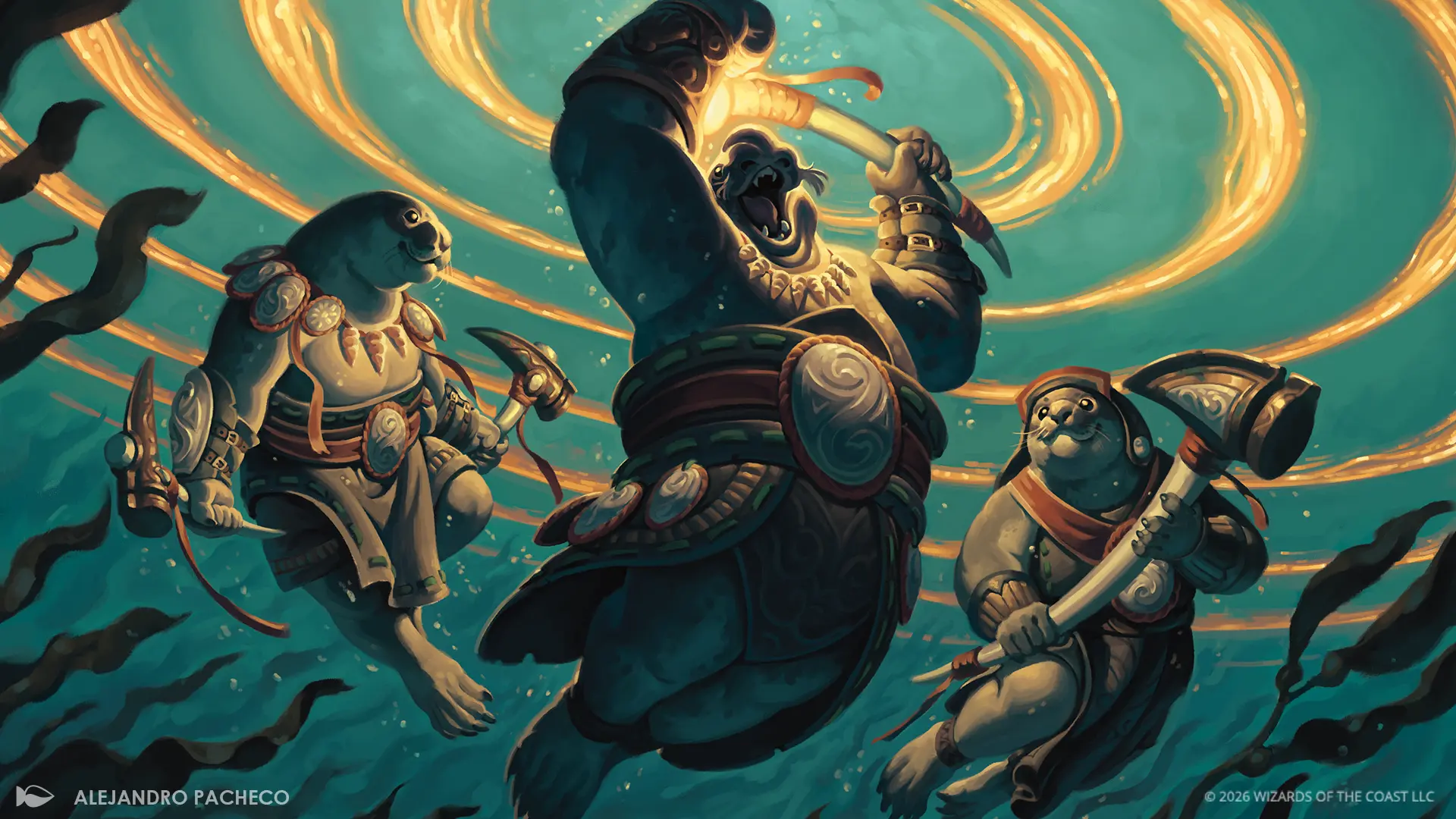
These proud and daring sealfolk make up the Catamarine, a marine fleet of artisans, merchants, mercenaries, and other guildsfolk. They are among the ranks of the Stranders, toiling alongside humanity across the plane's meager surface. But, unlike humans, their unique biology and jovial nature allow them to breach the border of sea and sky, forging alliances above and below, trading with both humans and merfolk alike. They are adept swimmers and gregarious sailors with a deep care for family, legacy, fairness, and tradition.
Morphology
Pinneon are a short, fin-footed, whiskered species. A thick layer of fat insulates them against the cold, while their velvety, oily fur helps them wick water. They prefer the buoyancy of the ocean to dry land, able to swim with speed and grace while diving up to hundreds of meters. They can hold their breath for over an hour—longer, with spare air kept in magic bubbles. Some have ears or tusks.
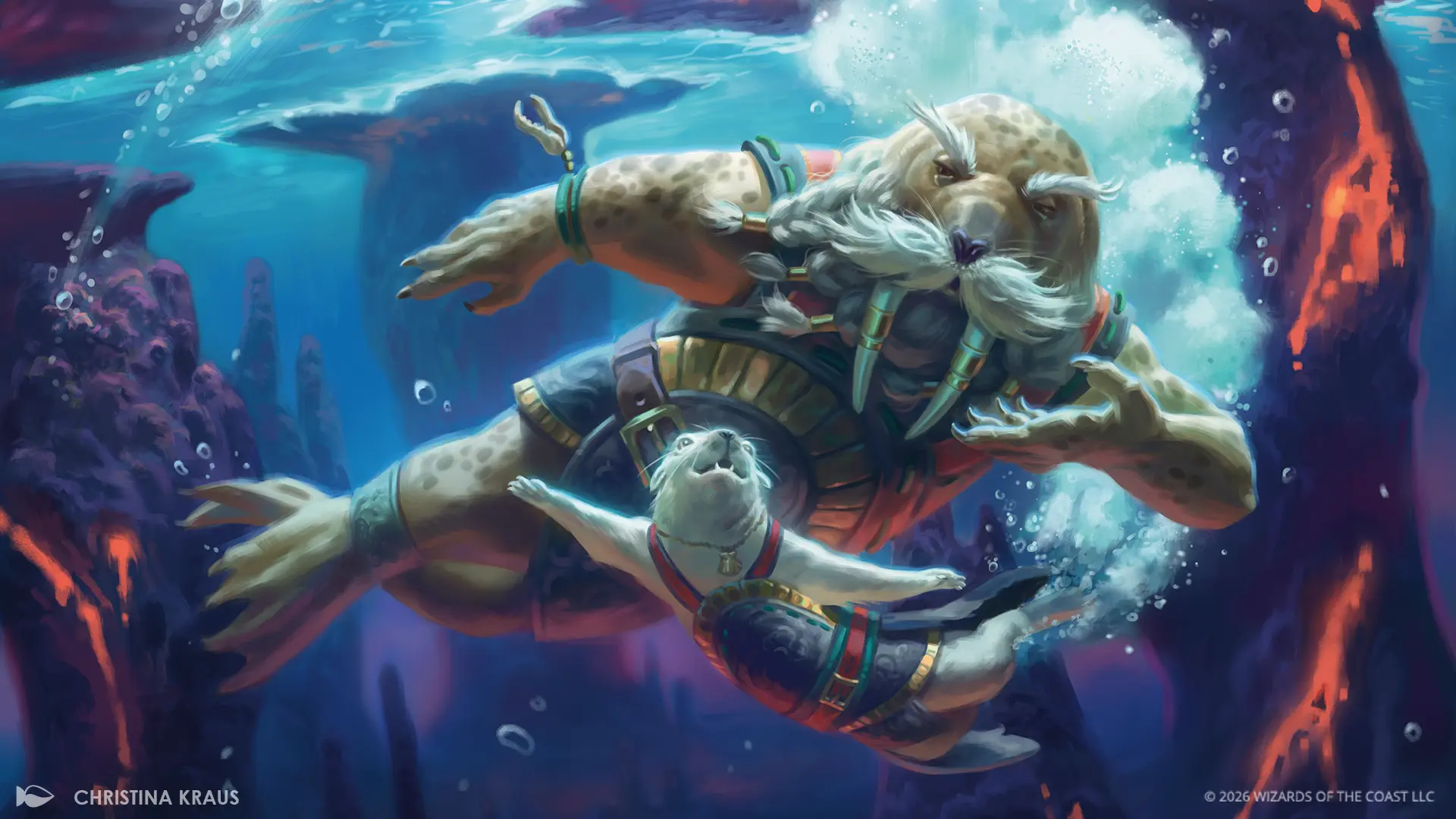
Society
Pinneon have established themselves as the best miners and artificers this side of the ocean, with a reputation for exquisite craftsmanship … and steep prices. The Catamarine is an artisan conglomerate with consistent access to furnaces and is thus Nauctis's primary source of smelted glass and metal. They sail stout forge ships across the ocean's surface, constantly on the move in search of trade resources.
There is a deep reverence for legacy among pinneon. Some establish themselves through reckless pursuit of excellence: diving the deepest depths, mining the purest minerals, taking on an armada single-finned. Others do so through slow and steady merit: They establish a reputation for the best wares, the friendliest service, or the most consistent track record in battle. Pinneon culture revolves around heirlooms, physical or otherwise. They pass down their businesses, their trades, their learnings, and, naturally, their wealth. Their ancestry is preserved in carvings on bone plates, considered the utmost pride of a pinneon family.
Magic
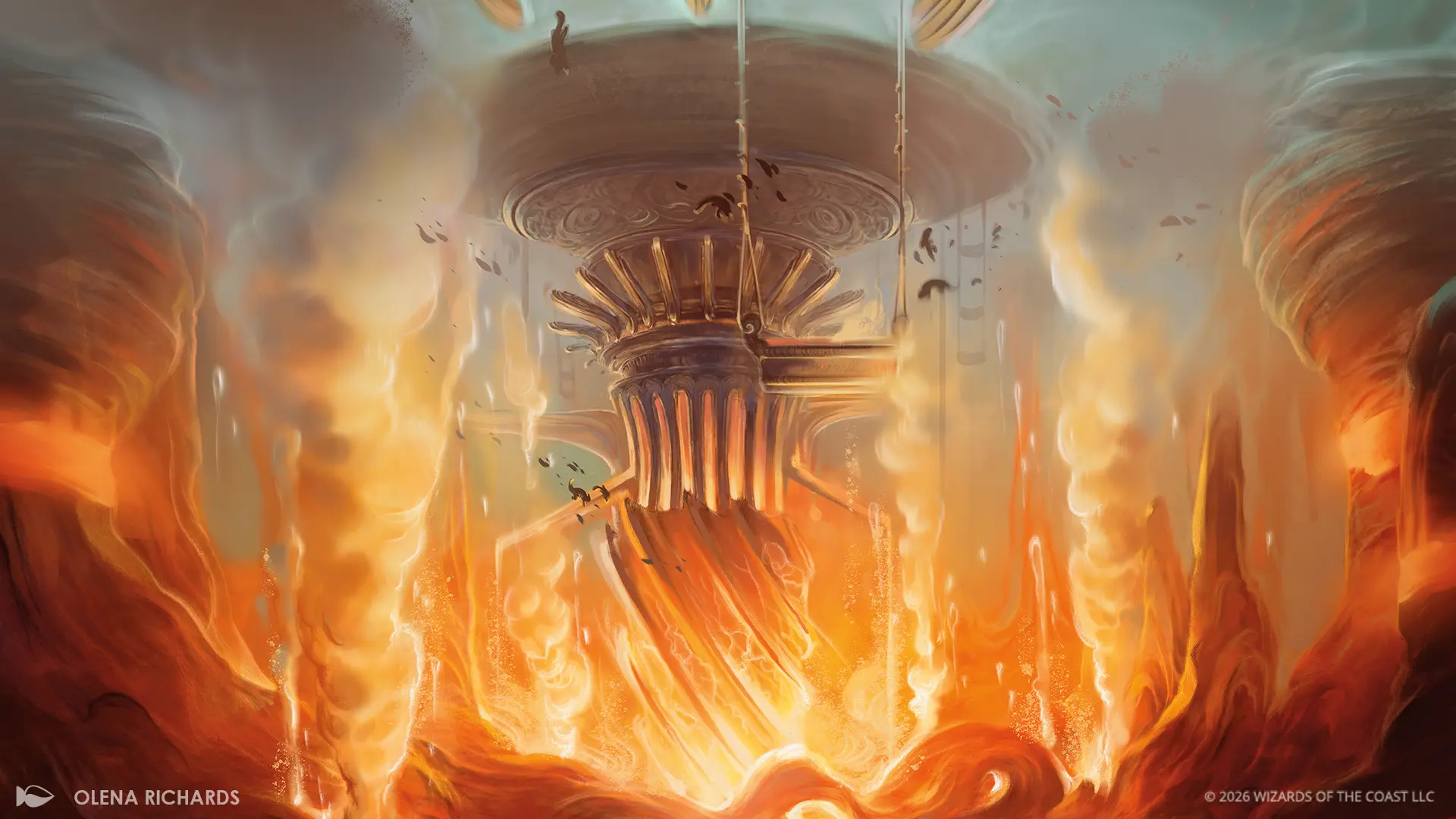
Though some pinneon earn magic from their faith in the whale gods, many create it through craft. They most often use air and fire magics, both of which are a great boon in the forge. Air magic can be used to extend a pinneon's already impressive dive time by hours, and fire magic is useful both for utility and combat. Sonic magic is also a staple of their culture: Pinneon are known for their work songs, and music is a frequent backdrop in their communities and a means of communication. It's therefore only natural that some magic found its way into the tradition.
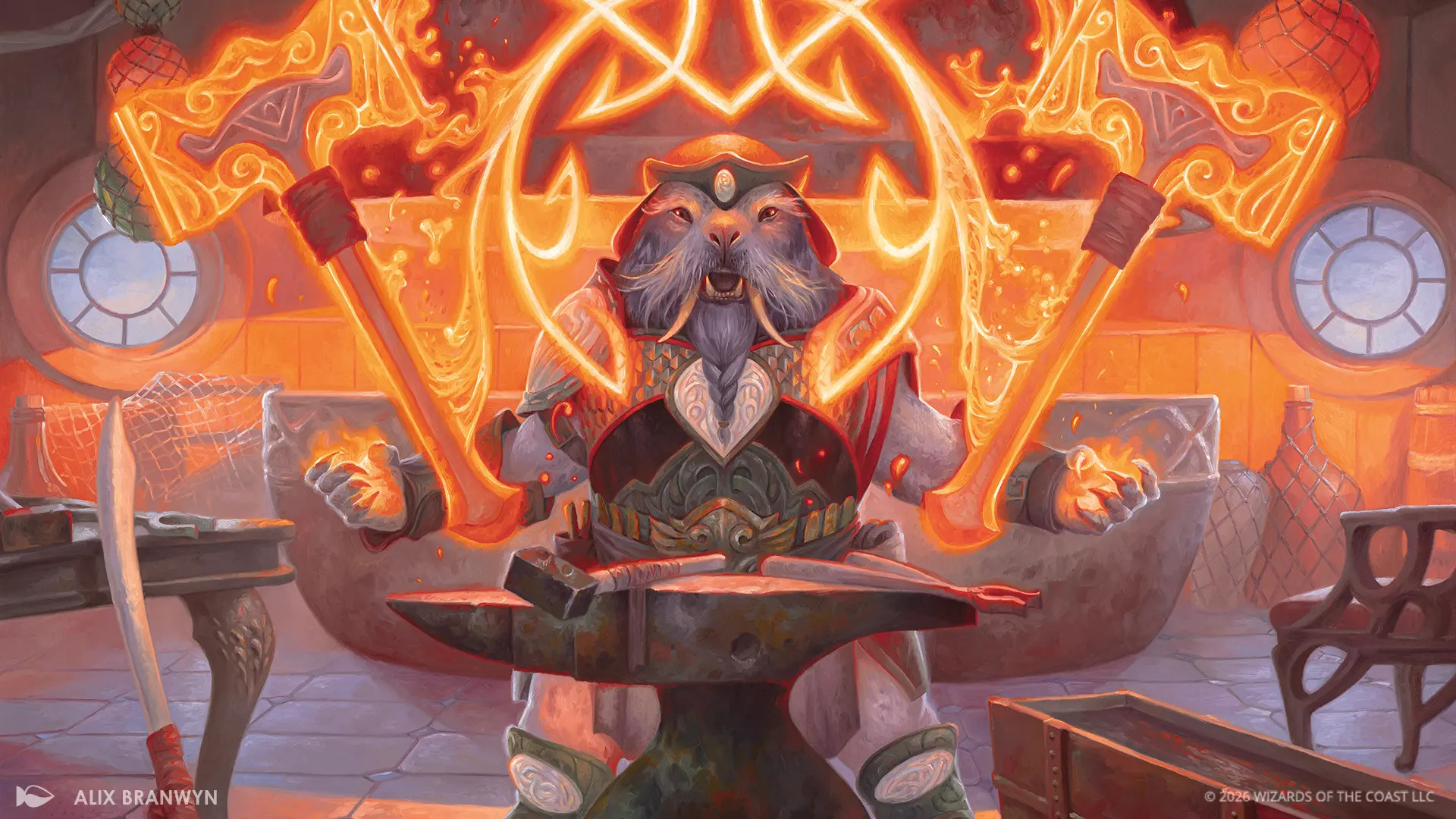
Locations
- The Hulldown: The largest (and most profitable) Catamarine stronghold. The Hulldown is a patchwork of steel ships welded into a massive, mobile vessel-town. Its mighty forges are incorporated into an intricate ventilation system that fuels the ship's propulsion. World-class smithies operate the furnaces.
SHALLOW OCEAN
Chordatans
"Let there be no world off limits to the chordatans! No sea too deep, no storm too furious. All things that exist are either ours or ours to conquer!"
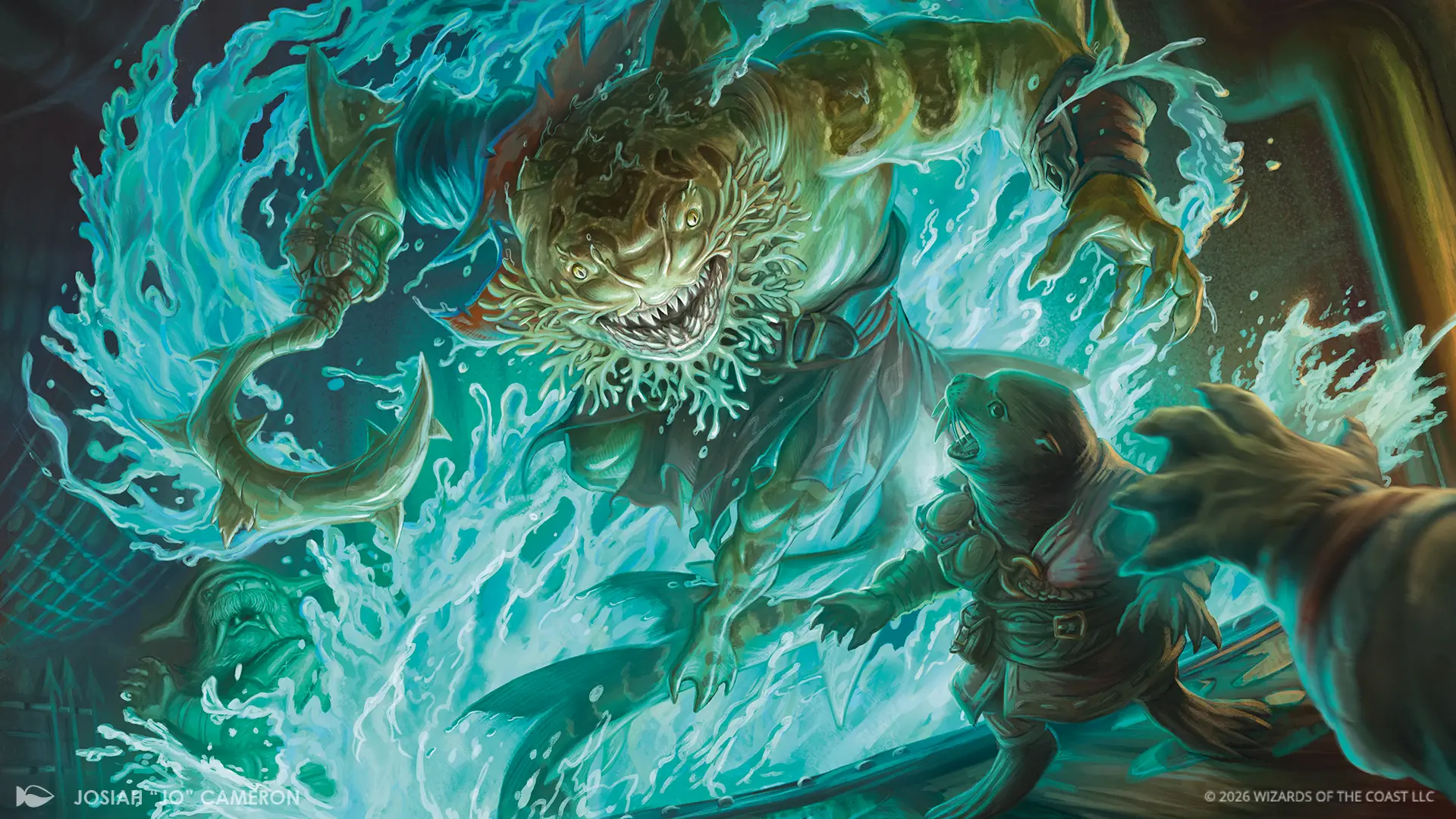
The Armada is a grand force of fearsome, cutthroat buccaneers populated almost exclusively by deadly sharkfolk. These apex predators hunt flesh and treasure in equal measure, but they are not just brawn—it takes strength and cunning to command an Armada ship. They raid both the surface and the Grand Marine, a plague on Stranders and merfolk alike.
Morphology
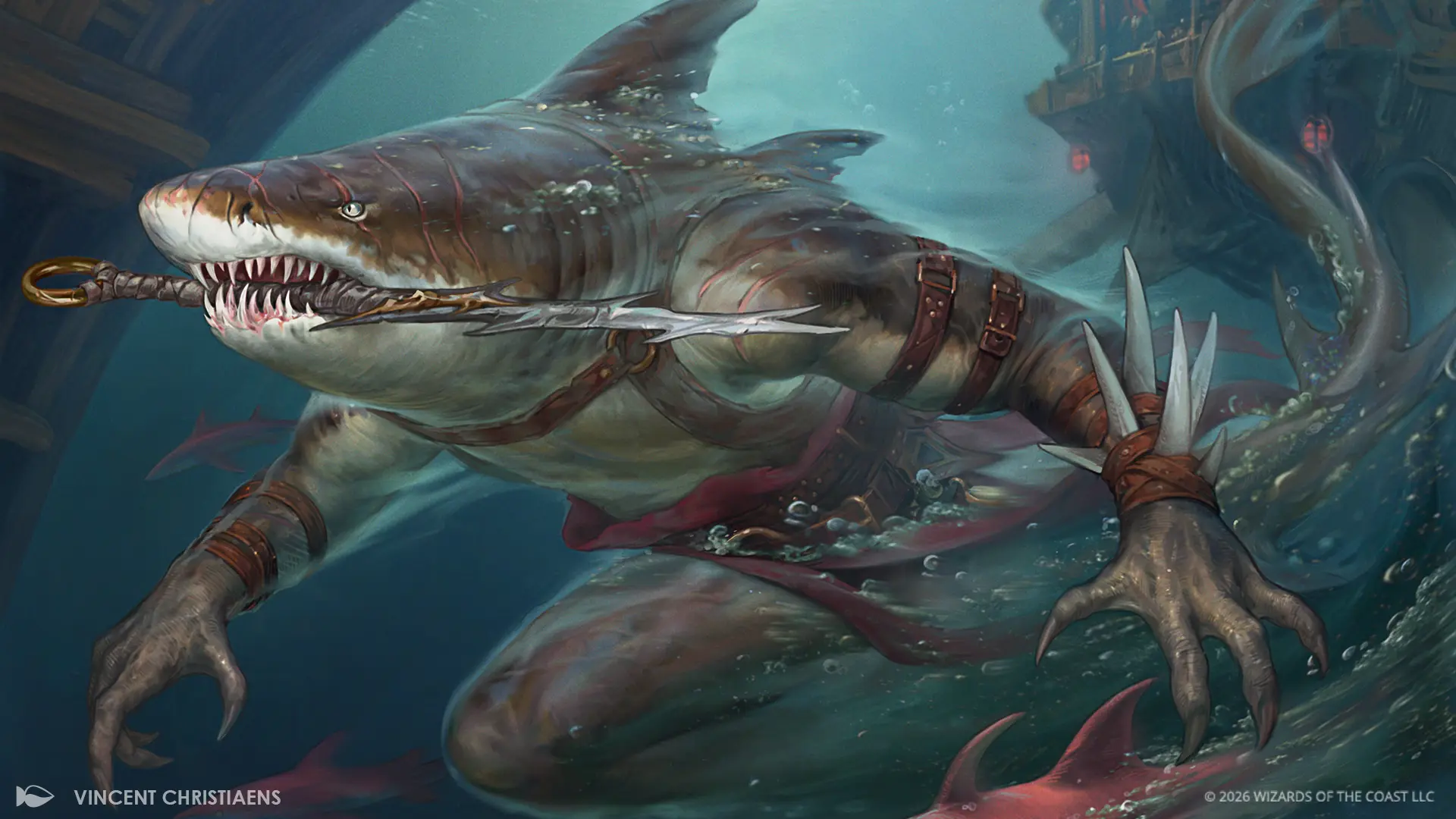
Chordatans are massive and sinuous, with frightening sawtooth mouths and leathery skin capable of scraping on contact. They're amphibious, able to live wholly in air or water, though most choose to spend their life below the waves. As obligate carnivores, they've adapted internal mechanisms for identifying and tracking prey via electrical signals and an olfactory system that can detect even a drop of blood with pinpoint accuracy. Unstable genetics in their distant past have led to great diversity in body form—including color, shape, size, and even number of fingers. They claim that they created themselves, and their apex form is the result of careful experimentation and crafting—though this claim is impossible to substantiate. They share distant cousinhood with the behemoth beast sharks, an even more unstable strain who possess only the barest of sentience and conduct themselves on pure, instinctual bloodlust.
Society
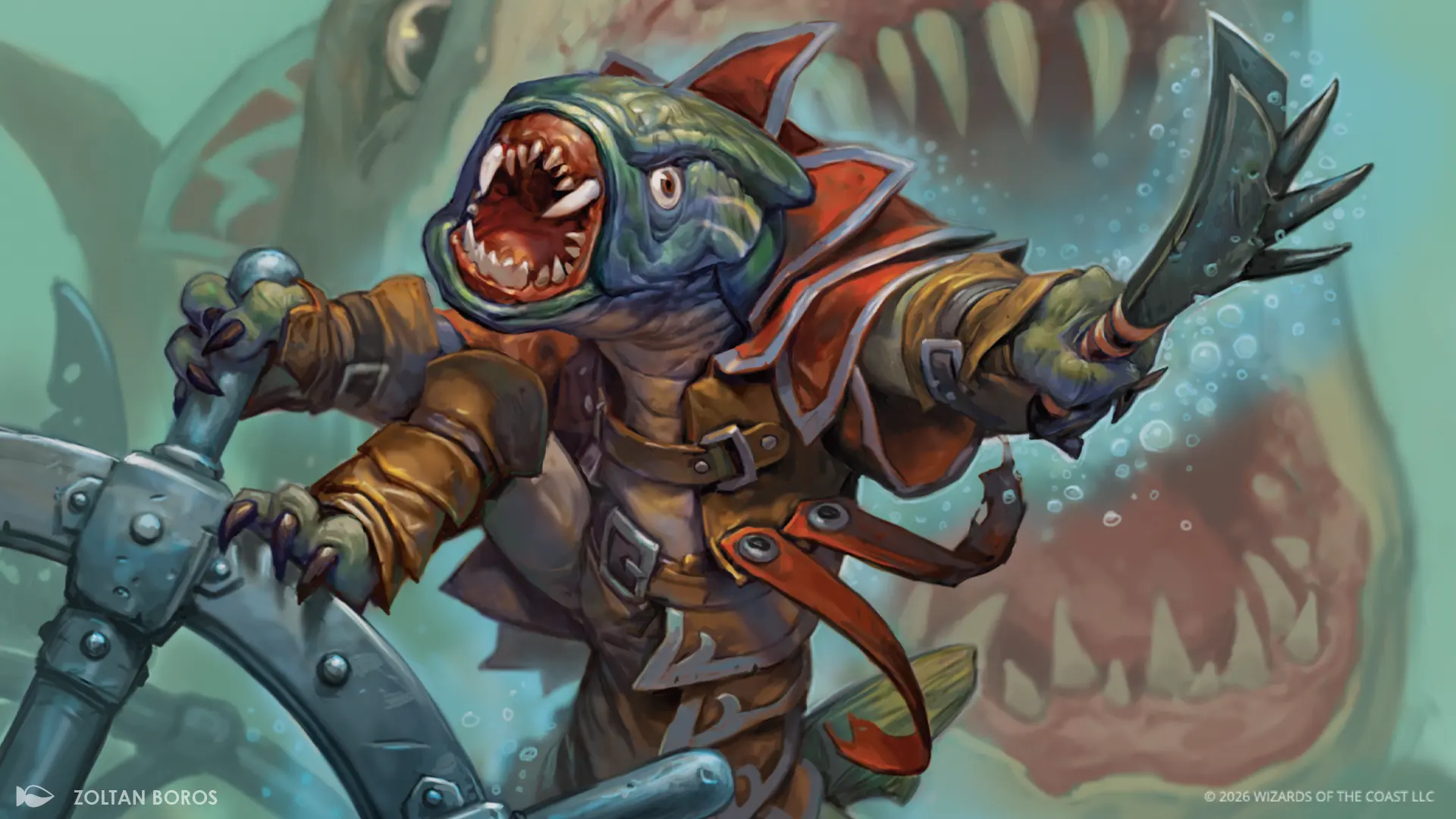
The Armada is united in their treasure lust—and very little else. Some baseline codes of conduct keep tentative peace, but often a greater creed takes precedence: supremacy of the strong. Disputes are often settled through conflict. Sometimes it comes down to a battle of wits or a competition of strengths, but chordatans are not above tearing each other apart if they deem it necessary. This rule of strength is the reason the Armada is so insular to other species, largely only accepting sharkfolk into their ranks. The major exception is the remora—tiny bipedal fishfolk who happily submit themselves to chordatan crews. Once in a great while, a warrior of a different species will prove themselves so spectacularly that they will be allowed to join an open-minded ship. Such was the case with the famous Keelhauler armada, who welcomed fishfolk, homarids, and humans into their ranks.
The chordatans worship a dead god: Kalekao, the shark who was said to swim the void between worlds. Her many teeth litter the ocean floor, still brimming with her deific presence, which chordatans use to fuel their ships. These vessels are often small and rigged for speed, painted with fearsome depictions of sharks to strike fear into their victims. Likewise, the Armada adorns itself with the ghoulish trophies of the slain, often crafting them into tools or apparel. A homarid husk or splintered tusk can make a sturdy base for a weapon, and a pinneon hide is a great insulator in the colder seasons of Salinae and Lodea.
Magic
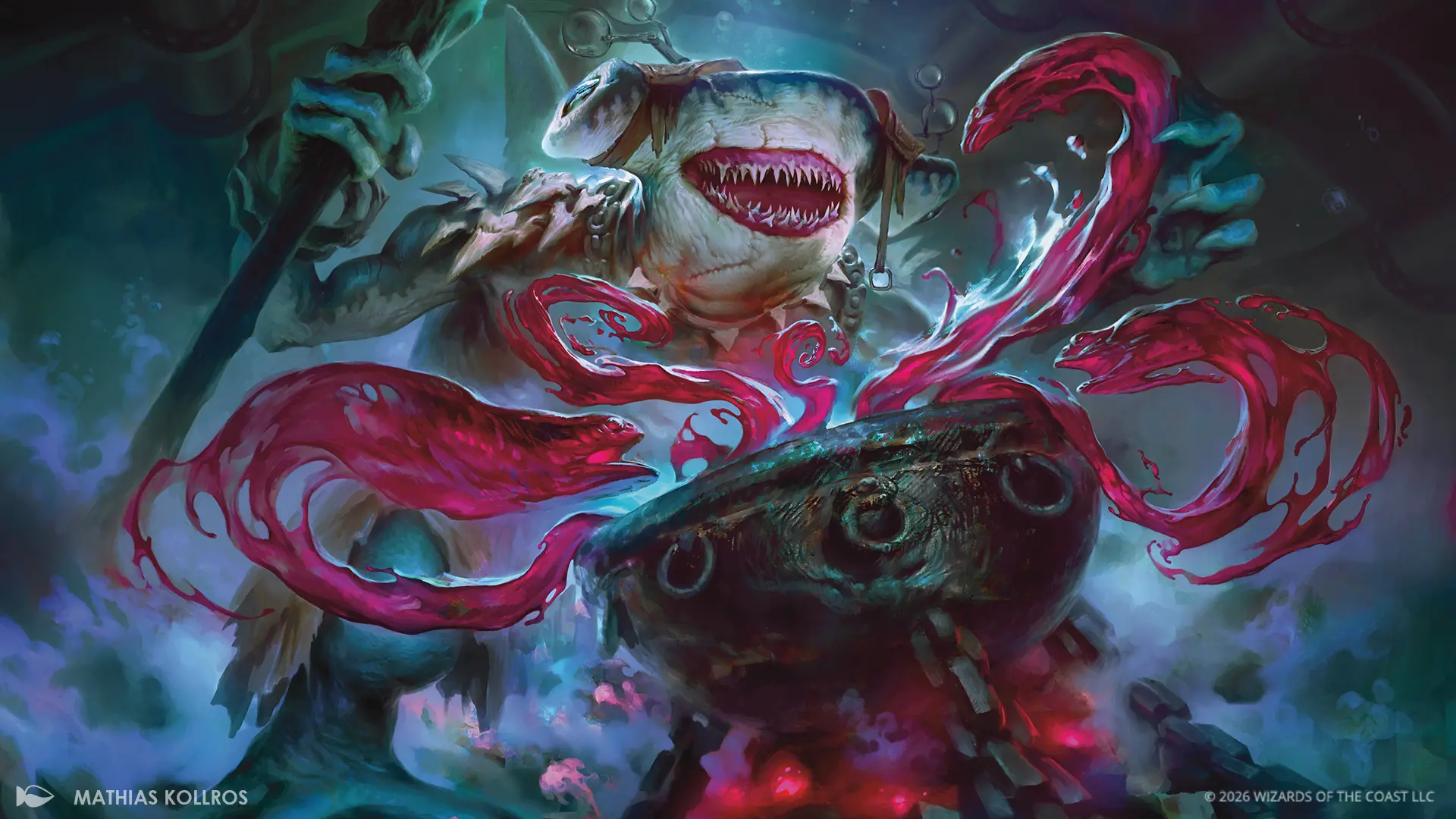
Though chordatans have their own goddess, that does not preclude them from using the magic of the whale gods. Chordatan mages are rare, however, and often derive their power from Kalekao's teeth. This gives them dominion over blood magic: a unique and versatile discipline that can send a warrior into a powerful bloodrage or even become animate itself at the caster's will.
Locations
- The Bluefields: Warm-water reef valleys of the shallow ocean where chordatans go to rear young. Adult chordatans are banned from entry unless they are actively raising pups. While most of the chordatan world is tumultuous, a tight security force ensures strict peace in the Bluefields, both from internal conflict and outside threats.
- The Chasefields: A favored hunting ground. Here, beast sharks are plentiful and their prey even more so. Chordatans come here for quarry large and small. Some hunt for a meal, others for a trophy.
- Howler's Mount: A colossal seamount where the Armada gathers for the biannual Feastmount celebration. This is an event of great cultural significance: Captains meet, admirals are elected, new captains are honored, goddess teeth are awarded to corsairs, and the Armada's new direction is decided.
THE GRAND MARINE
Merfolk
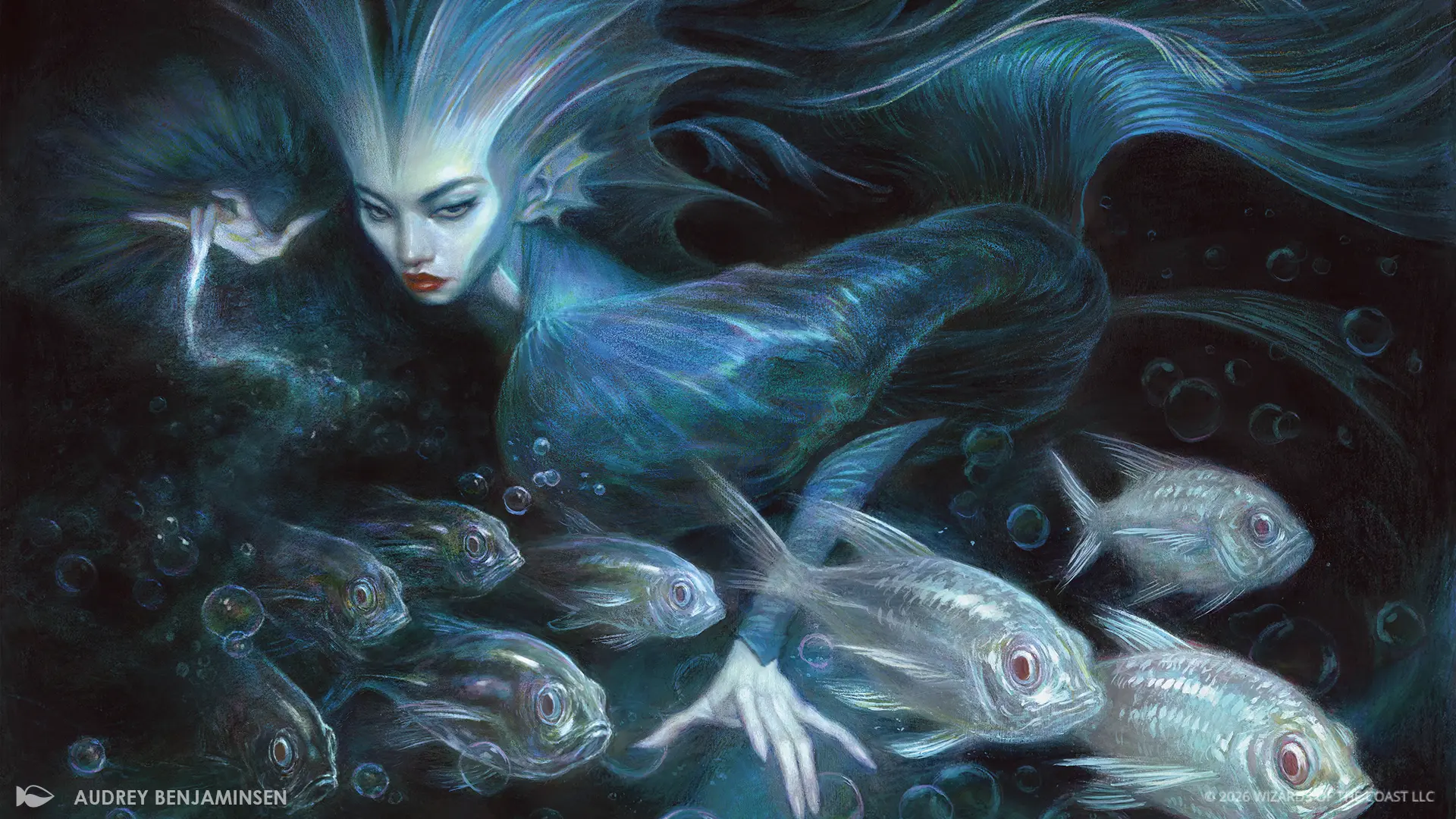
Masters of the ocean, dominant across all its habitable regions, the plentiful merfolk of Nauctis are in the midst of a long-lasting golden age. Two ruling bodies of note have risen to the forefront in recent years: the Diluvian League, the senatorial body that emerged from the collapse of the Empire, and the independent city-state Halsia. A third, stateless group of merfolk known as the Revenists also skulks in the background, bound together by the ideology of the political dynamo Morgriff Reven.
Morphology
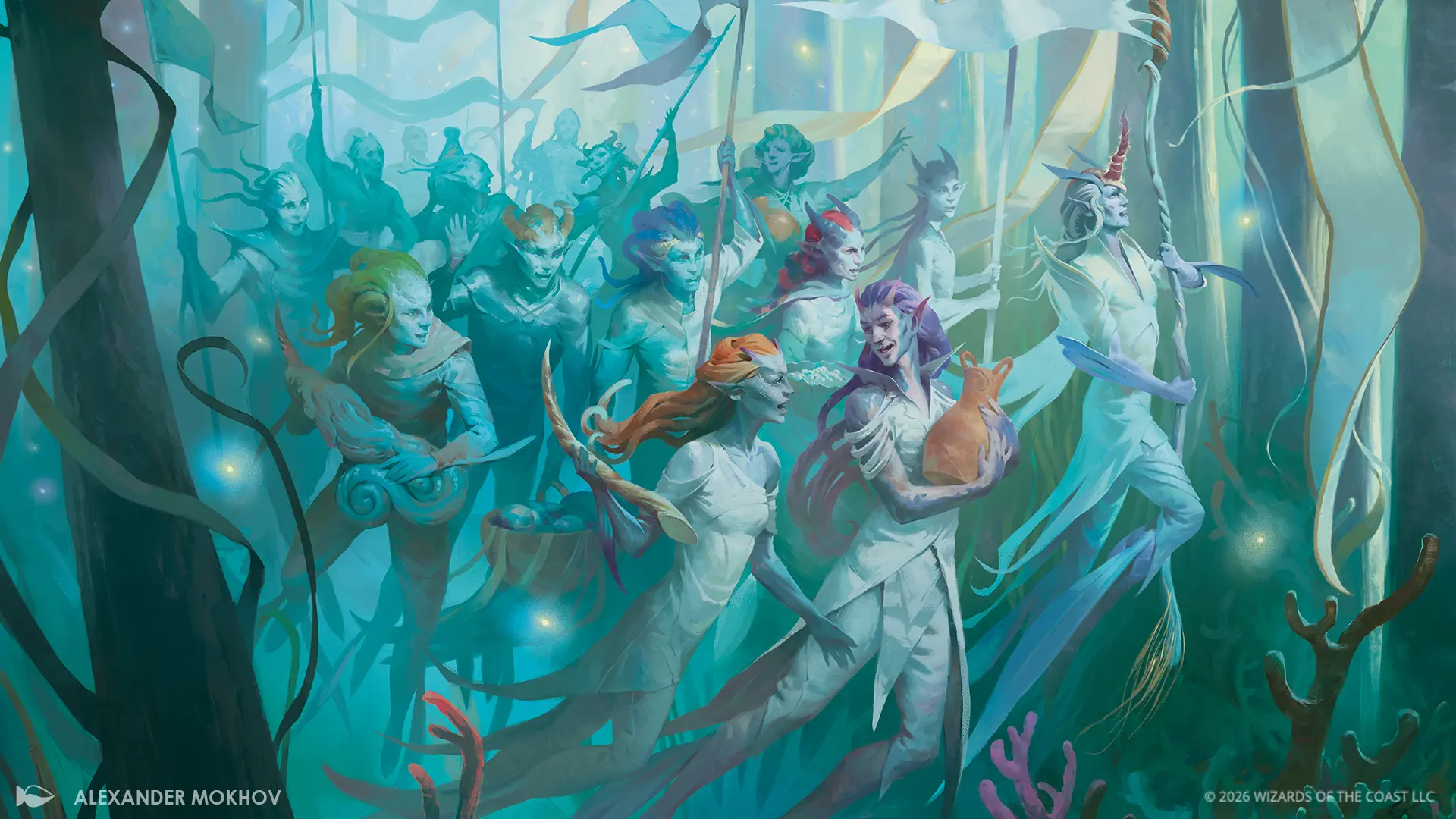
Despite the merfolk's humanoid appearance, they are obligate water-breathers. Their bipedal forms bear some resemblance to humans, though they would take great offense if any claimed so to their face. Their bodies are streamlined for the ocean, with finned feet, calves, forearms, and shoulders. In addition, their smooth and rubbery skin is perfect for reducing drag during high-speed swimming. There is a large amount of biodiversity in merfolk: bioluminescent markings, horns, hair—even the webbing between their fingers varies.
Society
Merfolk consider all sunlit parts of the ocean their purview, from the shallow waters to the dim fathoms. They live in metropolises built upon the ocean floor and travel via vast transit systems that operate on fast-moving tide magic. Even beyond, merfolk venture into the Abyss using specialized hydrodynamic armor, which protects them from the deadly cold and pressure. With the assistance of sonic magic, they've begun mapping out the Abyss.
Magic
The merfolk are powerful casters with a deep relationship to the whale gods. Their primary patrons are Cambra, Salinae, and Ethuo—though all the whales see some worship. Air, tide, and algae magics come most naturally to them.
Diluvian League
"These waters are our sovereign birthright. Their farthest reaches are our calling."
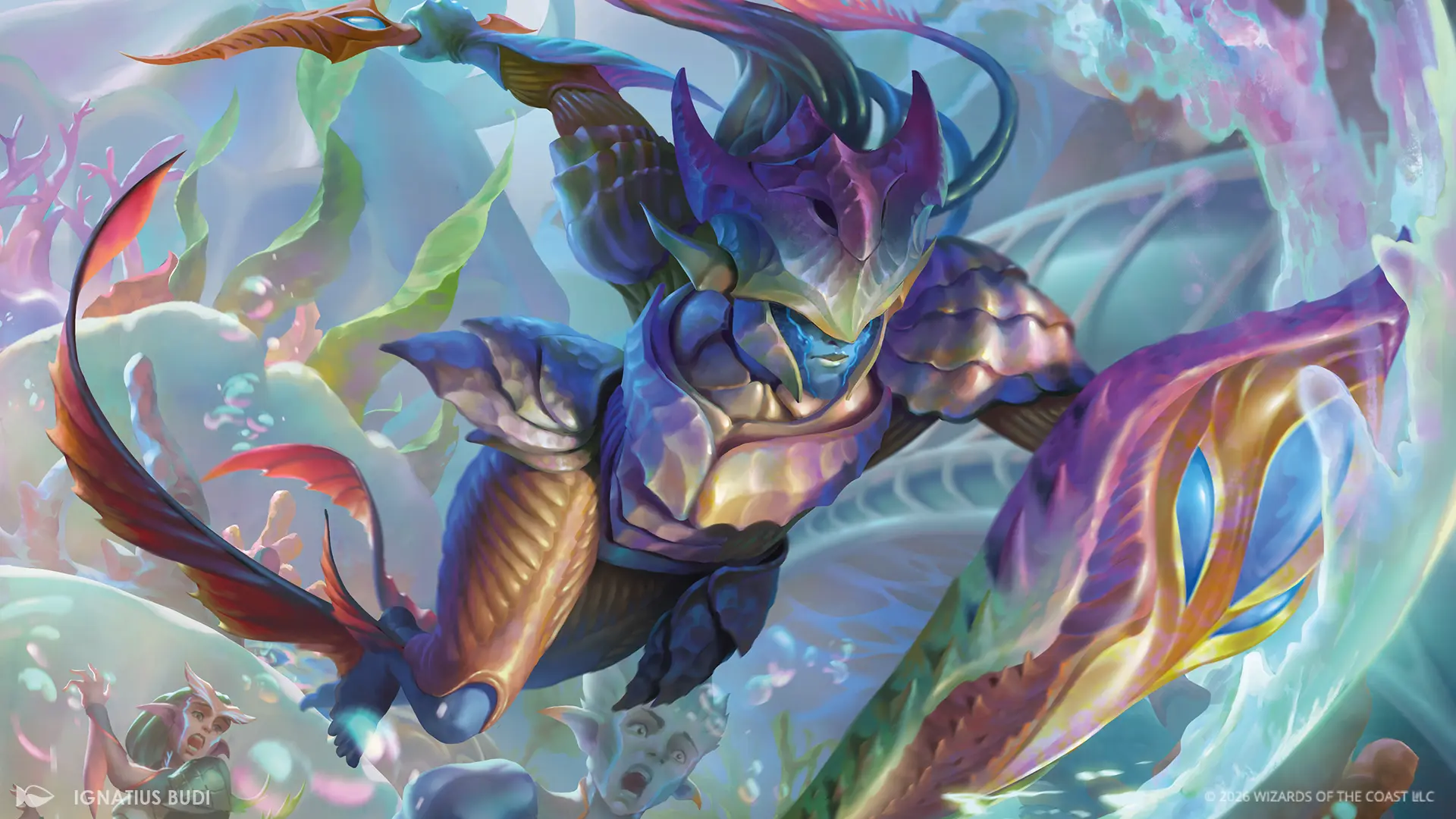
The Diluvian League is by far the largest faction of its region, its people the proud descendants of the collapsed Empire. A ruling senate replaced the old emperor and transformed the League into the representative democratic state it is today. Dozens of provinces encompass Diluvia's capital Maratheon, where ostensibly all mer have the equal opportunity to elect their senators. In practice, however, this right is hoarded exclusively by those with wealth, status, and property, leaving much of the League's poorer underbelly trapped within the dream of opportunity.
Despite the inequality of its people, the Diluvian League is still rich and proud. They are known for their bureaucratic formality and civil tradition. They display their wealth unabashedly, their cities decorated with expensive coral features and their well-tailored clothes tightly woven of silks harvested from rare silk cucumbers. Their infantry is devout and disciplined, outfitted in hammered-copper plating and valuable marine steel—a rare, corrosion-resistant alloy harvested and shaped by League metallurgists. Weaponry is built to thrust and stab, as befits underwater combat. Their cavalry rides giant barracudas into battle with the mighty tides at their backs.
The League's patron god is Salinae, mother of oceans. They make their stewardship of her waters known through their command of tide magic, forcing the very waters to subjugate themselves. They control the currents for speedy transit and territorial control. In addition, air magic assists them in firing long-range weaponry.
Halsia
"Power belongs to the commonwealth! All deserve the bounty of the waters they were born to."
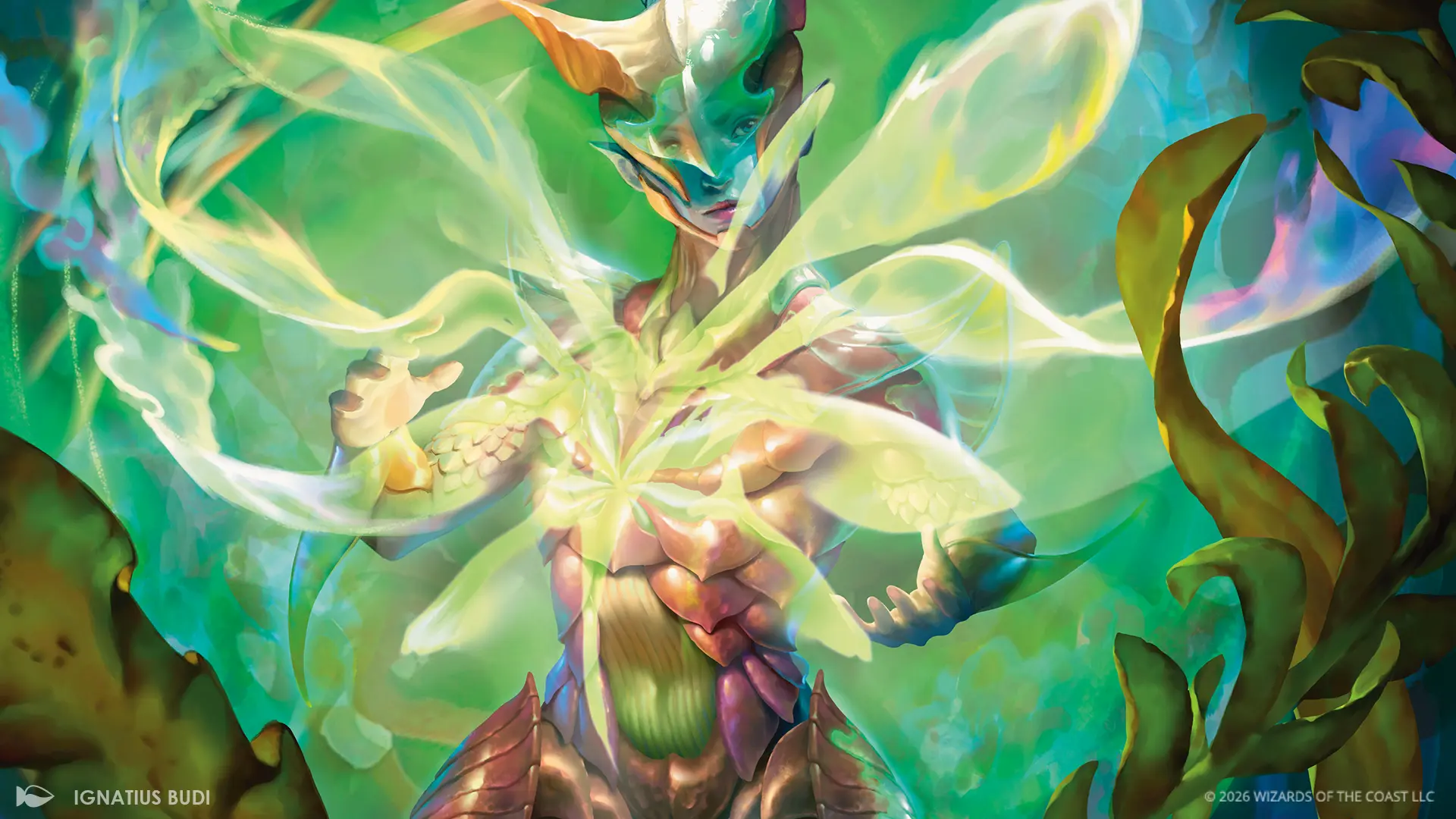
The independent city-state Halsia is a recent fracture from the Diluvian League, united under the revolutionary creed, "One mer, one vote." They believe all merfolk should have direct influence upon lawmaking, regardless of noble title or landownership. During the Empire's fall, this grassroots rebellion of radicals and reactionaries banded together to take advantage of the tumultuous political landscape and stake out independence. Halsia was once the breadbasket of the Empire—its position as an industrial and agricultural base gave it the economic strength to remain stable after parting. It also gave the League ample incentive to take it back. This clash of wills led to bloody conflict, now known as the Years of Crying Bells. Ultimately, Halsia protected its independence, leading to the tense ceasefire of the present day.
Halsia is horizontally organized. They are far less conservative than the League in both their manner and dress—"brutish," by the League's claim. They wear simple clothes tightly woven from sea grasses and kelp. They lack the same strict military structure as the League, with most of their warriors sourced from volunteer citizenry. Without the boon of marine steel, combatants are instead outfitted with bronze and shark leathers. Trained riders are carried into battle by billfish and cuttlerays—steeds that they spend years cultivating a close and trusting bond with.
In stark contrast to their League counterparts, Halsia employs a mutualistic use of their magic. Their command of light and life makes them great farmers and tamers. Druids connect deeply with Ethuo and his domain, allowing them to commune with nature.
Revenist Front
"The visionary gives his sermon, and we listen. The depths whisper their wants, and we interpret. They speak of old glory, and we enact it."
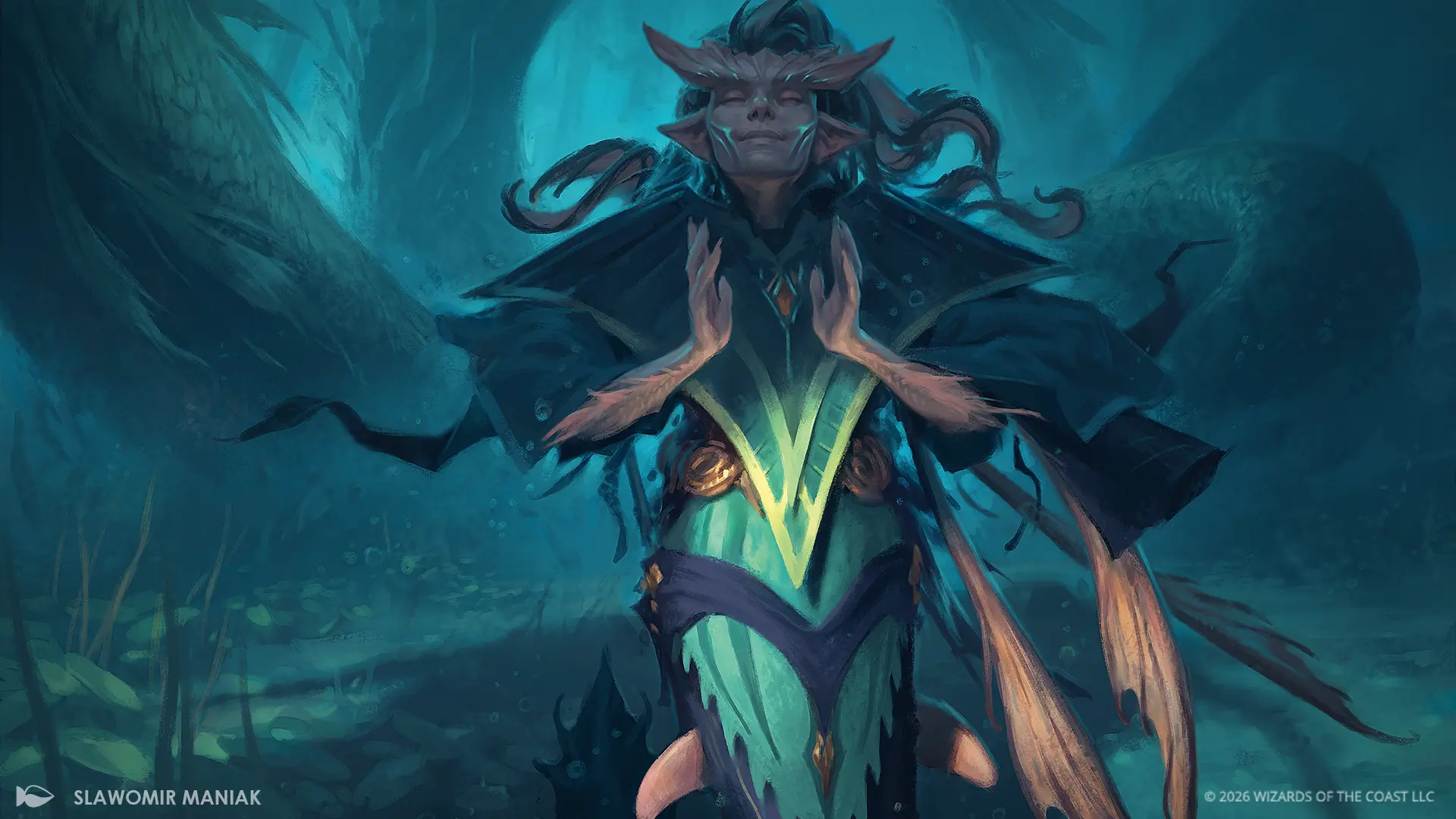
Not all merfolk celebrated the fall of the Empire. A passionate falangist movement coalesced around the resurrection of the monarchy: the Revenist Front, named after the magnetic dynamo who spearheaded their mobilization. Morgriff Reven's followers believe him to be divinely inspired by something greater than even the gods—a force older, stronger, and wiser, or so they would claim. They follow the will of the Abyss and the monsters therein. This heretical faith lurks in the shadow of what appears to be a peaceful political movement: Reven makes passionate appeals to an imagined time of past stability, currying favor and expanding his ranks. But beneath the surface, his followers are radicals, political saboteurs, schemers, and druids in command of dark magics. His movement is embodied by the old symbol of the Diluvian Empire: the Noble Serpent, a species of colossal monsters imbued with great and enigmatic power that allows them to survive the extreme depths of the Abyss. Revenists dress in robes that mimic the serpent's shape, favoring darker colors meant to evoke mourning for the state of the current world.
The Revenists pursue almightier heights of divine worship. Their magic reaches toward the farthest depths of the ocean, where ancient leviathans answer their call. Through reverence and complex ritual, they summon abyssal monsters to aid them in battle.
Locations
- Maratheon: The capital province of the Diluvian League, owned by its administrative bodies: the courts, the senate, the armories, and so on. It occupies a raised plateau that intersects the path of most every whale god—Lodea being the only exception, though she becomes distantly visible during the Nightmare Season. The gods' cyclical passing is recorded in calendars and celebrated with boisterous festivals.
- Piccia: Halsia's capital, a sprawling agricultural hub built into an old kelp forest. It's located directly upon Ethuo's path and is his favored domain, which has historically allowed Halsia to grow crops and rear fish in great abundance.
- Noble Serpent Tower: An old Imperial-era temple dedicated to the Noble Serpents. It lies in the dark depths, lit by captured glow jellies and decorated by statues of historic emperors.
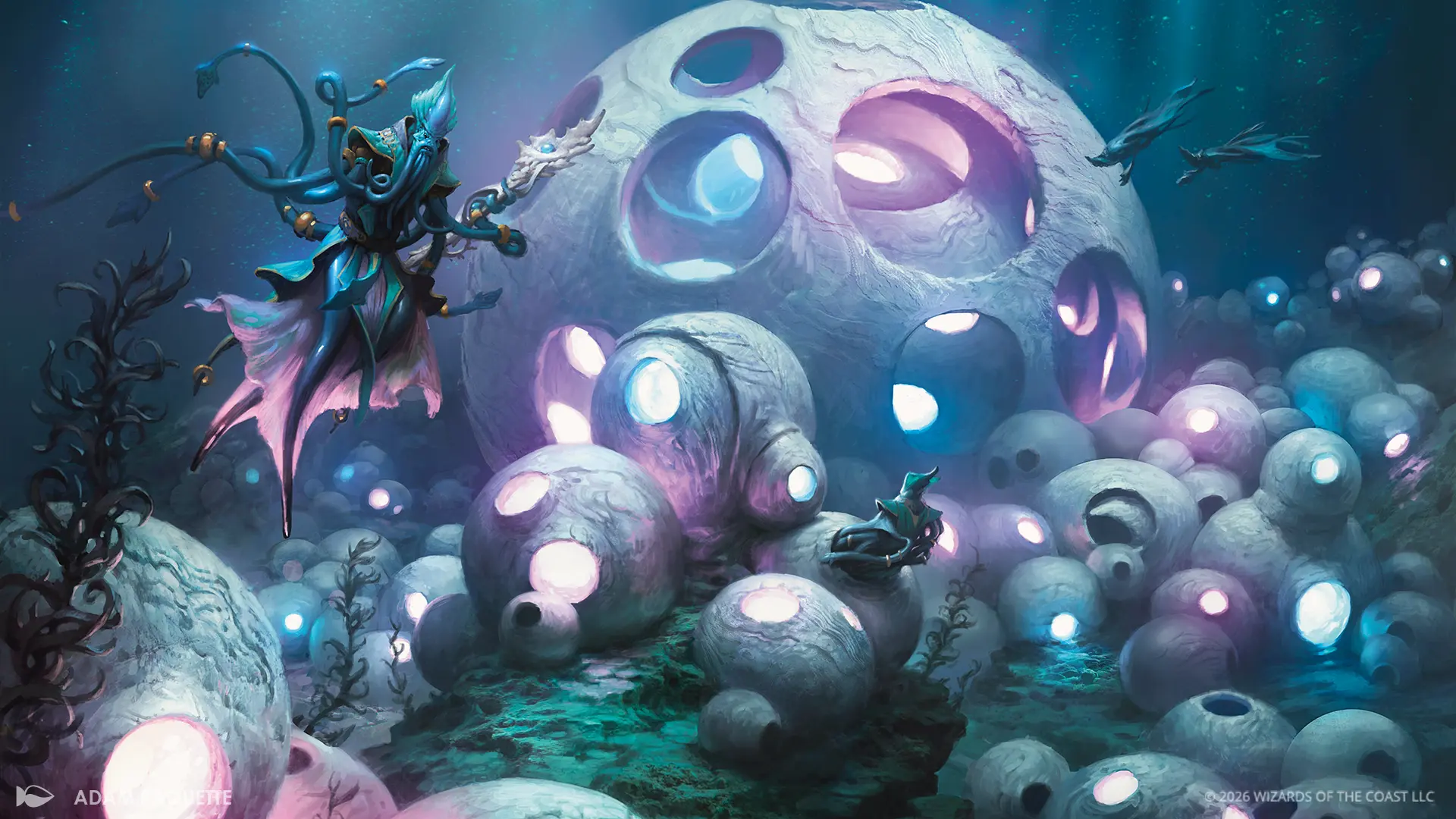
Decalids
"Seek wonders to unravel them. Follow that phantom figure deeper into your dream. What does the mind hold? What is really behind the curtain? And how far will you go to learn it?"
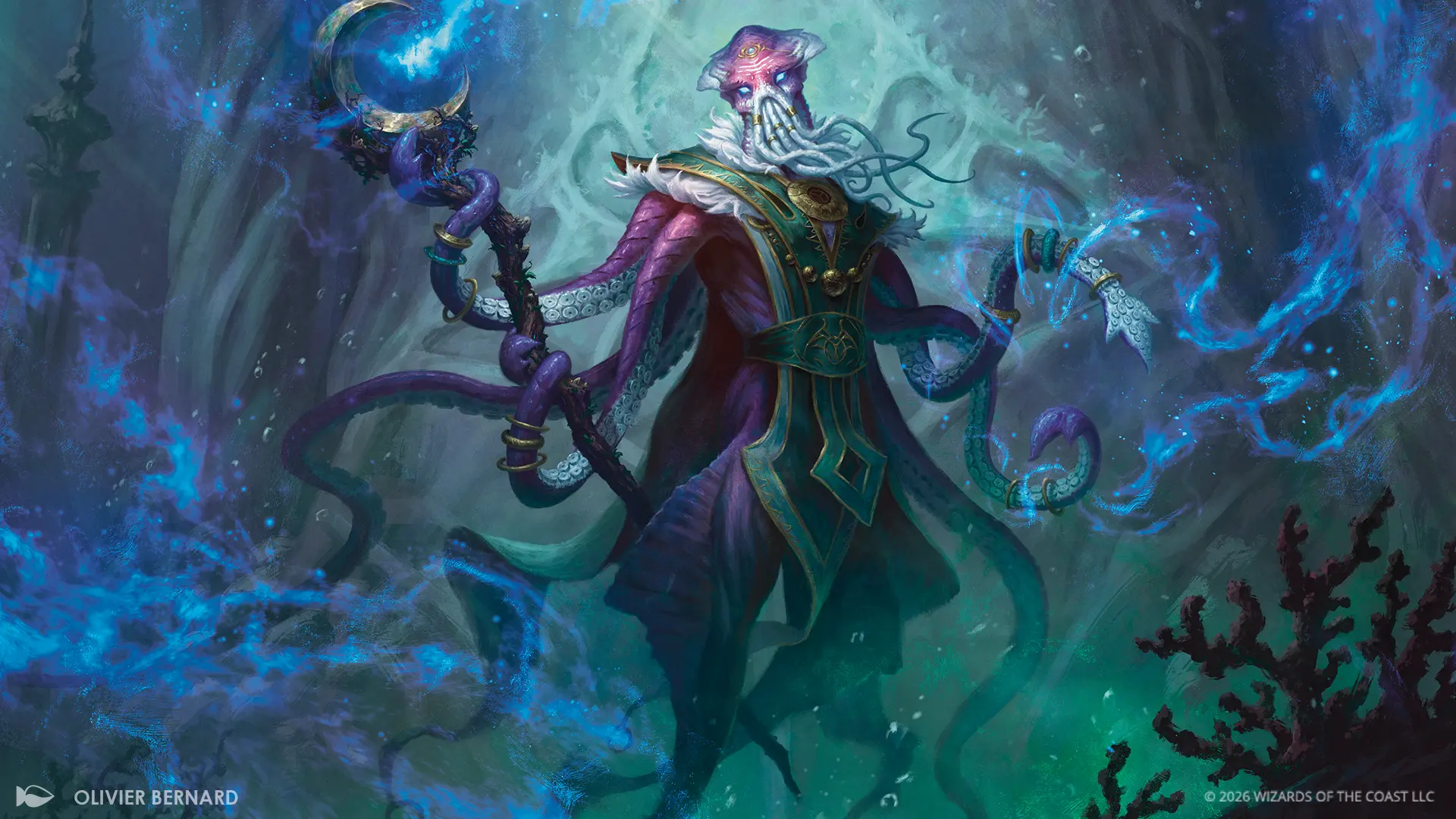
Reclusive and obscure, the squidfolk are a living remnant of a plane-spanning civilization that collapsed long before merfolk even began recording their history. They are a short-lived species who make up for their physical fragility with magic of unprecedented power. Past tumult has left them scattered and diminished, with little in the way of a unifying civilization. They can be found rarely throughout the lower swaths of the Grand Marine, a scant few even having adapted to survive the crushing cold of the Abyss. Their knowledge and experience are passed through generations in the form of ancestor spirits who haunt the latest in their lines.
Morphology
Decalids are thin, elegant, and frail. Some of their tentacles are tipped in suckers for fine motor manipulation, while the rest are dedicated to swimming. They are largely invertebrate, able to squeeze into any gap large enough for their skull plate to pass through. They come in many different shapes and sizes with variation in their chin barbules, crests, and markings.
Society
The lifespan of any one decalid is less than a decade, but their collective memory is far longer. They still know of a time when they ruled the oceans and the bloodshed that followed. The ancient battlefields of their collapse are scattered across the ocean floors where many decalids now build their homes, tending to ancient tombs with deep solemnity. These gravekeepers recall an older history—an ancient sin, an apocalypse created by hubris and desperation—but that is a secret they keep close for the sake of their shame. Other decalids have scattered to the currents and can be found in merfolk cities as augurs, court mages, and oracles. Their knowledge and incredible magical aptitude allow them to seamlessly slot into high-profile roles.
Ancestor Spirits
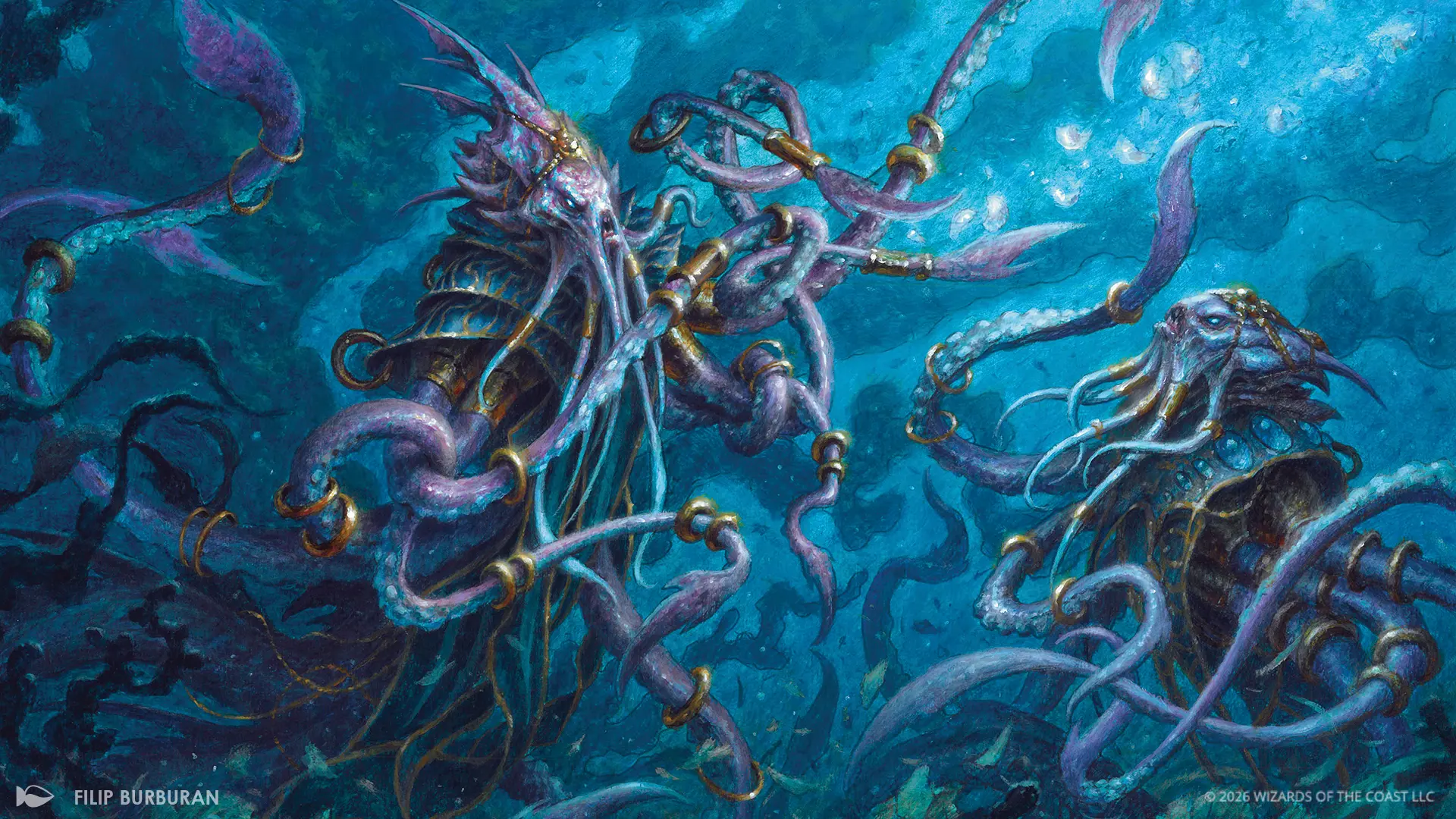
The reason for the decalids' long memory can be found in their ancestors. A decalid accrues the spirits of all who came before them as literal hauntings that can be called upon for both knowledge and magic. A decalid's power is measured by the number of their ancestors they carry. As a lineage masters professions and gains renown over the course of lifetimes, they pass that boon on to their descendants. These boons are then immortalized as new syllables in their ever-growing name—a decalid's most precious heirloom. However, this accumulation is not perfect. Pieces get lost over centuries. Ancestor spirits fade, or defect, or even reject their descendants in the most dire circumstances. Some die without an heir, and an entire lineage is lost in a moment. Decalid gravekeepers do all they can to forge ties with these lost spirits and ensure their legacy lives beyond the end of their line.
Magic
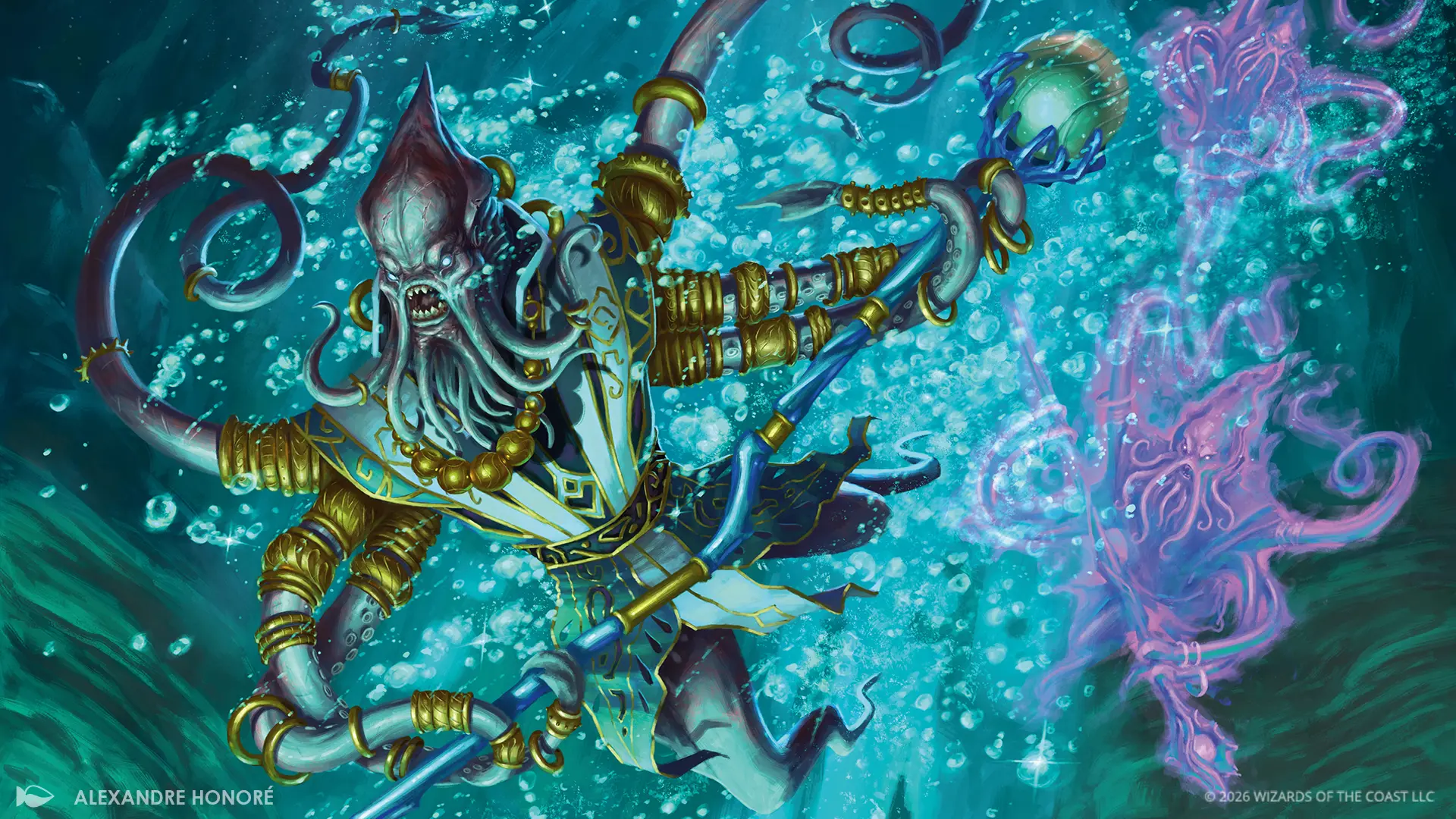
The decalids' natural predisposition for magic is multifaceted and can be observed in their physical conductivity of mana, their mental wiring, and their cultural understanding. They have been studying and perfecting magic for generations—though much of their knowledge has been rendered patchy, incomplete, or twisted by the mass devastation of ancient wartimes. Decalid magic tends to be cerebral, phantasmagorical, and nightmarish, allowing them to walk in dreams, poison the mind, glean distant knowledge, and extrapolate potential futures. They research dark magics in hopes of someday regaining their former glory. Their short lifespans ensure they have a particular loyalty to Lodea; it is their hope that no matter what happens to their bodies or their lineage, she can offer them eternity afterward.
Locations
- Porifera: An old relic of the pre-collapse era. Once an ancient city of citadels, it was brought to ruin by war, then restored by magic—rebuilt upon the mass graveyard it left behind. Its citizens tend to it with sorrowful reverence and obsessive rumination. The architecture is composed of many interwoven cylindrical spires that are perforated by thin, winding corridors only traversable by decalids. Magic accumulates and warps the city. Walls reshape, pathways shift, and the building takes on a dreamlike life of its own.
Homarids
"Time is known by erosion of the rock and shifting of currents. The self is inextricable from the whole. Death may never find you—but all things are doomed to change, regardless."
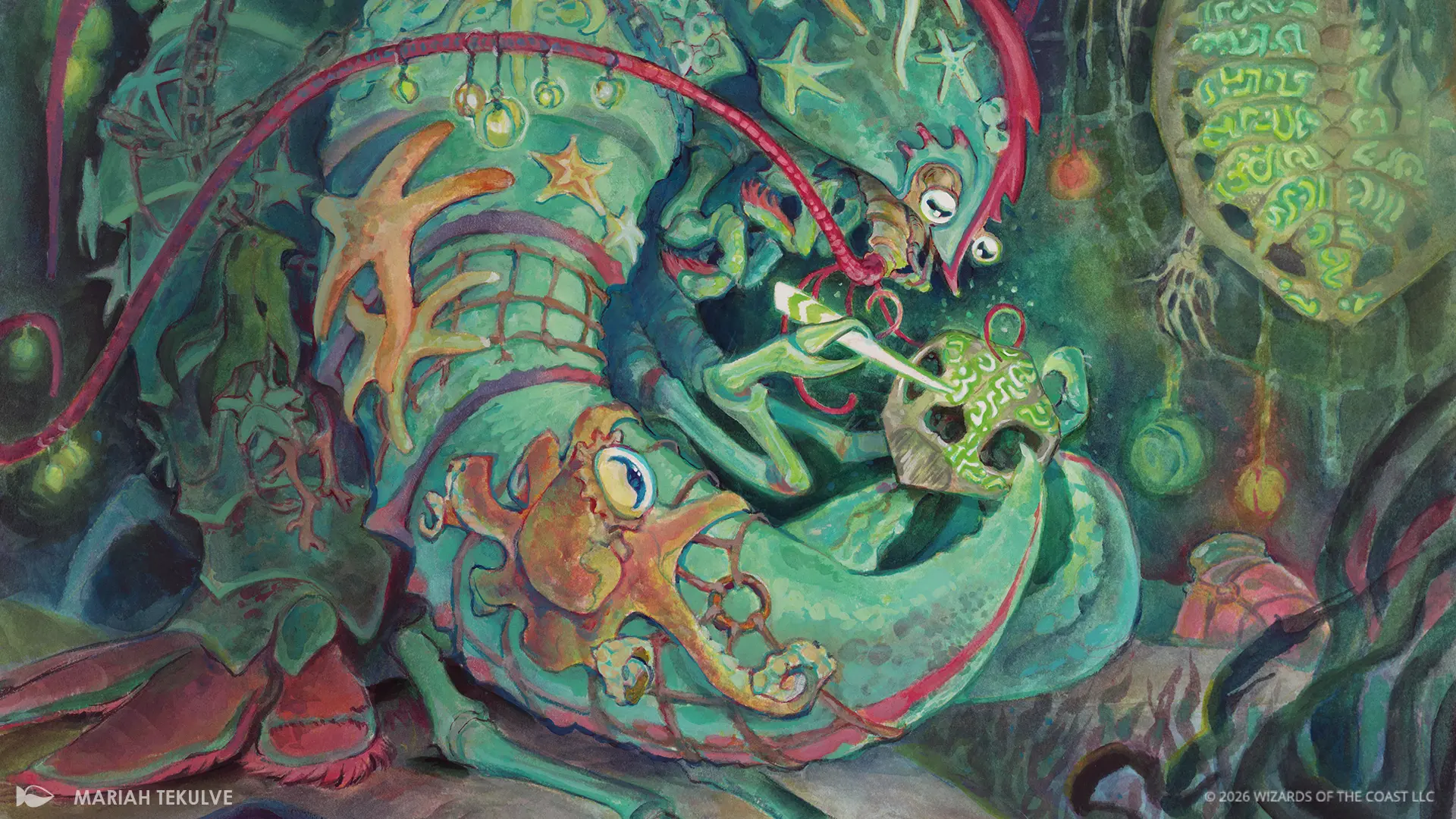
These hardy crustaceans roam the waters of Nauctis as solitary traders and collectors, recovering lost items, hawking curiosities, and trading in secrets. Their long lives net them a large breadth of experience and allow them to offer their services as appraisers, neutral advisors, healers, and storytellers for all the Grand Marine. Homarids are functionally immortal, only dying when killed or by their own choice. Many homarids count their age in centuries, though a handful are even older.
Homarids are welcomed by merfolk as wise elders and living relics of a bygone era. Their arrival in a city is considered a great boon and often begets lively celebration. Homarids can survive above water, though most prefer to wander the ocean floors, as their great bulk and heavy burdens make traveling above cumbersome and uncomfortable. Younger homarids—those with less chitin and smaller mass—on rare occasions venture to the surface. This is the only reason Stranders know of their existence.
Morphology
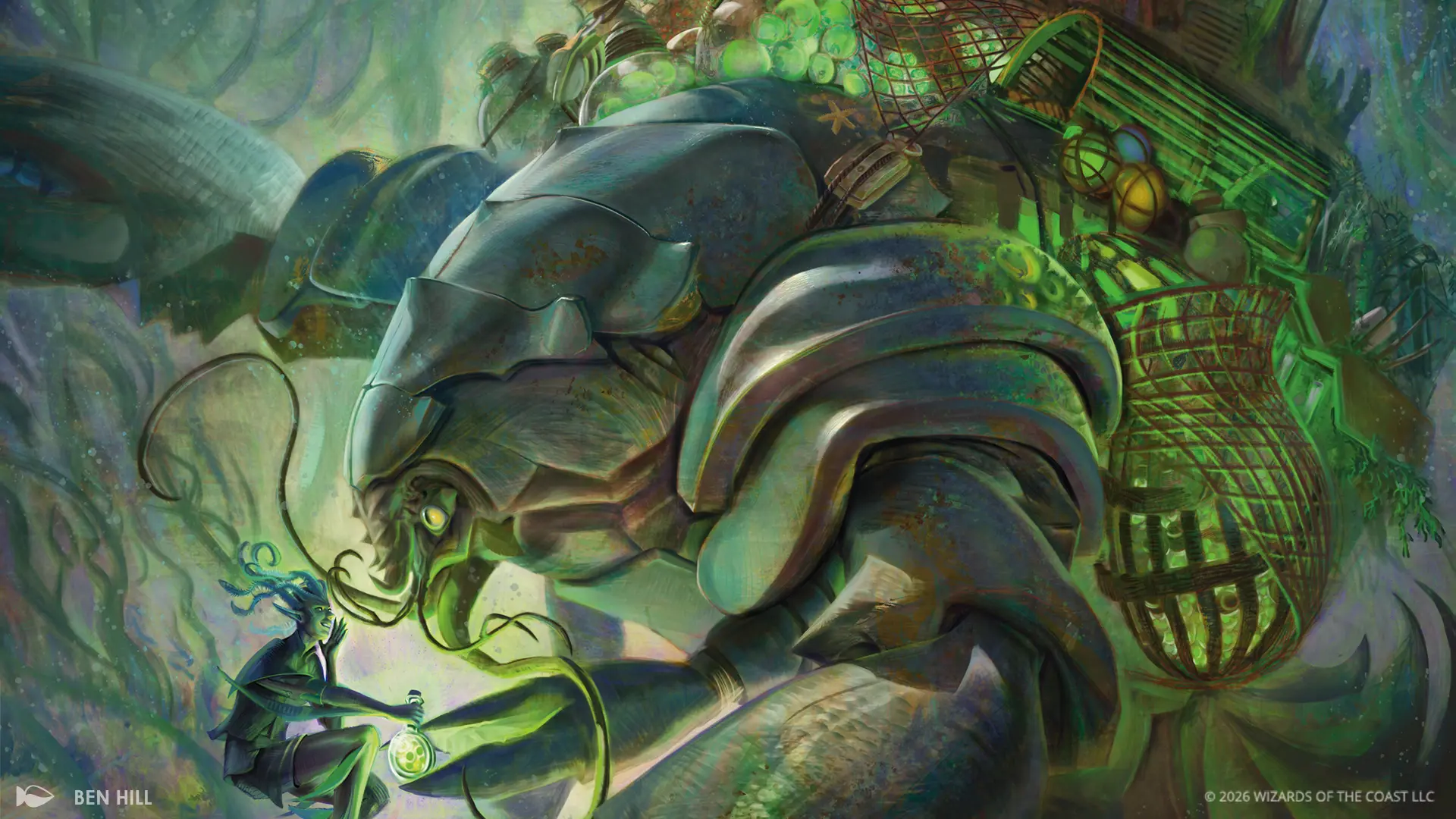
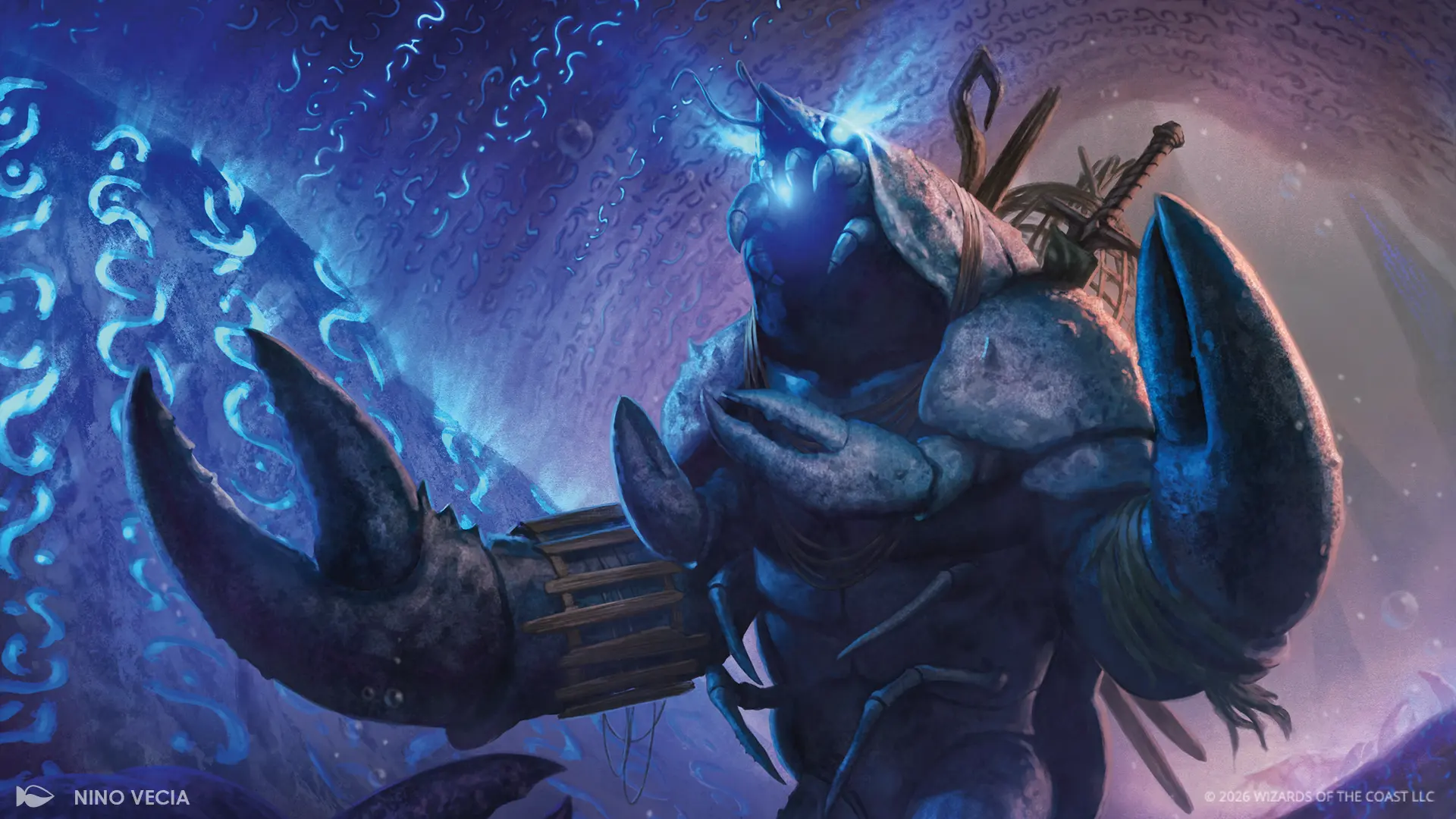
Homarids are large, hulking creatures with one set of heavy claws and another, smaller set of manipulator arms. They molt their carapace once every three to five years, granting their ever-growing bodies the space to age. Their chitin is hefty and resilient, making for effective armor against most physical attacks. This also makes it quite a challenge to shed during their molts and requires a lengthy ritual to crack open and remove.
Society
Much of homarid society views it as their collective burden to catalog and preserve the history of Nauctis. However, they are thoroughly divided on the specifics of how. Some believe knowledge should be guarded zealously—kept close to the chest and employed with the precision of a knife's edge. These homarids scavenge and study voraciously, valuing acquisition over all else. Other homarids share all they have affably, believing that wisdom is one's duty to spread. These homarids trade tales for tales and for simple bites to eat, taking and leaving tidbits and trinkets with the ease of the currents.
Homarids collect their histories on their bodies, displaying a physical roadmap of their life and of the plane at large. They come and go from cozy heritages and shared warrens, decorating the walls of these waypoints, swapping stories, tending to clutches of eggs, and assisting their kin in molts.
Magic
After many centuries of life, homarids are rich in the secrets of magic, including the taboo practices of brine, death, and even necromancy. Some homarids connect deeply with nature, teaching themselves the history of the plane through its geography, its flora, and its waters. These homarids feel magic instinctually in their bodies and in time with the tides. Others seek dark and forbidden secrets, funding their magic with the less-than-savory sources. Homarids overall are most closely drawn to Ethuo and Lodea. Nearly immortal, they have a unique relationship with the latter—they fear Lodea, but they also respect her, draw strength from her, view her as the perfect collection of history, and reject her domain all at once.
Locations
- Ebon's Shell: The final molt of Old Ebon, the largest and oldest known homarid, named in his honor. Homarids gather here in great numbers for an exclusive yearly festival. They ardently guard its location, for here they donate the most valuable treasures, carve elusive secrets into Ebon's shell, and tuck away kelp scrolls in an expansive library and a great number of egg clutches safely at his core.
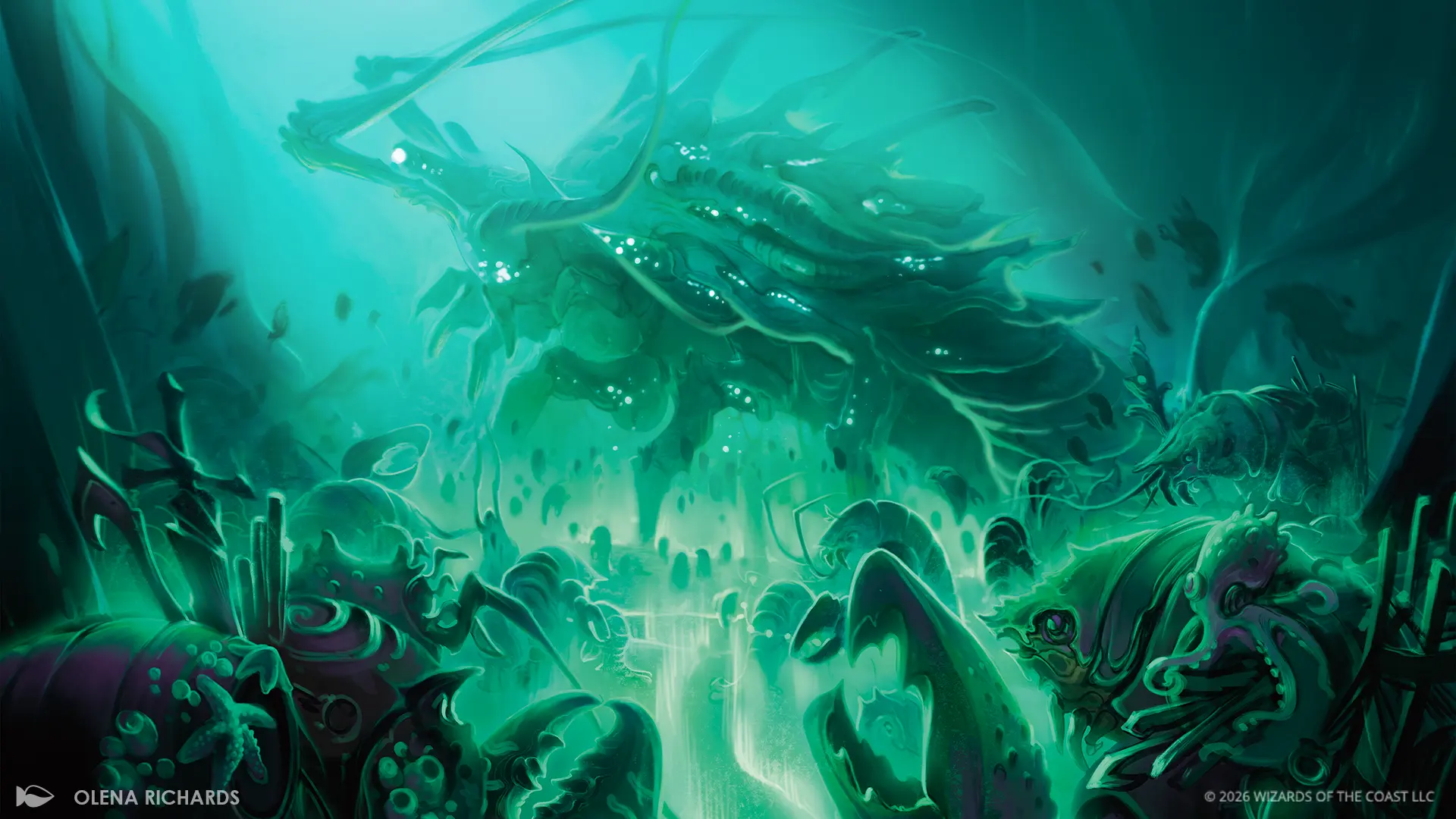
Other Creatures
Nauctis is home to creatures of all kinds. Its waters know the largest and most ancient leviathans whose bodies move landscapes and have birthed the smallest shrimplings whose only goal during their fleeting lifespans is to enact gleeful mischief. From the shallows to the Abyss, the ocean bursts with oddities.
Mercantile fishfolk live among Stranders and peddle their wares. Gull avens fly the skies amid the low spires of human cities. Beast sharks, the wild cousins of chordatans, roam the oceans in constant, ravenous hunger. Whale demigods escort their chosen god, and when they die, their fallen carcasses create pockets of divinity across the ocean floor. Ethereal slug-sprites feast upon the mana in Cambra's blessed groves. Elementals are born of Ethuo's overgrowth, and skeletons animate in Lodea's wake. Otherworldly monsters lurk in the darkest trenches. Zombies infected by parasitic coral—their organs choked and replaced one by one—feed themselves to a ravenous brood mother tucked under the reefs.
THE ABYSS
Desolators
Clawing hunger. Boiling heat. Blood-smells, yearning, follow. Gods of our own weave below us. They tell us to feast, feast, feast.
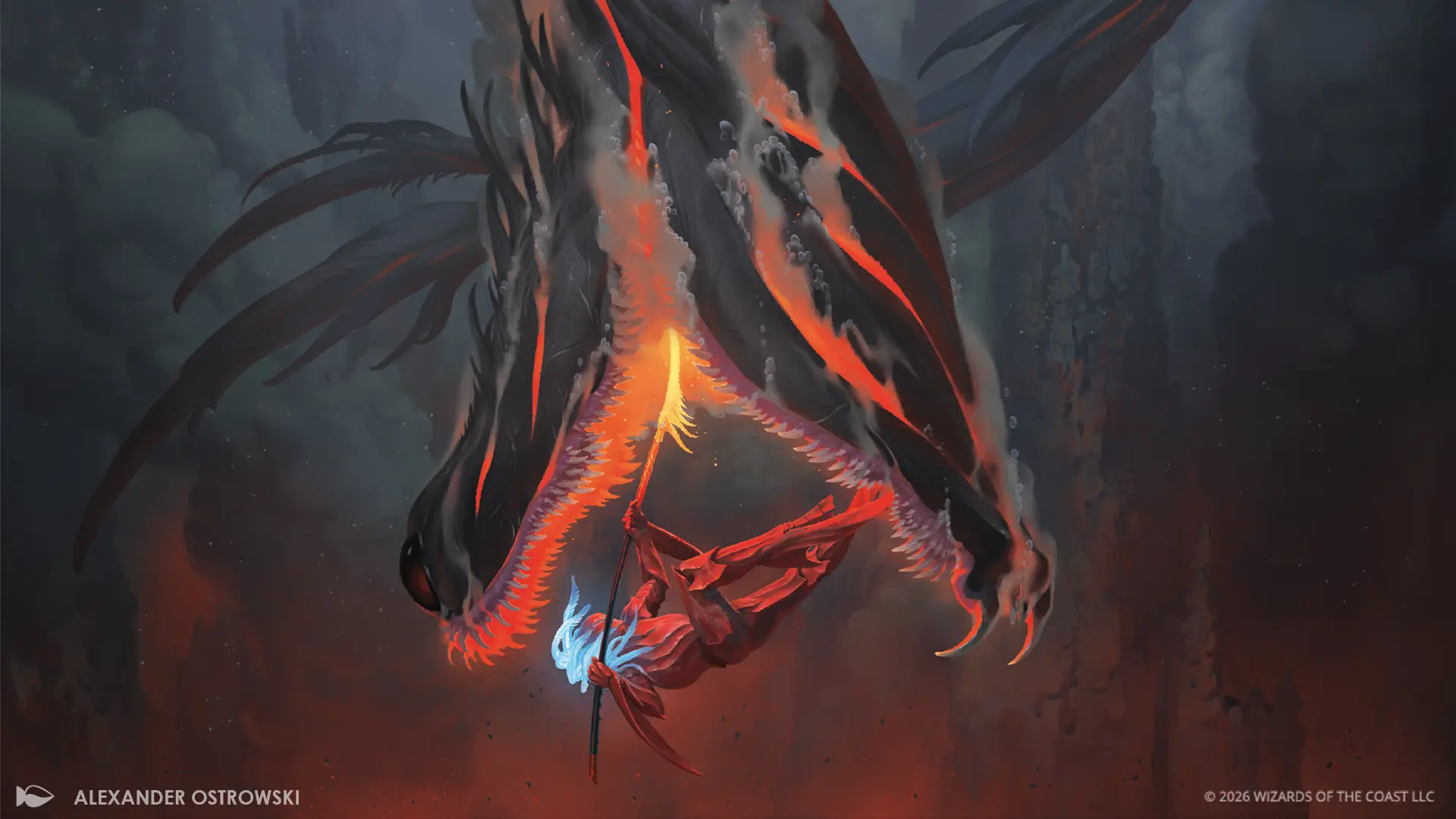
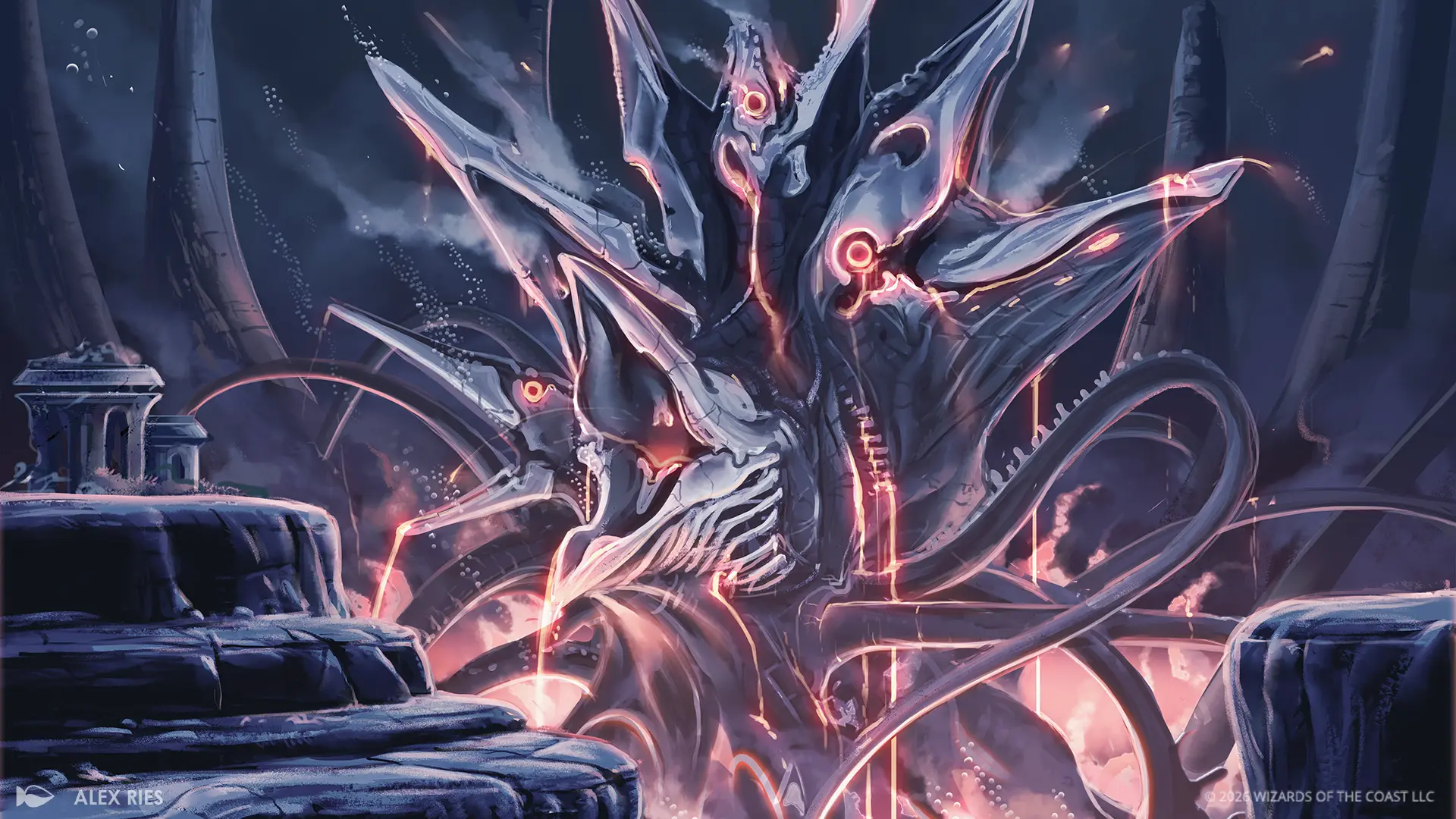
Hateful, ravenous, and invasive, these elementals are the embodiment of hunger and destruction. Their life, if it can be considered as such, begins in magma below the ocean floor. They savage their way out, devouring all in their path, even their own kind—until they break into the Abyss. Their existence is based around one prime directive, a genetic mission carved into every thread of their being: Consume, grow, and replace all the ocean with slag and pollution. After untold eras, they've consumed all available biomass in their region of the Abyss and venture higher in search of more nourishing prey. This has caused violent clashing with the inhabitants of the Grand Marine, earning them their name, "desolators."
Morphology
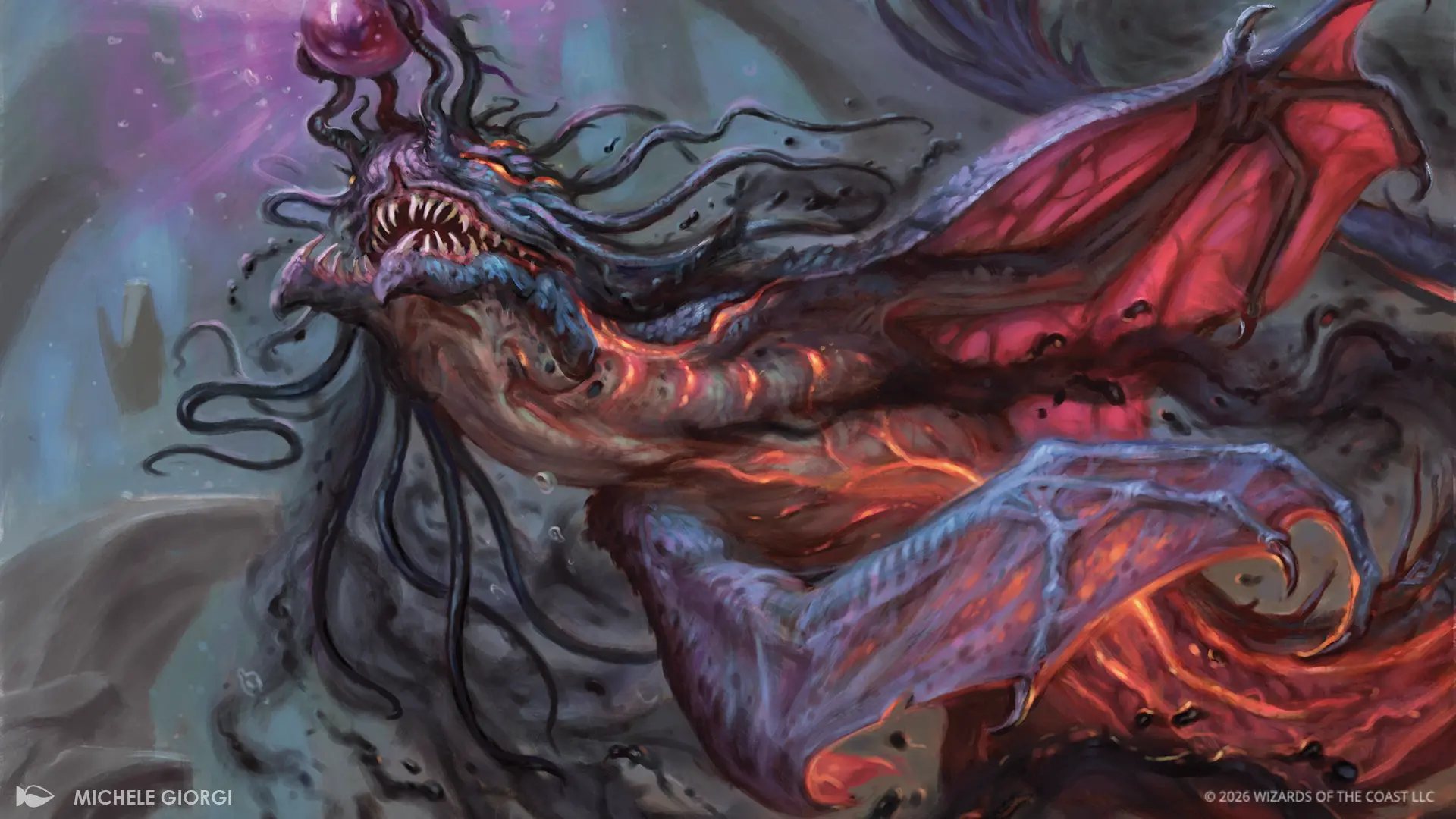
Desolators are complex multicellular organisms born of swirling magma. They start as single-celled prokaryotic microorganisms, then coalesce into multicellular beings. Upon emergence from the mantle, they develop layers to protect their magma cores: a silicate exoskeleton kept plastic and flexible by their heat and a protective carapace of rock. They interpret the world around them via their skin. Each cell not devoted to digestion is an optomuscular neuron, capable of perceiving, thinking, and acting on sensory information.
Society
Though it's difficult to describe desolators as societal, they are not mindless. They are sentient, capable of chemo-memetic language. They possess reasoning skills, hierarchical organization, and even a vague notion of epigenetic religion. These systems and thought processes would be completely alien to any other sapient being in the ocean. They don't have brains like any other; rather, their intelligence is disseminated across their body, inextricably intertwined with their genetic mission. This mission is divine mandate, an innate command, and the basis of any and all societal expression. Whatever this directive may have been in years past, it has long since malformed, decayed, and mutated over millennia and innumerable short-lived reproduction cycles. Now, it commands them to consume and terraform the ocean—a task they carry out with unwavering reverence.
Ruiners
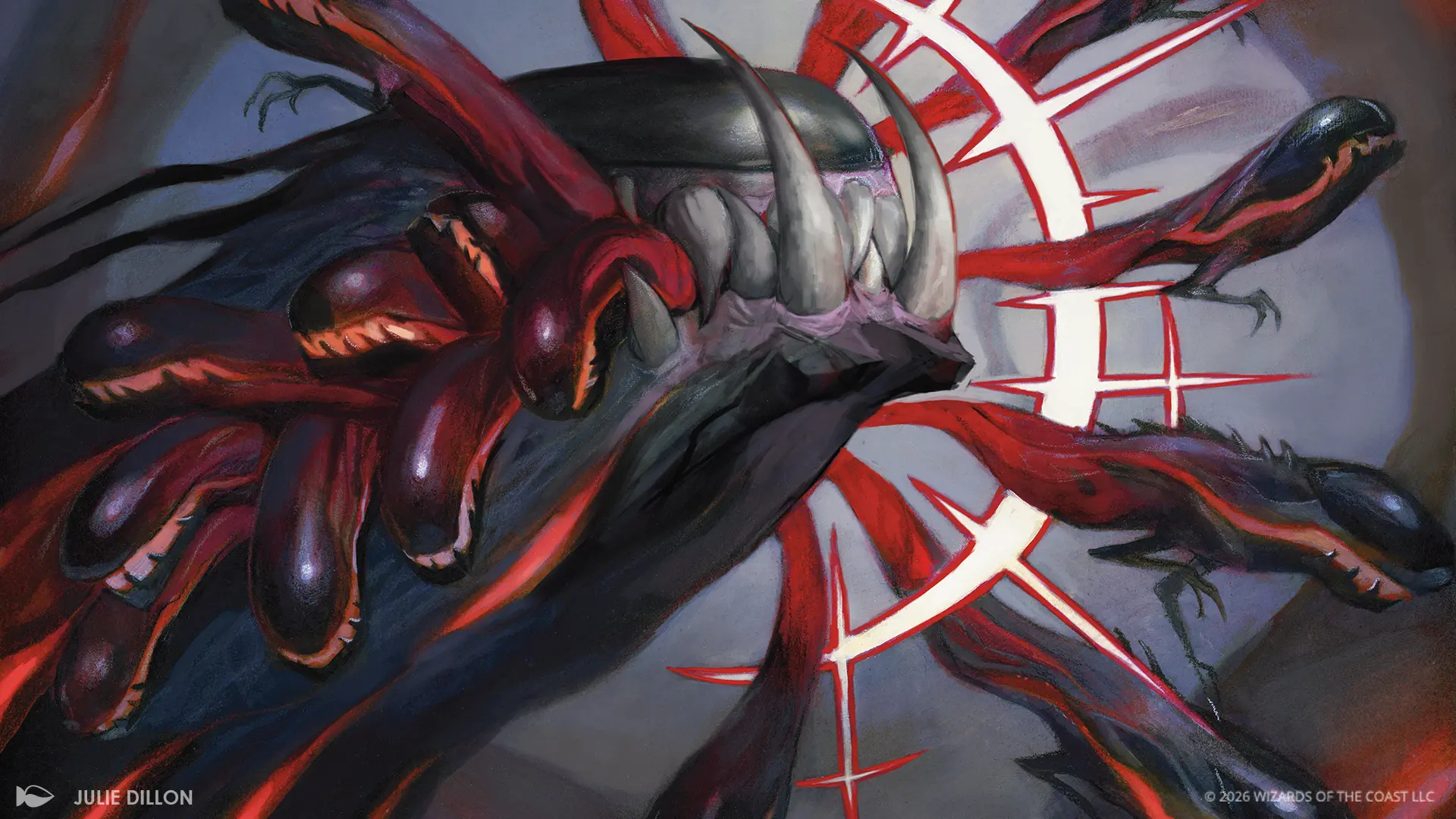
At some point over the course of countless centuries, a black swan event occurred. One aberrant evolved, its directive deforming so thoroughly, so apocalyptically, that it became something entirely new. This desolator experienced one thought and one thought alone throughout every facet of its being, down to the very core of its genetic code: Become god.
It was apotheosis. The first ruiner was born: Tecton, a being who evolved beyond the simple coding of its brethren into grander intention. Tecton's birth allowed for more ruiners to follow, each defined by their innate self-veneration. Their presence compels all desolators around them to organize and mobilize in ways they never could before. It is through ruiner psyche that some oblique form of hierarchy and religion can be gleaned by the desolators. They command reverence from their followers; this in turn provides them resources to grow limitlessly and attain what could be considered godlike power.
Locations
- The Bulwark Thermocline: The magical barrier that separates the habitable parts of the ocean from the deadly Abyss. It keeps all the horrors of the depths safely contained; only on rare occasions does a monster manage to slip through. If the Thermocline were ever truly shattered, it would spell doom for the inhabitants of the Grand Marine.
- The Hadalmaw: The largest known split in the sea floor, torn open when Tecton first emerged from the mantle and released droves of desolator progeny upon the plane. The Hadalmaw is kilometers deep and sheer-edged. Smoke belches from its depths, foul enough to nearly reach the surface before dissipating.
- The Drowned World: The all-but-forgotten remnants of an expansive civilization buried deep within the Abyss, explored sparingly by fathom knights searching for a glimpse of their history. The Drowned World is a maze of concrete ruins, monolithic buildings, and ancient emergency lights. These depths are exceedingly dangerous; thus, expeditions are rare and meticulously planned. Even then, some expeditions never return.
Follow the story of Nauctis: The Sunken Realm when the first episode arrives on January 4 at MTGStory.com and The Magic Story Podcast. Nauctis: The Sunken Realm releases on February 5, 2027, and is available for preorder now from your local game store, TCGplayer, Amazon, and elsewhere Magic is sold.