
Design Files: Fifth Dawn, Part 2

Last week, I started my "Design Files" series for Fifth Dawn, where I show the complete design as handed off from design for development (this set happened long before our current exploratory design, vision design, set design, and play design model). I ended last column with black, so today, we pick up with red.
CR1
Speedy Tim
o2oR
Creature — Wizard
1/1
Haste
T: CARDNAME deals 1 damage to target creature or player.
This card became
CR2
Cageflinger
o3oRoR
Creature — Giant
3/3
Sacrifice an artifact: Target creature can't block this turn.
This became
CR3
Ornery Goblin
o2oR
Creature — Goblin Warrior
2/2
First strike
CARDNAME cannot be equipped.
This became
CR4
Scrye Fire
o2oR
Instant
CARDNAME deals 2 damage to target creature or player.
Scrye 2 (Look at the top two cards of your library. Put the cards back in any order on top and/or on bottom of your library.)
This became
CR5
System Overload
oR
Instant
Destroy target tapped artifact.
This set had a small theme of cards that destroyed tapped permanents. This one didn't make it. The set having a bunch of Equipment didn't help, because it can be unclear when Equipment is tapped, as players tend to tap the Equipment with the creature.
CR6
Fiery Edict
oR
Instant
Target player chooses a creature they control. CARDNAME deals 3 damage to the chosen creature.
This was us making a card similar to "target player sacrifices a creature," but in red. It didn't make it.
UR1
Goblin Tech Support
o3oR
Creature — Goblin
2/2
R, Sacrifice two artifacts: Destroy target artifact.
This card became
UR2
Big Bully
o4oR
Creature
5/3
My best guess is this card became
UR3
Practical Joke
oR
Instant
Attach target Equipment to target creature.
This became
UR4
Foment
o2oR
Sorcery
Tap each untapped land target player controls. Add {1} to your mana pool for each land tapped this way.
If I remember correctly, this card had some rules issues. We didn't want the opponent always tapping the lands in response to the spell but didn't have the tools at the time to stop it.
UR99
[Commandeer]
o2oR
Instant
Untap and gain control of target artifact until end of turn. If that artifact is a creature, it gains haste until end of turn.
UR99
Eat Hot Lead
o2oR
Instant
CARDNAME deals damage to target creature equal to the number of artifacts you control.
This became
RR1
Magma Giant
o5oRoR
Creature — Giant
5/5
When Magma Giant comes into play from your hand, it deals 2 damage to each creature and player.
This is a reprint from Portal Second Age. We were looking for places to reprint Portal cards we liked. I believe at the time they weren't legal unless they were printed in a Standard-legal set.
RR2
Roto-tiller
o1oRoR
Creature
7/6
Trample
At the beginning of your upkeep, sacrifice CARDNAME unless you sacrifice two lands.
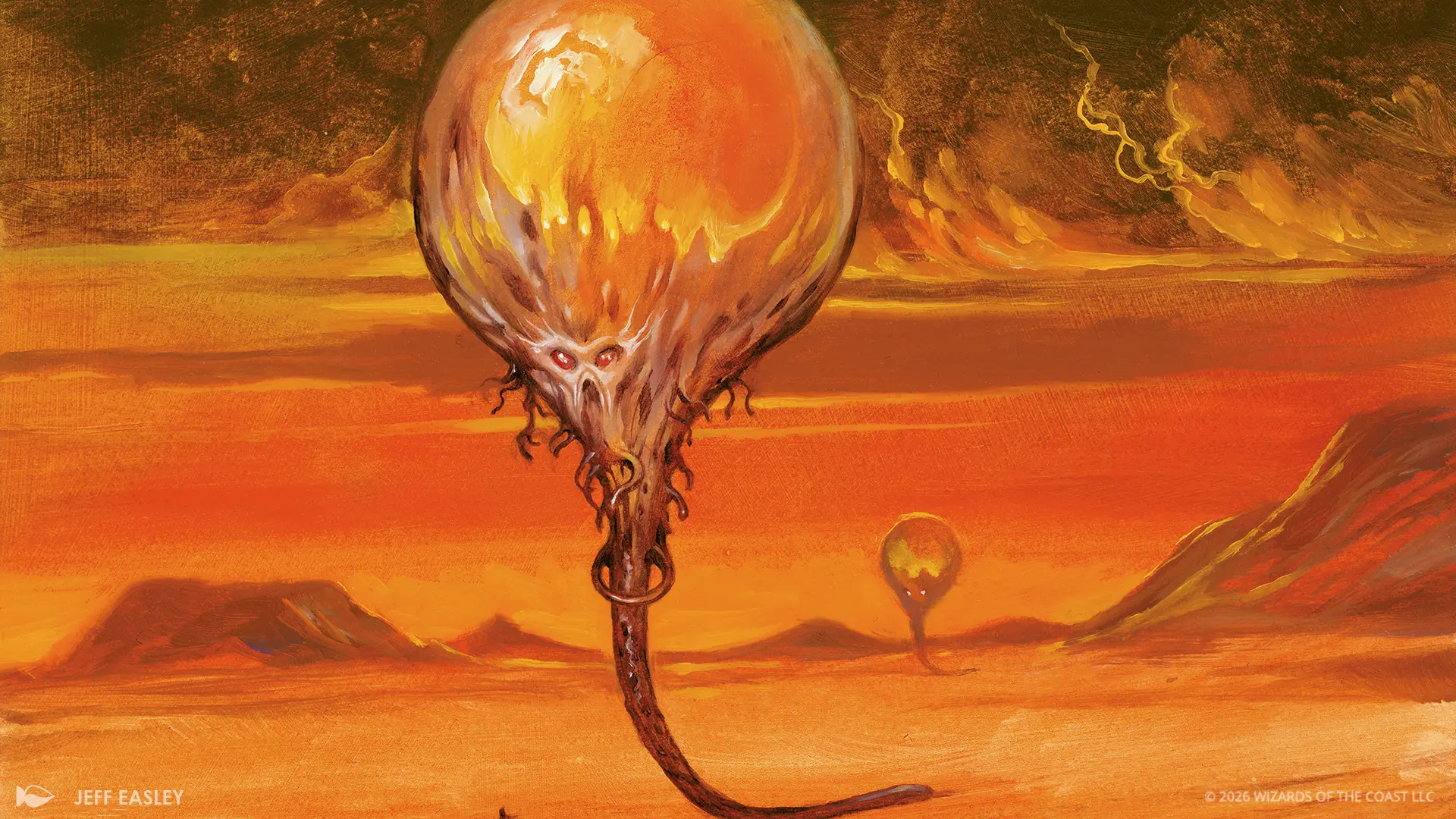
This card had its name changed to
RR3
Preemptive Fork
oRoR
Sorcery
Target opponent reveals their hand. You may choose an instant or sorcery card from it. You may copy the chosen card and play the copy without paying its mana cost.
This became
RR4
Meltdown for Three
o2oRoR
Sorcery
Destroy each artifact with a converted mana cost of 3 or less.
This became
RR5
Eternal Combustion
o3oRoR
Instant
CARDNAME deals 5 damage to target creature or player. Shuffle CARDNAME into your library.
This became
CG1
Basilisk Newt
o1oG
Creature — Basilisk
1/2
Whenever CARDNAME blocks or becomes blocked by a creature, destroy that creature at end of combat.
This became
CG2
Quirion Explorer
o1oG
Creature — Elf
1/1
T: Add to your mana pool one mana of any color that a land an opponent controls could produce.
This was a reprint from Planeshift. It was given a new name and new creative, becoming a Human Druid named
CG3
Roused Howler
o3oG
Creature — Lizard
3/3
G, T: Target creature gets +X/+0 until end of turn, where X is the number of artifacts all opponents control.
This card became
CG4
Sturdy Crusher
o4oGoG
Creature — Beast
5/4
1G: CARDNAME gets -1/+1 until end of turn.
This card became
CG5
Scrye Oxidize
o1oG
Instant
Destroy target artifact.
Scrye 2 (Look at the top two cards of your library. Put the cards back in any order on top and/or on bottom of your library.)
This became
CG6
Fertile Moss
o1oGoG
Enchant Land
Whenever enchanted land is tapped for mana, its controller adds two mana of any combination of colors to their mana pool.
This was designed as a
CG99
Small Modeman
oGoG
Creature — Elf
1/1
Whenever CARDNAME comes into play, put a +1/+1 counter on CARDNAME, or gain 4 life, or add two mana of any combination of colors to your mana pool.
Aaron Forsythe is a huge fan of charms, so he made a vertical cycle in green for creatures that have an enters effect that lets you choose one of three options. There didn't end up being space for it (note that it's a 99), so it didn't make it into the final set.
CG99
Pipe Viper
o1oGoG
Creature — Snake
3/2
CARDNAME is unblockable as long as defending player controls an artifact land.
This card was basically "artifactwalk" (a riff on the landwalk ability from early Magic). Yet another 99 design that didn't make the final set.
UG1
Tan Ouphe Clan
o4oG
Creature — Ouphe
4/3
G, Sacrifice CARDNAME: Counter target activated ability from an artifact source. Destroy that artifact. (Mana abilities can't be countered.)
This became
UG2
Stampeding Buffalo
o3oGoG
Creature — Beast
4/5
Your creatures gain trample.
This became
UG3
Verdant Collector
o4oGoG
Creature — Elf Shaman
2/2
When CARDNAME comes into play, you may return target card in your graveyard to your hand.
This became
UG4
Scrye Growth
o2oG
Instant
Target creature gets +4/+4 until end of turn.
Scrye 2 (Look at the top two cards of your library. Put the cards back in any order on top and/or on bottom of your library.)
This became
UG99
Medium Modeman
o1oGoG
Creature — Wall
2/4
(Walls can't attack.) When CARDNAME comes into play, draw a card, or change CARDNAME's creature type to Beast, or each player sacrifices an artifact.
This was Aaron's uncommon charm creature in his green vertical cycle.
UG99
Happy Hermit
oXoGoG
Creature — Elemental
0/2
When CARDNAME comes into play, put X 0/0 green [NAME] creature tokens into play. All [NAME] get +1/+1.
This was our clever design to make a bunch of 1/1 creature tokens that went away when the creature that created them went away. We would later use this technology on the card
RG1
Candy-Coated Surprise
o5oGoG
Creature — Elemental
6/6
Whenever CARDNAME goes to a graveyard from play, you may search your library for any number of creature cards with a combined converted mana cost of 6 or less and put them into play.
This card didn't make it into Fifth Dawn, but Aaron remembered it and put it into the file for the first design he led, Dissension. It was called
RG2
Tornado Elemental
o4oGoG
Creature — Elemental
5/5
Trample
T: Destroy target artifact creature or creature with flying.
It changed from a
RG3
Fungusaur World
o2oG
Enchantment
Whenever a creature you control is dealt damage, put a +1/+1 counter on it. (The damage is dealt before the counter is put on.)
RG4
All Suns' Dawn
o4oG
Sorcery
Return target white card, target blue card, target black card, target red card, and target green card from your graveyard to your hand. You can choose less than the required number of targets. Remove CARDNAME from the game instead of putting it in a graveyard when it resolves.
The card made it in as is, with the only change being some templating.
RG5
Eternal Monsterball
oXoG
Instant
Put an X/X green Beast token into play. Shuffle CARDNAME into your library.
This became
RG99
Growth Ooze
oGoG
Creature — Ooze
1/1
Whenever a +1/+1 counter is put on a non-Ooze creature, you may put a +1/+1 counter on CARDNAME.
o4oGoG: Put a +1/+1 counter on target creature.
This card was a 99 design because of rules concerns. It was a little too easy to create an infinite loop.
RG99
Large Modeman
o2oGoG
Creature — Giant
3/3
When CARDNAME comes into play, put two +1/+1 counters on CARDNAME; or put two 1/1 green [NAME] creature tokens into play; or CARDNAME deals 4 damage to each creature with flying.
And here's the rare in Aaron's vertical cycle of charm creatures. A note from the record:
Mark R. (4/22/03): 99'ed to save for future set.
Aaron F. (4/24/03): *sniff*
RG99
Mincer
o1oG
Enchantment
If a nontoken artifact comes into play under your control, you may instead remove that artifact from the game and put X 1/1 Myr artifact creature tokens into play, where X is that artifact's converted mana cost.
A Johnny card I designed that sadly didn't make it.
RG99
Nature's Reward
o1oGoG
Enchantment
At the beginning of your upkeep, each player that controls the fewest number of artifacts may draw a card.
We realized that all our rares had the word "creature" on them, so Aaron designed a card in case that was an issue. This 99 design didn't make it.
CA1
Maximize Bear
o2
Artifact Creature
0/0
Maximize — +1/+1 (This comes into play with X +1/+1 counters on it, where X is the number of different colors of mana used to pay its mana cost.)
"Maximize" is the playtest name for the sunburst mechanic. It was designed by Aaron Forsythe (as was scry—as I said, Fifth Dawn was what convinced us Aaron should be on the R&D team). In our handoff, we had five sunburst creatures at common. The printed set had only three. This version didn't make it. A two-mana 2/2 that required two different colors of mana was pretty weak, even back then. You'll note it calls out that what you're maximizing is +1/+1 counters. When we got to templating, we moved this to the reminder text.
CA2
Maximize Golem
o3
Artifact Creature — Golem
0/0
Maximize — +1/+1 (This comes into play with X +1/+1 counters on it, where X is the number of different colors of mana used to pay its mana cost.)
This one made it to print as
CA3
Maximize Soldier
o4
Artifact Creature — Soldier
0/1
Maximize — +1/+1 counters (This comes into play with X +1/+1 counters on it, where X is the number of different colors of mana used to pay its mana cost.)
Remove two +1/+1 counters from CARDNAME: CARDNAME gets +4/+4 until end of turn.
This card became
CA4
Blazin' Pterodactyl
o5
Artifact Creature
0/0
Flying
Maximize — +1/+1 (As this card comes into play, put a +1/+1 counter on it for each color of mana used to pay its mana cost.)
This card became
CA5
Maximize Elephant
o6
Artifact Creature
2/2
Trample
Maximize — +1/+1 (As this card comes into play, put a +1/+1 counter on it for each color of mana used to pay its mana cost.)
Development realized that we didn't need quite so many sunburst creatures that were French vanilla (just had creature keywords with no other text), so they cut them. This was one of the cards that was cut.
CA6
Fly Boy
o4
Artifact Creature
1/3
Flying
T: Target artifact creature gains flying.
Darksteel had a theme of artifact creatures helping other artifact creatures that we were continuing with this design. Development decided to push the aspects that were more novel to Fifth Dawn, and this card was cut.
CA7
Little Bugger
o4
Artifact Creature
1/2
Tap two untapped artifacts you control: Regenerate CARDNAME.
Whenever CARDNAME attacks, it gets +2/+0 until end of turn.
The card ended up being annoying because it played a lot like an indestructible creature, so it was cut.
CA8
Robo-Roach
o1
Artifact Creature — Insect
1/1
At the beginning of your upkeep, return all cards named CARDNAME from all graveyards to play under their owners' control.
This card was printed as
CA9
Hopper
o3
Artifact Creature
2/2
Tap an untapped artifact you control: CARDNAME gains flying until end of turn.
This card was printed as
CA10
Steel Centipede
o3
Artifact Creature — Insect
1/1
CARDNAME is unblockable.
Whenever CARDNAME deals damage to a player, you may remove a counter from target permanent.
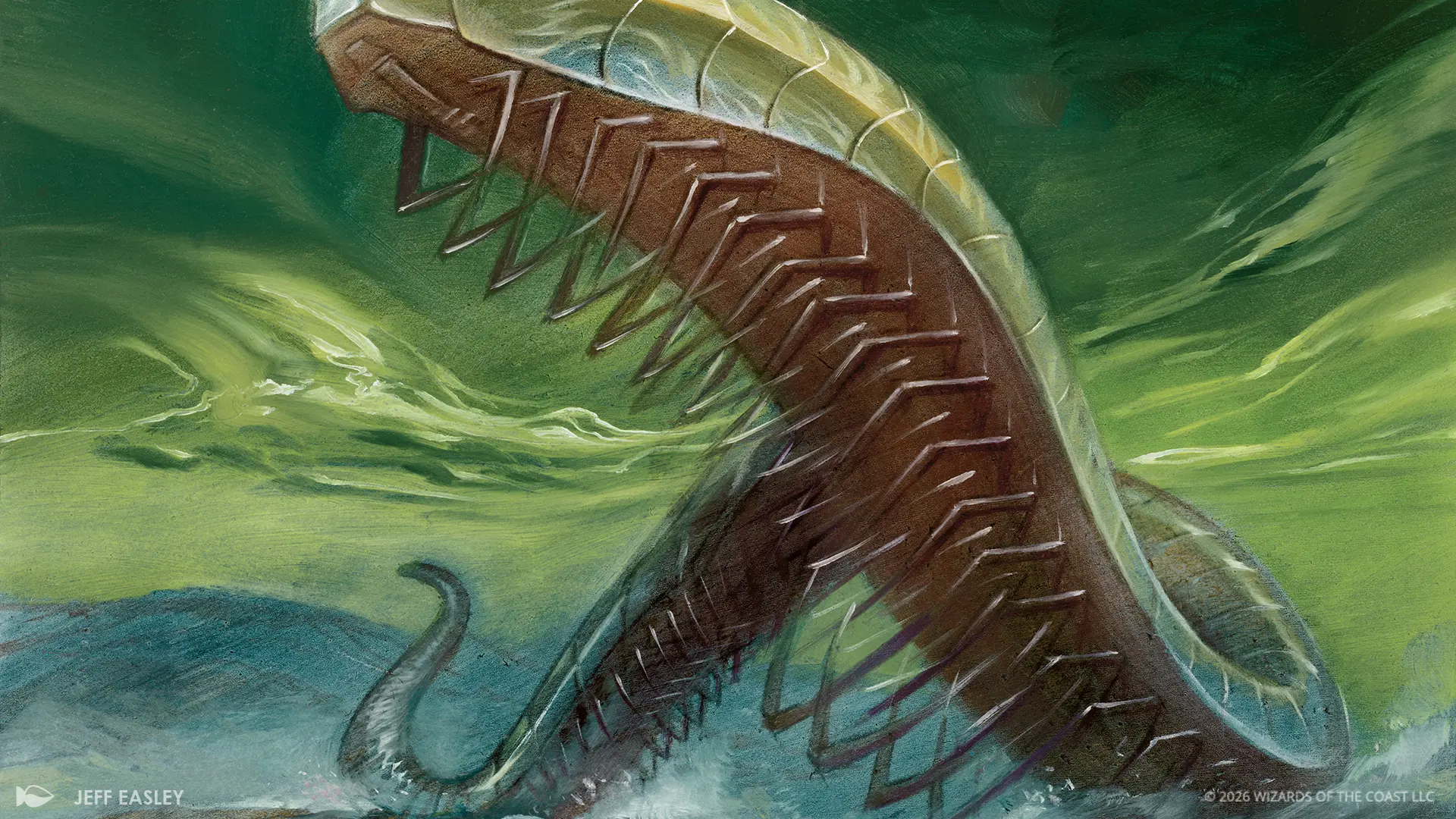
This card was printed as
CA11
Chrome Serpent
o6
Artifact Creature
3/4
Protection from red, protection from green
This card's design was simple. Artifact destruction was mostly in red and green (yes, white did have some). Its protection kept it from dying to most of the artifact-destruction spells. It didn't make it to the final set. In fact, no artifact creatures with protection made it into the set (and
CA12
Glass Golem
o5
Artifact Creature — Golem
6/2
This card didn't make it into Fifth Dawn, but would make it years later, name and all, in Ravnica: City of Guilds. It's common practice when a card you like gets cut to try it again later in a future design. It ended up being printed at uncommon.
CA13
[Bot]
o7
Artifact Creature
4/4
CARDNAME gets +1/+0 for each creature blocking it.
This card was a riff on the flanking mechanic from Mirage, although it only pumped power and didn't care about other creatures with the ability. It didn't make it to print. The highest mana value for a common artifact creature in the final set was mana value 6.
CA14
Crystal Myr
o3
Artifact Creature — Myr
1/2
T: Add one mana of any color to your mana pool.
My best guess is this turned into
Time to Stop
We've come to the end of part two. As always, I'm eager for feedback. If you have thoughts on this article, my "Design Files" series, Fifth Dawn, or any of the cards I talked about, you can email me or give me feedback through social media (Bluesky, Tumblr, Instagram, TikTok, and Twitter).
Join me next week for part three.
Until then, may you smile when you see things you'd long forgotten.