
Secrets of Strixhaven | Winnowing Season

Ripe fields crude-cut and strewn with chaff
Where shadows light her wanting path
She shoulders harvest, looks toward home
Yet I stumble, starving, toward unprov'd road
—Excerpt from Winnowing Season by Embrose Lu
Saffron leaves shadowed low tables cleared of tea sets, and the scent of cardamom and pepper wafted through the Adumbral Gardens. The tea ceremony had been a lovely affair, Killian thought as he readied himself for the duel. Alas.
He'd missed the moment negotiations soured. Likely somewhere between the tea selection and the order in which the ambassadors' cups were poured. Regardless, though the Pinzari Isles shipping tariffs were agreed upon, the ceremony ended on a bitter note, and at the Forum of Amity, there was but one recourse for bitterness.
The delegates withdrew, making way for the duelists. Killian ascended the black marble steps to the outdoor stage with only half a mind on the proceedings; this was foolish, and he found it difficult to take this charade seriously.
The avian inkling bobbing at his shoulder flickered into a chiding gesture. Killian winced. No, Doco was right—not a charade. A ritual.
Everything at the Forum was ritual, and here, ritual was everything. It was the wheel, the road, and the way by which Arcavian peace had been maintained for hundreds of years. Seven hundred years, to be precise. If Killian nursed doubts, more fooled him.
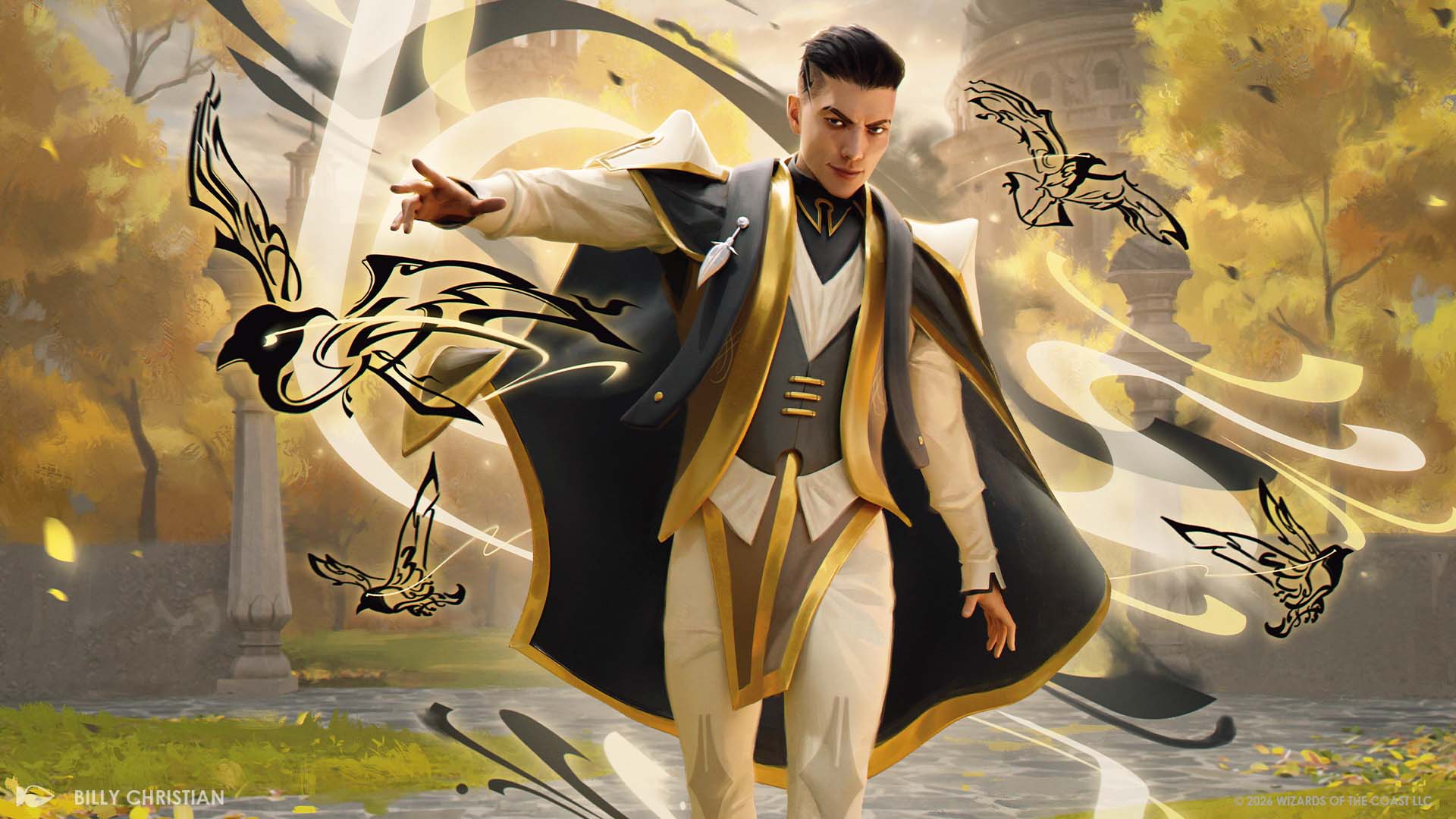
Yet Killian couldn't help noticing the glares the delegates threw each other across the garden glade. Or the queasy look on the Forum page, whom Killian had volunteered to replace. Or the grim seriousness of his leonin opponent, who now ascended the stairs opposite.
Killian balked. There were no leonins in the Pinzari delegation. But who was he to question it? He was also a second. The real question was why. Killian had his own reasons for getting involved; what of his opponent?
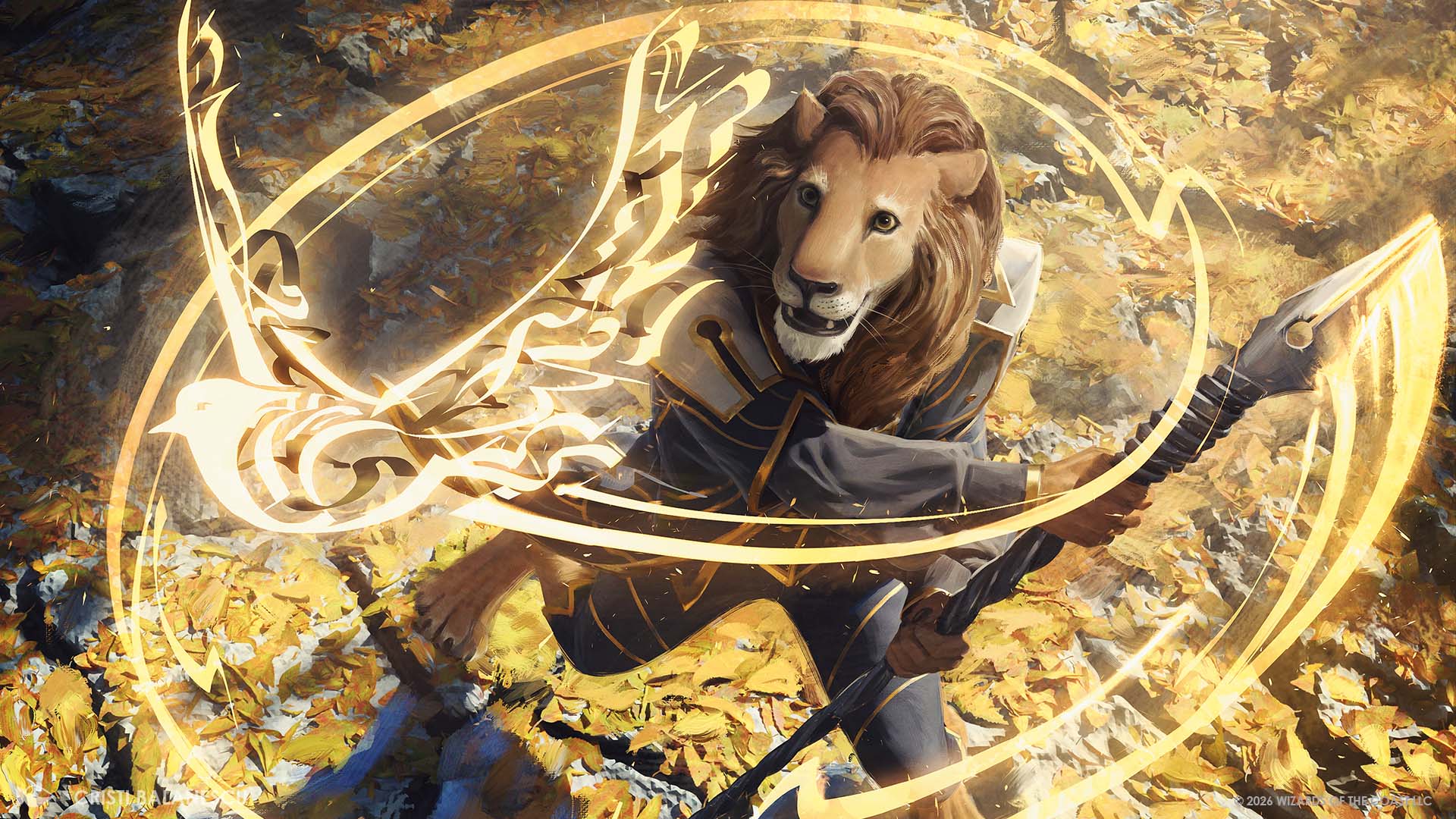
They studied each other as they drew their sigils overhead, part of Forum tradition: the emblems declared the factions they represented (Doradur for Killian; Pinzari for his opponent) and the terms ("satisfaction"—for whatever that was worth).
Killian marked the leonin's youth, his white and emerald Silkmeadow finery, and his impressive poise. His amber eyes tracked Killian with an intensity that gave Killian pause; it seemed familiar.
The time for thoughts had passed. The duelists finished their sigils with methodical flourish. They saluted each other. A bell chimed.
"Now risen sun, cut deep the sky."
The leonin struck first, his words evoking a whip of white light lined with gold and moth wings that lashed toward Killian—just as Killian had hoped.
"You call, I heed. You cry, I cleave."
Killian's ink ensnared the whip and smacked it to the stage, where it shattered like glass.
The leonin grimaced. His next strikes were cunning, but Killian countered every one. He could already see his victory; the leonin was losing patience, and too often flung out his arm, leaving his chest wide open.
But as Killian readied a final riposte, he realized what was familiar about the leonin's hungry amber stare. He knew that look. That desperation, for anything—anything at all—to just, for once, go right.
Killian shut his mouth and braced for impact.
Killian's next foolish thought was that he was, for some reason, on his back, and that he couldn't breathe. His chest hurt terribly. Doco fluttered in a panic over Killian's head alongside the stricken face of his leonin opponent.
"I—you—" The leonin could only offer a hand.
"Just take the win." That was what Killian meant to say. It came out more like a strangled wheeze.
Killian's vision blurred as he was hauled to his feet. His former opponent had sat him on a bench all the way back inside the Forum manor before he even thought to ask for a name.
"Crown," the leonin said gruffly.
"Crownflower," said a teasing voice. That voice came with a cool hand on Killian's forehead. A sweet ribbon of healing power slid through deft fingers into his aching skull. "Does your mother know you're nearly killing people?"
"I didn't think I'd get him!" Crown protested. "He was so fast. I got—frustrated."
"And I was stupid," Killian slurred. "We all make mistakes."
This emerged from his throat with greater clarity. He was likewise finally able to focus on his healer: a blue-skinned orc, her dark hair styled in Kathorran braids. She patted Killian's cheek. "Careful how you flatter Crownflower. It'll go straight to his head."
"Verdis."
"I'm just saving you the embarrassment of thinking you can out-duel a grad student."
"Oh!" Killian pointed clumsily at Crown. "That's where I know you from—you just declared for Silverquill."
Crown looked furtively over his shoulder. "Keep it down."
"Sure, lecture the man you just concussed." Verdis tsked. "If you're that worried someone will see us, leave him with me."
Crown's arms crossed. "No. I have to know." Again, he fixed that hard amber stare on Killian. "I shouldn't have won. Why did you let me win?"
"Is that what happened?" Verdis asked, newly intrigued. "Well? Spill. Why did the most popular second at the Forum decide he'd like to try losing for once?"
Killian tried to shrug, though the movement made his head ache anew. "It's nothing. It's just … the duels are meant to be cathartic, yes? You can't stake terms on them—you certainly can't let any agreement ride on the outcome."
That practice in particular was so strictly forbidden that Shadrix Silverquill himself had composed the injunction.
"So, the point of the duels is to vent feeling—to ease ill will. Except I've been here three months, and win or lose, I've never seen anyone leave 'satisfied.' Either they're bitter they've lost, or worse, they win, and they're even more bitter because they have nothing to show for it."
Dizzy heat rose in Killian's skull, warning him not to dump all this on strangers. But Verdis and Crown regarded him with such interest that he thought, Fine! Whatever! and decided to blame his loose tongue on the concussion.
"I don't think it's that the duels have never worked. The Forum's still here, isn't it? But … it's like something's wrong with us. With Arcavios. Like no one knows how to let things go anymore."
Verdis cackled. Crown let out an echoing "Ha!" Killian frowned; was he being mocked?
He didn't get to ask. A distant flurry of commotion made Crown and Verdis abruptly silent. Something was afoot in the Presiding Chamber, the cavernous gallery at the center of the manor, where great archways brought papers and peoples to the Forum at all hours of the day.
The clamor only grew. Killian's brow creased, and he stood—swayed, waved off Verdis's steadying hand—and strode down the hall. Three years, and he still found himself running toward every unexpected noise. He had to know. Had to be sure it wasn't …
—his breath trapped in his chest; the frantic panting of his friends as they fled; the last glimpse of his father's back before—
Doco landed on Killian's shoulder and nuzzled his cheek. He nodded brief thanks. He was fine. It would be fine.
But his eyes did not once stray from the light at the end of the hall.
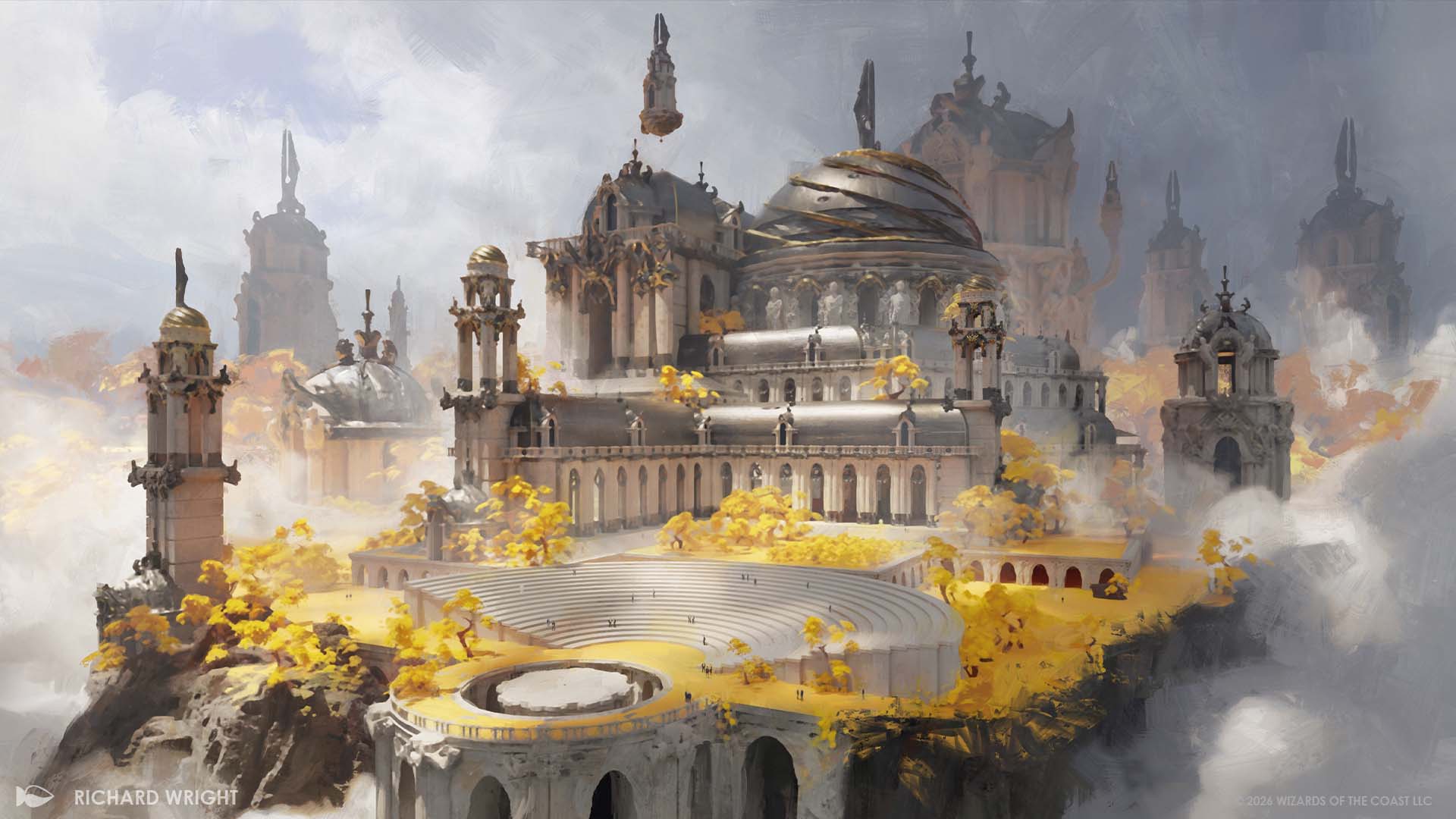
The Presiding Chamber's three stories of white-and-black marble housed four silver archways that shimmered with blue light, portals that led across Arcavios. A dense knot of people crowded the northern portal, through which someone had just emerged.
At the heart of the knot stood two conciliators and their delegations: the imperious leonin who led the Silkmeadow contingent and the scarred orc in charge of the Kathorr counterpart. While the ambassadors each wore the conservative greens, blacks, and silvers of conciliator dress and held themselves with stiff cordiality, their delegations flaunted the silks and linens for which each region was respectively known, and they faced each other with open venom.
Killian stilled at the sight of the confrontation and was not alone. The usual furor of the Presiding Chamber hushed as eye after eye fixed on the knot.
(A whisper: "Weren't they told to avoid each other until the mediator got here?")
("As if they've listened to a single thing anyone else has said!")
To be fair, said mediator had just arrived. He stood at the center of the knot, though he was staring not at the ambassadors who'd come to meet him but straight ahead—at Killian.
Dark hair, dark clothes, dark mien. Here stood Silverquill's own shadow dean, Embrose Lu. Killian's stomach reflexively dropped. He straightened to greet his father. But though his father's brow furrowed, his gaze slid over Killian's shoulder.
Killian followed that gaze, drawn with it like a current. He turned to find an empty corridor. No sign of Crown or Verdis.
By the time he turned back to the Presiding Chamber, his father was sweeping away, the warring delegations on his heels. Killian was left with the strangest feeling—that his father looked nervous.
Ridiculous. His father never looked less than a storm in human form. Even so, Killian's hand settled on the fold of his jacket where he had hidden a pamphlet of poetry.
My feet find purchase, soles wear thin,
Thundering heart and rabbit-whim,
No burrow ahead, no hart at bay,
No well, no wine, no bed, no ache.
In the days to follow, everything Killian read about the conflict spoke of blood and water.
On the eastern edge of Tor-Kathorr, where the desert ceded to golden Silkmeadow grass, there rose the hill called Mornhollow under which lay a spring called All-Gleam. It was an oasis, a home, a refuge. Pure, still, despite the Phyrexian poison that had sickened the land for hundreds of miles in every surrounding direction. It would take a century and more for those lands to heal, even under the care of dedicated magecraft, and those were only the troubles of the last three years.
To wit, there had been a war. That this war had ended over seven hundred years ago didn't seem to matter; it was recounted endlessly to this day, in legends of the lives lost on the hill above and songs of the blood staining the water below.
Said Crown, when Killian pestered him for help locating an anthology of Silkmeadow work songs in the Forum Archive: "It's about origin. Birth. Most accurately, our silkworms were bred from multiple strains across the plains, but the All-Gleam varietal is recognizable to this day—it's in the wave pattern of the cocoons." And more quietly, chin raised, unwilling to be looked in the eye, "My favorite lullaby is about returning."
Said Verdis, when Killian found her on a balcony overlooking the Adumbral Gardens—he wanted her opinion on translations of a particular Kathorran epic: "It's about destiny. Hope. That's how my clan came to be, you know. We were three, once, from the north, the south, and west, and we were all starving. Mornhollow was the end of the drought-walk, and we were so few by the end that we were ready to be one." She made a face, burdened by her own seriousness. "Did Crown tell you he likes the lullabies? Well I like the drinking songs."
Killian's fingers paused over a translator's note. The ink on the page swelled under his touch, Doco encouraging his curiosity. "How do you and Crown know each other?"
Their history had been written all over their first encounter, both in how quickly Crown turned to Verdis for help and in the ready rhythm of their banter. As to why Killian hadn't seen them so much as glance each other's way since that day—he understood. It wasn't as if Killian could easily consort with people his father hated.
And hate each other the Silkmeadow and Tor-Kathorr delegations did. Killian had by now also read every complaint they'd lodged against one another in the three years since the Phyrexian Invasion. The charges ran the gamut from diversion of water resources to outright banditry—even retaliatory violence. The reported incidents had thus far been individual, at least on paper. The delegations' overt enmity made it difficult to buy that either side was willing to admit wrongdoing.
The question was where, in the midst of this historic breakdown between the territories, Crown and Verdis had even met. From what Killian had seen, Verdis had the clever mind and arcane skill to earn a place at Strixhaven, but he was certain she couldn't have been there any time in the last six years. He would have noticed her; she had too large a personality to miss. In fact, she was only quiet around—well, her family.
Said family included her grandmother, the Kathorran conciliator who was at this very moment attending a public debate on the evolving needs of border security in the garden two stories below their balcony. Verdis was skillfully pretending not to watch.
Instead, she hemmed and hawed over Killian's question, rolling her shoulders as she sagged against the marble balustrade. Killian raised a brow, unmoved. Verdis let out the most dramatic of sighs. "We were tutored together, when we were kids."
"Where?"
"Here, there. I fostered with his kin for a season. He was supposed to come to my clan a couple years ago."
"But then?"
"What do you think?" Verdis shrugged amply at the debate, where a lumimancer wove her words into the shimmering silhouette of a strange machine of supple arm and cruel teeth. Killian's breath hardened in his chest. Verdis took his stony expression as proof that she was understood and shrugged again. "Sometimes the world you want isn't the world you have."
Killian wasn't the only one newly preoccupied.
Gossip in the Page's Common had it that the Silkmeadow and Kathorran delegations had already snarled and snapped their way through two weeks and four rituals, and that the Forum's permanent staff had sent for Dean Lu in a desperate bid for someone to bring them in line.
(Said a pair of students who didn't realize Killian was eavesdropping:
"Isn't the dean a poet?"
"A poet who's really, really good at yelling at people—come on, it'll be fun.")
Gossip among the Forum's staff and Archive caretakers was more focused on the ritual. The Naming Tithe had not been invoked for half a century, because it was long and arduous, and therefore unpopular—but properly executed, it had never failed to yield a breakthrough.
(Said a pair of bickering archivists who didn't care who heard them:
"Oh, yes, because if you force someone to do something time-consuming and boring, they'll be in the most diplomatic mood."
"Exactly. They'll be so desperate to be done that they'll agree to basically anything.")
Embrose Lu did not gossip, and when Killian mentioned the affair over dinner in the grand dining hall, the night before the Naming Tithe was to begin, all he said was: "How is this related to your work study? Don't trouble yourself. I heard you lost a duel."
Killian frowned at his roast vegetables. "I did."
"Ah." Embrose frowned at his vegetables as well. "Don't let that distract you from your studies either."
Killian wondered whether he should clarify that he had more accurately "not won," and that he had done so mostly on purpose. But the conversation that would follow struck him as more difficult than worthwhile. If anything, Killian was annoyed that his father was attempting to what, soothe him?
Killian speared a potato that he made no attempt to eat. "I'm not distracted. I'm—concerned."
The way he saw it, no one would admit to what everyone feared: that the Forum of Amity was staring down the possibility of its first failure in seven hundred years.
"Shouldn't someone have demanded a duel by now? I know it doesn't always help—" Killian stopped short. As if he hadn't been muttering about the uselessness of the duels only a few days before.
But all Embrose said was, again, "Don't trouble yourself."
Too late. Killian had found he shared a disease with the rest of the Forum: He, too, had no idea how to relinquish his troubles. The difference between Killian and the delegations was that while his troubles were his problem, any trouble between Silkmeadow and Tor-Kathorr would inevitably become everyone's.
It was like they couldn't dare surrender their anger.
The thought made Killian swallow a sigh. So, before the main course had been cleared away, he offered peace. "I picked up your new publication."
Embrose looked for a moment like he wanted to pretend he could no longer understand language. "Oh."
Killian did an excellent job of not touching the pocket where he kept the pamphlet of poetry. He realized belatedly that he had never before discussed his father's work with the man himself. Killian had in fact been afraid to read it, pathetic as it was to admit. He didn't know what had possessed him to say anything. But Winnowing Season was his father's first publication in three years. It felt … relevant?
Not relevant enough to risk more silence.
Killian said quickly, "I should tell you about the thesis I'm working on."
"You should."
Even then, Killian cleaved to small talk, words as pacifying as they were pointless. A kind of ritual in themselves, he mused, the sort everyone hoped tomorrow would bring. Yet all through the meal, the weight of words unspoken did not lift, and Killian began to fear they never would.
Where once she, froth'd in bridal lace,
Drew near my kiss in keen embrace,
Now fog seeps in down to my bone,
And makes of me reluctant groom.
The hall assigned to the Naming Tithe was long and narrow, focused. The delegations sat at either end, the mediator in the center, and the water-filled silver basin before him, which was large enough for a body to curl up inside.
Tiered benches craned away from the floor. They were full. Observers leaned forward despite themselves. The unwise hoped for a spectacle; the rest couldn't bear the anticipation.
Killian placed himself in the middle row of the east benches, directly behind where Embrose stood. The middle, because he didn't want anyone thinking he'd taken a side. Behind his father, because it felt a courtesy to not stare him in the face.
The first two delegation representatives approached from their respective ends of the hall. Youngest first, as was written in the Archive ritual records. Crown, swathed in the silken robes of his people. Verdis, resplendent in the braids and linens of hers.
They took their positions opposite each other. It was, as far as Killian knew, the first time they'd let themselves look each other in the eye since the day he met them. He thought their composure admirable. He dared to hope.
Embrose said to the water, and so to them both: "By what name do we know you?" As he did, he raised hands to his right, then left, to indicate order.
"Crownflower Majen, born of Silkmeadow, rooted by Mornhollow harvests—"
And in alternating concert, in harmony:
"Verdis Fa-Ulla, born of Tor-Kathorr, rooted by Mornhollow feasts—"
The introductions were a laborious litany of descent, relation, and community, but Crown and Verdis both spoke with practiced focus. With each word, Embrose's hands rose and twisted as if lifting water from a pool. Shadow limned in light flew from their mouths and was siphoned into the basin, where the water darkened on the surface, but glowed from within.
Said Embrose: "And by what name will you know your fellow?"
At his direction, Crown and Verdis each dipped their hands into the basin, then raised them to each other, the imbued water glistening in their palms.
Said Crown: "I see Verdis, Sweet Wind, who leads the frail to sanctuary."
Said Verdis: "I see Crownflower, Swift Thought, who shelters all who fall in his shadow."
They lifted water to their lips and drank. Killian heard a lone sigh of relief. The delegations did not look relieved. The conciliators' eyes were dark, their mouths heavy.
The ritual progressed regardless. Each member of the delegations came forward to declare themselves to one another and grant their opposite a title and obligation. But as the hours drew on, the introductions grew brittle, and the shadow and light Embrose conjured from the delegates grew muddier and less defined.
One pair called each other names Killian didn't recognize, but one of the Forum archivists shifted uncomfortably, so what else needed to be said? The next was worse, and obviously so. The air in the hall thickened. Embrose's shoulders tensed under its weight.
Finally, the conciliators came to speak their names, and the shadow and light drawn from their mouths was so jagged, it should have cut their lips.
Their words never met the water. Embrose's hands snapped shut, and the inky pall of his conjuration consumed the light. The hall went dark. All anyone could see was the two conciliators, still illuminated in the utter black. All anyone could hear was Embrose's voice, soft and cutting:
"Enough."
Killian's chest constricted. He knew that tone in his bones.
"I've asked you how you see each other," said Embrose from the gloom. "But let me ask you instead: How do you see yourselves? Brave? Righteous?"
If the conciliators tried to speak, their words were drowned in the dark.
"I see infants. I see bullies. Pitiable, selfish children squabbling over a toy neither can bear to see the other touch. It is my job to tell you so, and so to tell you: no more. You cannot have all you desire. Neither of you can be more precious. You must live in this scarred world, as we all must, and you must live beside each other."
The words were wise; the venom was unmistakable.
The light returned abruptly. The hall was devastatingly quiet. Killian could not relax.
Embrose alone continued to move. He raised his hands to each conciliator.
They spoke their names again, and he drew shadow from their mouths, as ever lined with light. The serrated edges had smoothed away. But something of the sigils Embrose poured into the basin struck Killian as a touch too specific, too perfect—feigned.
Killian didn't actually hear the titles the conciliators gave each other. He forced himself to look away from them to Crown, then Verdis. Each looked as still and blank as he felt. And when he looked to his father …
Embrose stood tall and forbiddingly silent. Yet Killian couldn't help but think of his father, haggard and staggering to his feet in the rubble of Strixhaven, surrounded by the bodies of colleagues he had been forced to kill.
As he had then, Killian thought he should be relieved. He wasn't.
The ritual closed, but the air did not lighten. The delegations clustered on their respective ends of the hall, quiet; the crowd filtered away, wishing they felt hopeful. Killian descended to the floor alone. He thought he ought to say something to his father, though he had no idea what.
Of course Embrose noticed. When Killian neared, his father exhaled at the emptied silver basin. "I told you not to trouble yourself." His frown tightened. "I won't be troubling myself either. Not any longer. It's time for the conciliators to prove themselves worthy of their peoples' trust."
Even a year ago, Killian might have heard that as a rebuke. Instead, he wasn't angry, per se. Nor frustrated, really. A little frustrated, perhaps. Did Embrose really think the issue resolved?
Killian opened his mouth to ask as much, but a pang of shame brought him short. Instead, he nodded to his father, said he hoped they would have a chance to speak before his departure, and took his leave.
What, after all, did Killian think he was going to do about any of this? Was he so arrogant as to imagine he, a stranger, could heal an age-old wound with a helping hand and a kind word?
No. But neither could he bear to leave it alone.
As he stepped into the corridor outside the hall and saw two familiar backs retreating down it, he realized he wasn't the only one.
As crocus bloomed from unkind snow,
Requires frost to cut the road,
I cup my hands, drink iron dew,
And abide here, ever, guard anew.
The sun had just set. The remaining light cast long shadows through the silver branches and yellow leaves of the manor grounds. Killian followed his quarry at a careful distance, hastening when they slipped out of sight.
Doco hovered nervously at his shoulder, unsure whether to urge him back or onward. They were sneaking, yes—but for a good reason. Maybe. He hoped.
Killian's guilt slowed his step when he heard his quarry speak. They had come to a stop somewhere ahead. He held his breath to better hear them.
"It needs to be binding."
"Only so much we can do on that front."
"Verdis—"
"I know. Sorry."
The sincerity of her apology took Killian by surprise. It evidently got Crown, too; he spoke so softly that Killian had to stop moving, if he didn't want his footsteps to be heard.
"Me, too," said Crown.
"Aw."
"Stop."
Playfully: "En garde."
Killian found a shadowy corner from where he could watch. Crown and Verdis had climbed onto the stage where Killian first met Crown. This time, it was Crown and Verdis who stood opposite each other. Crown and Verdis who meant to duel. They were already drawing their duelist sigils in the air above their heads. Black shot through with white for Crown. White streaked with black for Verdis.
Binding, was it?
Killian stepped out of the shadows and into the glade surrounding the stage. "The terms?"
Crown and Verdis froze, but where Crown looked stricken, Verdis's jaw set defensively.
Killian raised his hands, though Doco flew past his shoulder to inspect their sigils.
"I'm not here to stop you." Killian had seen how well that worked for his father. "I'm here to bear witness. And if I want to do that well, and to bring what happens to those you represent, I ought to understand what I'm looking at."
Crown and Verdis exchanged a guarded look.
"You said it when we met," said Verdis. "The duels aren't working anymore. No one knows how to let things go."
"And you saw how they are," said Crown. "My mother. Verdis's grandmother. They're—proud."
"They're afraid."
"They can't … move forward."
"So." Verdis shrugged. "We're going to have to make them."
As they spoke, Doco's shifting silhouette communicated the details of the duelist sigils to Killian. They composed the expected agreement, each duelist bound to their delegation. The terms, though, were not the usual "satisfaction." Instead, Doco read the emblems for "rights" and "water" and "all."
Killian paled. He had realized with sudden horrible clarity why Forum duels were strictly reserved for catharsis—why Shadrix Silverquill had forbidden their use as a decider of outcomes.
Because if all you had to do to save your people was to kill one other person … For some, the temptation would be too great. All it took to break the world was a few people willing to pay a terrible price.
His horror must have shown. The duelists on stage tensed.
"We know what we're doing," said Crown.
"We agreed," said Verdis.
Killian hastily raised his hands higher—but stopped as he remembered his father making the same gesture no more than an hour ago. He lowered them. "I know. And like I said, I'm not going to stop you. I'm here to bear witness."
But neither was he going to stand by and watch one of them kill the other. He just wasn't going to convince anyone to his side with sharp and stinging words.
Killian said cautiously: "Would you allow me to draw my own marks? To make it official."
Crown and Verdis exchanged another look. Something of how they'd come to know Killian in the last week—or merely the fact that he asked—made Verdis nod, which drew a nod from Crown in turn.
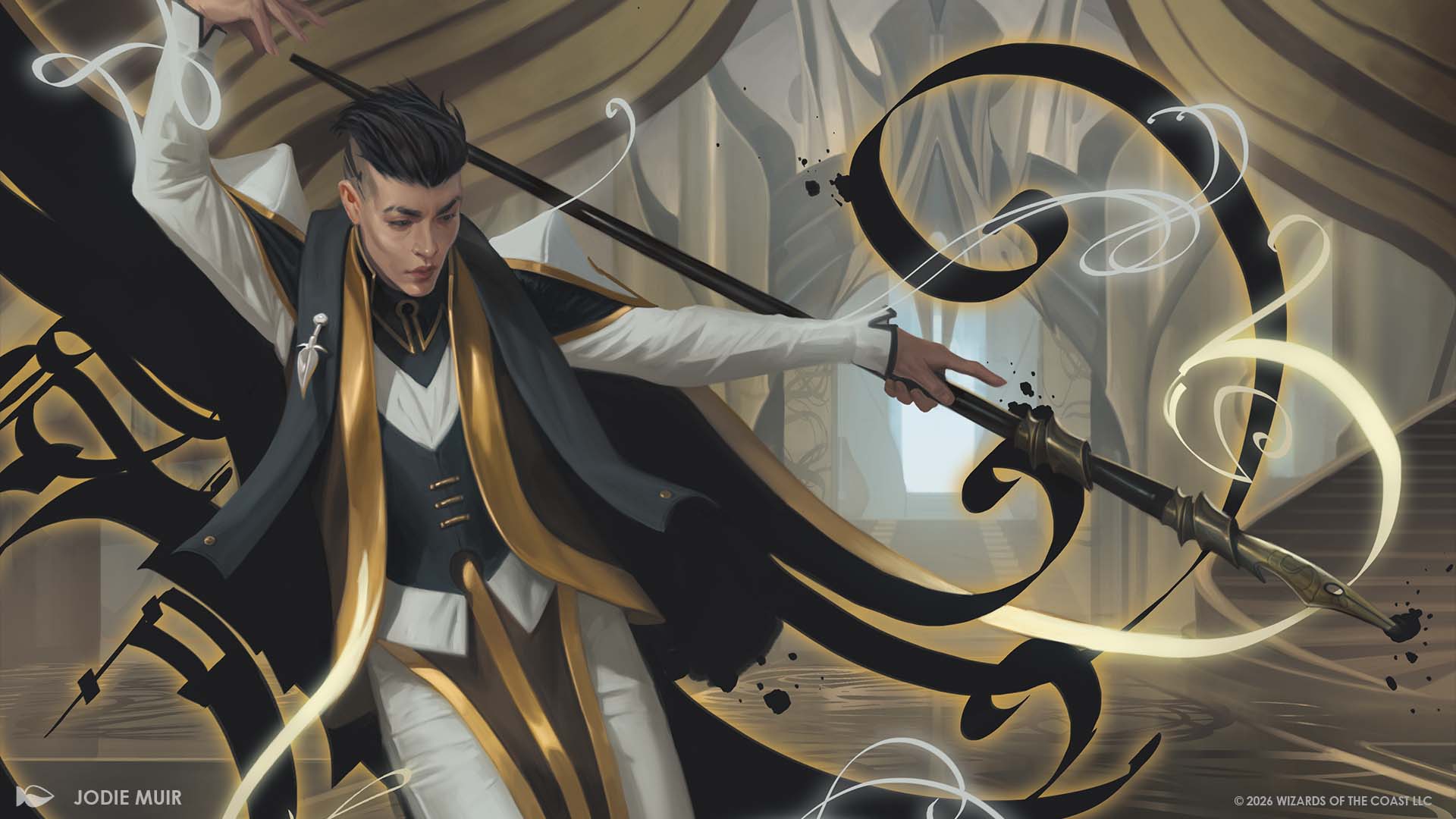
Killian took a slow, deep breath. "I bear witness … in the shelter of a shadow, borne by sweet wind."
As he spoke, he wove his own sigil into the air, his hands deft but gentle. The light and shadow he coaxed came from the sigils the duelists had already drawn, until they were linked in the center, bridged by black and gold. The emblems he layered onto his sigil were not negations, nor modifiers, but expansions: "Together," he wrote, and "shared," and "communion."
On one end of the stage, Crown's face softened. On the other, Verdis's warmed. Their eyes met again, lit by nervous hope.
"On my mark," said Killian.
With a final flourish and twist of wrist, he ignited all three sigils. The emblems burst into a flurry of small, quick shadow birds that flitted between large, slow moths of white and gold. Crown and Verdis inhaled deeply and raised their hands, ready at last to strike.
The morning sun found two people standing on opposite ends of the Dragon's Podium, the great circular stretch of stone where Shadrix held court when at the Forum. Its occupants today were quite a bit smaller: a black-maned leonin and a red-skinned orc, each wearing the colors of their respective delegations. The conciliators from Silkmeadow and Kathorr looked on from the sides as each duelist drew their sigil.
Killian wasn't paying as much attention as he would have liked. He sat on the stairs that led to the Forum manor, writing furiously as a shadow descended upon him. He looked up to find himself facing that good old storm in human clothing.
"Explain," said Embrose.
"Oh." Killian looked past his father to see the duelists salute Crown, who had taken the job of witness, and who had just finished drawing his own sigil in the center. "Good, they're about to start."
At Crown's gesture, the witness sigil burst apart in a flourish of desert and meadow flowers. The duelists drank in the light and were on each other in a whirl—a clash that was as much a show of speed and force as grace and skill. A clash that was defined less by victory than a celebration of the fact that they were fighting at all—that they had agreed to meet on terms forged in the name of resolution.
"I know what they're doing," said Embrose in tones that meant, I am not without eyes, thank you. "I am asking you to explain the lack of formal precedent and procedure here, at the Forum of Amity—the beating heart of precedent and procedure."
Killian balked and began to stand, offering the papers he'd been writing so furiously upon. "No, you're right. I should've pulled you in—or one of the archivists, maybe. But once the first duel came together, I thought it'd be better to let Crown and Verdis keep the ball rolling while I took care of the formalities. Here. I'm drafting it as an optional addendum to the Naming Tithe."
But before Killian was all the way up, his father had taken the papers and sat on the stairs beside him. Though Embrose's brow furrowed, something of the storm dissipated.
The draft in his hands described the ritual unfolding before them as an iteration on the traditional duels—one that moved past competitive catharsis and into something more like competitive communion.
"Why not propose it as a separate ritual unto itself?" Embrose asked.
"In part because it's so rooted in the interplay of the naming process—but also because it's easier to get an addendum approved than an entirely new ritual."
"You really are turning into a bureaucrat."
"Someone has to have the patience for it."
Embrose paused, and Killian tensed, thinking: Oops. When his father snorted, Killian allowed himself a wry smile.
"What I don't know," Killian said with a bit more caution, "is if you'll appreciate where I got the idea. 'I cup my hands, drink iron dew, and abide here, ever, guard anew.' It made me think of how if something isn't working right, we'd better start building something new."
Embrose was silent again, his gaze lifting from the proposal to the amphitheater. One duelist had swept the feet out from under their opponent—only to run over and help that opponent to their feet. They were each enlivened, knocking shoulders, but Verdis was already clearing them away to make room for the conciliators, who wanted their own turn in the ring.
"What I don't know," said Embrose, "is if I've ever properly expressed what I appreciate about you." He was silent again. "I …" Again. "You …"
Killian tried not to read into the silence. Embrose was a man of quick tongue and deep thought who found it difficult to articulate his truest feelings; but who didn't struggle with that? That was practically the whole point of the ritual being built before them.
In fact.
Killian stood and offered a hand to his father. "How about this—let's show them how it's done."
Embrose considered the offer before he took it—not because he needed the leverage, but because it allowed him to clasp Killian's hand in a firm grip. "Yes," he said. "I think I'd like to see myself."