
Secrets of Strixhaven | Down to the Lake, Alone

They couldn't be that excited to find the dying bird by the path. True, it wasn't a species Dina had ever seen before—eight feet long, legs thick as a man's, shaggy-feathered with a predator's beak. It looked almost like a person in a costume. There was something in the gray plumage that looked cheap, and that was oddly moving. So, it was unusual enough, she supposed. And these were Witherbloom students: comfortable, the saying went, in Death's house. If Witherbloom students were cold in Death's house, they put on a sweater. If they were hungry, they found the pantry. But still, there was something obviously feigned in Morphia and Lorenin's manic clucking over the corpse, and as for Basil—ah, Basil—he wasn't even trying.
"Sampling the blood now," said Morphia, a doctor's clipped cadences already coming easily to her. Like many vampires, Morphia was an actor, and she applied the same careful study to her future profession as she did to the starring roles she played in college theatricals. Lifting her bioluminescent veil, she applied a dainty, businesslike bite to the creature's neck; it convulsed, and she added in an altered voice, "Poisonwater. Meanttokillrats. Oh, no. The egg—the shell—too thin—"
"What about the muscles?" asked Lorenin, sliding on a translucent glove. "Enough of the thoughts, what were the wings doing?"
"A glider," said Morphia, "meant to float a long time without effort. Working too hard. Tired—by the time it ended. Tired for a long time."
From the corner of her eye, Dina watched Basil fold up a little then take a step back. He doesn't want to watch it die. Resting a hand on his arm for a moment, she murmured, "It's going home now. Let it go."
It was the wrong thing to say. Everything was the wrong thing to say to the young elf, in his plain unspecialized first-year's uniform, although he should have long since assumed another. But she had to say something.
Lorenin had a scalpel out now, was opening the bird's chest cavity to look at the organs. Morphia was writing in her notebook, the two of them calling out names, colors, weights, to record the data—already doctor and mortician, life and death, as polished as two symbolic statues bracketing a row of books. Honestly, she couldn't figure out the nature of Lorenin and Morphia's whole thing. Was this what people saw when they looked at her and Killian? Two people who were never quite together and never quite apart but who were obviously a set in ways that nobody else got? If so, she understood the bond well enough; she just hoped it didn't look quite this insufferable from the outside.
Basil said, "Can you two hurry up? Honestly, this isn't what we're here to do—we need to get to the lake by nightfall."
Morphia glanced back at him, a faint distaste in her eyes. All of them knew damned well that the delay was for his benefit. Morphia didn't want to wait. She didn't want to be here at all. She'd only come along because this journey would be hard on her friend, and because Dina had insisted.
But people get tired of being protected, and Dina knew that well. Hadn't she protected Basil all year after the death of his partner, Mertyn, had sent him spiraling downward? Hadn't she told off the people who criticized him for his refusal to choose a path, and for his long grief? It wasn't appropriate for a Witherbloom student, was what they all said—he needed to understand that grief was part of life, that by refusing to let Mertyn fully die in his heart, he was preventing him from entering the cycle, decay, rebirth, and on and on. She'd shielded him all this time and been rewarded only with resentful silences at office hours.
"We'll see Mertyn soon enough," said Lorenin. He was softer-spoken than Morphia, and with his scratched hexagonal glasses, he had a more delicate air. "I want to at least take a couple more samples."
"We'll never see Mertyn again," said Basil. "Damn you. What we're going to see is—something else."
"You know it's not that simple."
Basil shrugged at this. "It is to me."
"Look," said Morphia. "We'll see him. We'll learn what he has to teach us, then we'll move on. That's what life is, man. It's learning and moving on."
"And that's the hardest thing about death," said Dina, sensing that Basil was softening a little, that he appreciated his friends' bluntness. "Knowing that you're going to see them again. As a mage, there are two ways this happens, right? In your memory, when you close your eyes. And in reality, when you open them again. As a mage, you get used to seeing the dead, but as a person, you never do. I get that."
Basil's face drained of all feeling. He shouldered his bag and set off on the path ahead. Morphia and Lorenin hastily capped their sample bottles, protesting halfheartedly—although even the half-heartedness felt like it was for his benefit. Dina threw her own knapsack across her back, heard two bottles of iced tea collide inside, a parody of a toast.
Why was she suddenly so bad at this? She'd always prided herself on being a supportive teacher and mentor—even as a student, even when the other person was a pain in the ass. What was it about becoming an instructor, an authority figure, a grad student with students of her own, that was stopping her words like a cork?
But all of this was necessary. She knew that. Necessary to bring the students out there, because they were grieving, and the beast that was their quarry thirsted for grief. Necessary to catch it, because it was dangerous, and would remain dangerous until it was understood. But none of them liked it, of course. They resented being used as bait. Dina resented it, too, and she wondered if it made her a good teacher or a bad one.
"Remember," said Dina, as Morphia threw open the door to the little shelter, "you'll probably see Mertyn's revenant for the first time tonight. And when you do …"
She made an inviting, ironic gesture, hoping for a chorus of weary replies, but they just looked at her, so she finished her own sentence. "Don't go with him to the lake, alone."
"Whatever," said Lorenin. "This place smells like mildewed ass."
"It smells like an ass that's returning to the land," corrected Dina patiently.
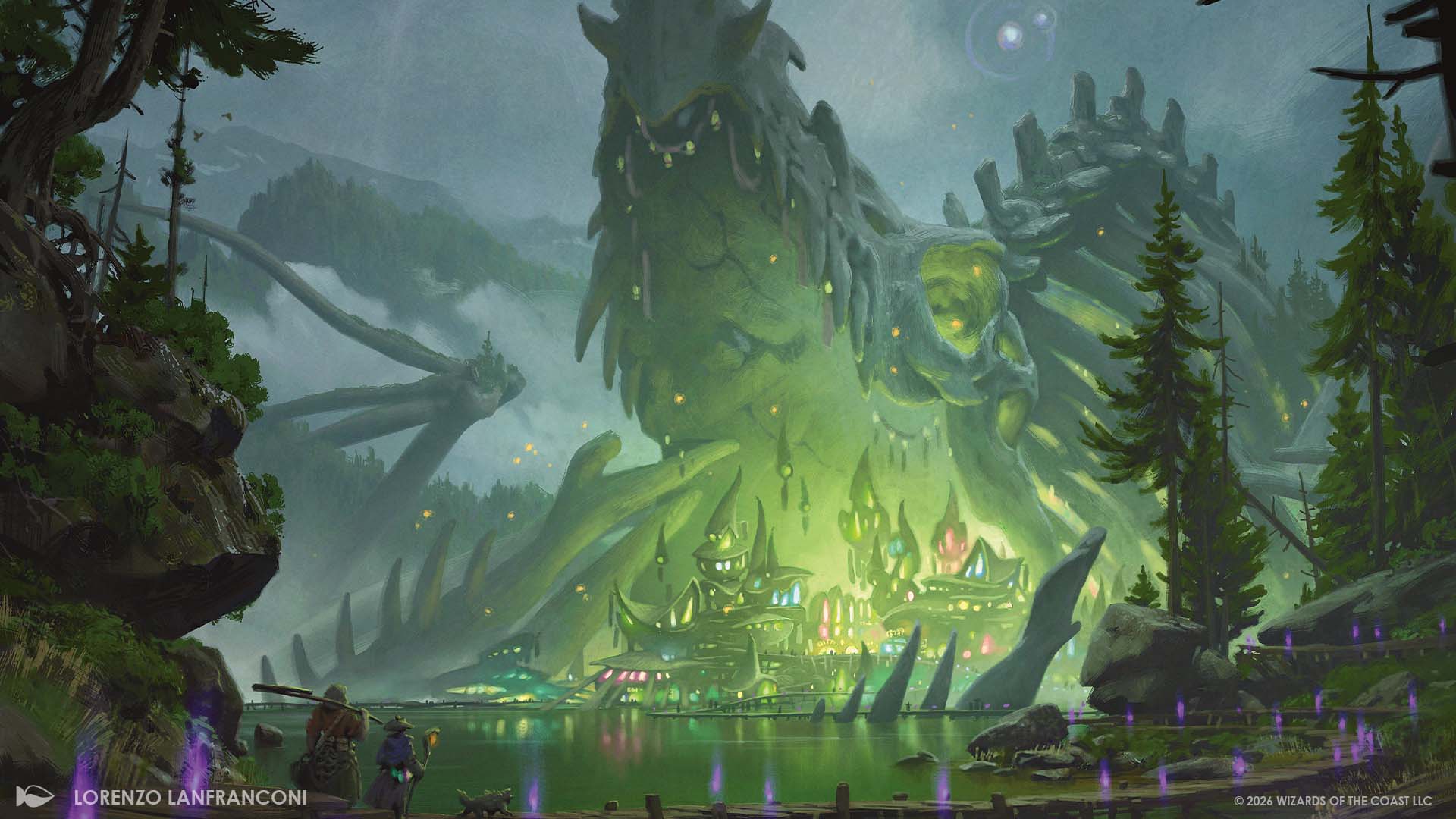
The smell was, indeed, pretty rough. The misty forest outside of Titan's Grave had a way of erasing human structures, draping their roofs with fallen branches and sketching them over with moss. Although the shelter was built as a mobile lab, and just a few years ago, it already had an air of profound disuse. It was one thing for a tree to die and submerge back into the ecosystem. It was another thing for a building to die. Buildings, with their mortared stone and varnished wood, were harder for nature to digest, and sometimes it choked on them.
Still, the place wasn't as bad as she'd feared. The thin futon mattresses were sealed tight in the cedar closet, the bunk beds were sturdy, and the tiny kitchen was fully stocked with pots, utensils, and even two or three unlikely spices that would never combine into anything good. She lit a fire and put on the kettle, watching through the window as Morphia uneasily opened the door to the outhouse and just as uneasily closed it again.
The suns set early at this time of year, and by the time dinner was over, it already felt like midnight. "And nobody wants to tell scary stories?" asked Lorenin, tapping at his lip with a blunted scalpel, a nervous habit he'd had since his first year. Dina had had to take the edge off it for him with an aging spell after a near disaster involving a flying book.
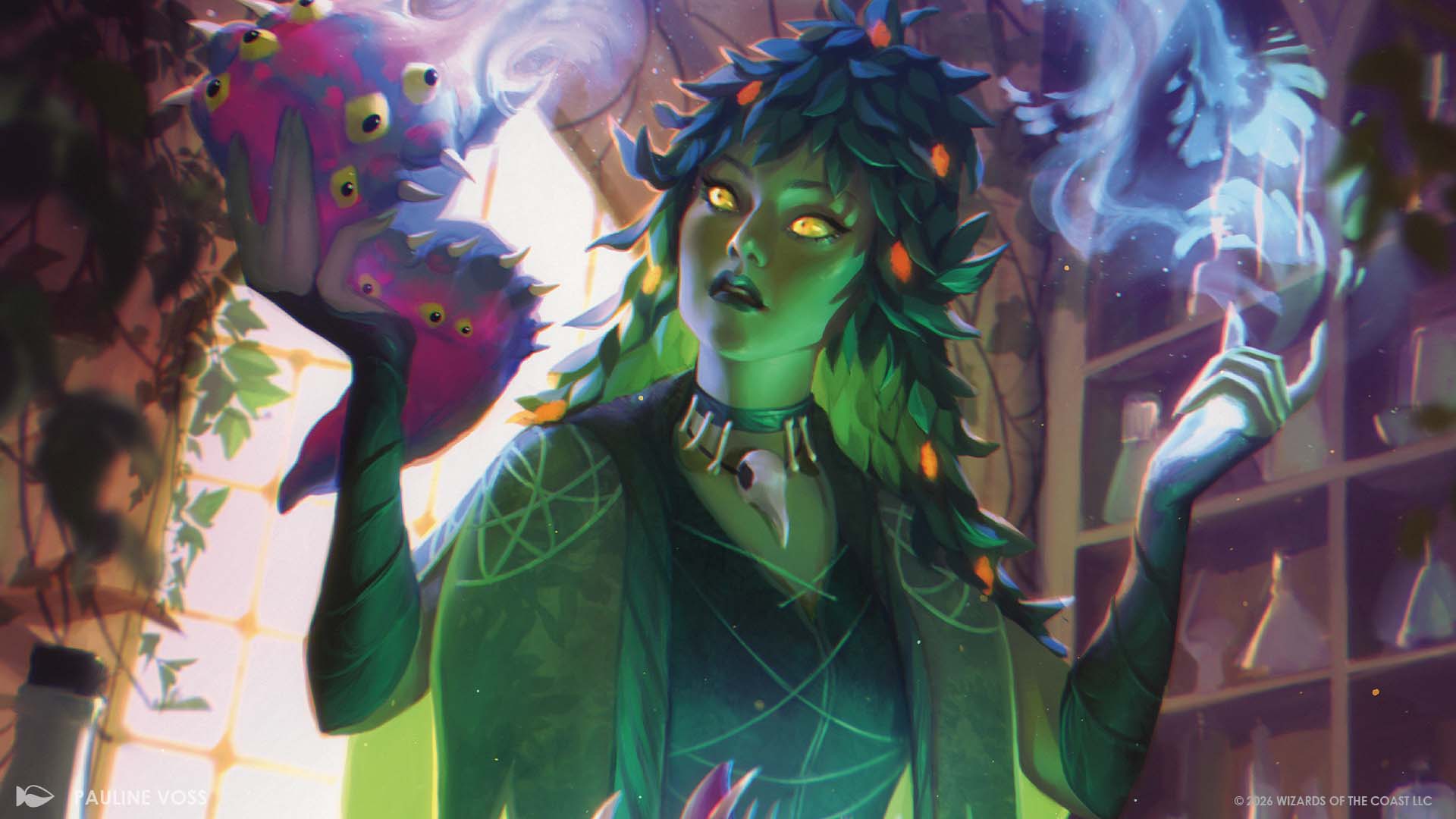
"No," said Basil, "I mean, come on. What's a scary story to a mortician? What do you guys have to be afraid of?"
"Oh, I have a really good one. The corpse with the wide smile. See, when a person is poisoned with—"
The knock came, as they'd all expected it to. Basil's hand clutched Morphia's arm, his knuckles pale; she fastened her hand around his wrist, tense as a tight knot. Lorenin got up and went to the door, his hands in the pockets of the light dressing gown he'd managed to fit into his knapsack. He looked tense, too, but his face was resolute. Undoing the latch, he pulled it open, and light flooded in from Mertyn's face.
He stood there just as he had on his last morning, when he'd come to Dina's office hours to banter with her. His first-year uniform—the same one he wore tonight; the same one Basil still wore—was somehow draped more fashionably than everyone else's. He'd had no idea of his coming death, of course, no idea that anything in the potions lab could actually kill him. That would be an anticlimax, after all. Mertyn had been a young elf who'd been convinced that if death came for him, it would at least be in an interesting way.
"How are you, old thing?" he said to Lorenin. The two of them had always affected an absurd, aristocratic way of speaking together—Mertyn had an in-joke with everybody. At the phrase, Lorenin darted his eyes down and clutched his scalpel more tightly.
"It's you who's an old thing now, I'm afraid."
"Don't be ridiculous—I'm a young thing. A very bright young thing. And who's here with you?" Mertyn stepped aside to look at the rest of the group; his eyes met Basil's, and a faint tremor of deep sadness came over his face, as if Basil were the ghost and not Mertyn. Basil looked away.
"I'm not coming to the lake with you, if that's what you're going to ask," said Lorenin.
"But however did you know? Listen, Lore—" Mertyn's voice dropped its posh affect. "Listen, seriously, it's amazing down there. Have you seen this lake? Miles of saltwater. So briny you could float forever."
"I've seen it."
"Have you swum in it?"
"Of course not. I just got here."
"There are fish in that lake with wise women's faces, who have but to kiss a corpse's forehead to preserve it forever. There are no secrets from them, in terms of laying out the dead."
"Is that right? And tell me, exactly where does the face join to the body? And how does the hair work? Do they have ears?"
"You have to come to the lake to find out, old top."
"No," said Lorenin. "No, thanks. Try the others, but it won't work on me. I miss you like hell, though. If this were you, I'd throw my arms around you. Every day at lunch I think of a new thing that I wish I'd said to you."
"It's me," said Mertyn, "but with a fun new hobby. It's going down to the lake—"
"Good night," said Lorenin, and closed the door.
His frail shoulders rose and fell with a long, deep breath before he turned around and came back to the group. Dina said, "Good job."
"It didn't feel like a job."
"What did it feel like?"
"Couldn't tell you. Look, are we done here? He'll try Morphia tomorrow night, I expect. Then Basil. Then we can get the sample and go home. And I really want to go home, so let's get to bed and get the night over with."
"Don't call it a sample," said Basil. "It's the Devotion."
"I don't trust any spirit that takes a capital letter," said Lorenin. "And that includes the name it profaned tonight. Good night, Morphia, Basil. Good night, Doctor."
"Not a doctor yet," said Dina and Morphia, in near unison, but nobody laughed.
The next day, Dina kept the students busy on the path around the lake, collecting ingredients and pests and looking for more interesting corpses. When they went back for the giant bird, they found that it had rapidly melted down to a husk of skin with a few sadly waving feathers. Whether this was a function of biology, magic, or a mysterious predator—or whether the three were separable—was hotly debated, but only by Morphia and Lorenin, still trying to fill the time like two college debaters on a filibustering tear.
Basil, as always, repelled everything. He was like some of that shiny mirrorblack paint that every new Witherbloom discovered in the student center store and independently decided was the only dorm decor that could express their innermost self. Quite frankly, Dina would have found him a bit of a drip by now, if it weren't for his frankness, that simple, honest quality that kept endearing him to her. Dina probably loved honesty too much for her own good.
That night, they ate a mishmash of dinner—big herb salads gathered in the shelter's overgrown kitchen garden; a little jerky for Basil and Lorenin; a discreetly punctured bag of blood for Morphia. She'd sprinkled in some of the unlikely spices from the cupboard and pronounced the combination good, the kind of stupid joke that always did it for Basil, and he did crack up a little, his fingers laid flat in front of his mouth.
Then came Mertyn's knock, and it was her turn.
"Morphia," said Mertyn. He was deliberately not looking at Basil this time but focusing on the vampire's kind, round violet eyes, the eyes that always played so poorly on the tragic stage. For all Morphia's brassy contralto, for all her smoke-and-velvet dress sense and incisive mind, she was born to be the actor who played the best friend, the doctor with the good bedside manner. Dina felt like she was watching Morphia realize this in real time, just from the way Mertyn said her name.
"I'm not going down to the lake with you," she said, more softly than Dina had ever heard her speak before. "You know that, right?"
"I'm not going to try to convince you. This is just a courtesy call."
"Why not? You used to try to convince me of all sorts of things, before you met Basil."
"Try was the operative word," said Mertyn. "But you were always the one who knew me best."
"If you think that's true, you're definitely not the real Mertyn."
"I'm as real as you want me to be. No, I mean it. You knew me best. Basil loved me best. There's a difference."
"All right, then. What did I know about you?"
"You knew how afraid I was, not of anything actually scary, but of not being taken seriously, or admired. You knew that my body embarrassed me, not for any good or even bad reason, but because any body would have. And you knew"—his head tilted a little—"you knew how much I cared for you all. I wouldn't have admitted to that, not openly."
"You know," said Morphia tiredly, "I did know that. But only because most people feel that way."
"I wish I could have lived to see you as a doctor."
"Are you saying the things you would have said? Or the things I wish you'd say?"
"Tear me in half," he said, "so you can have a control group."
"Mertyn, I'm going to close the door now, so say your piece. Say it fast."
"No," he said, and took her into his arms. Dina could see her body stiffen, then relax—much as a corpse would have. They held each other tightly, then Mertyn whispered something into her ear, passionately, the consonants loud, and she shook her head and threw him off and slammed the door, tears in her eyes.
"What did he say?" asked Basil, hungry for the words as a knife is for blood.
"Nothing." Morphia dabbed at her eyes with her veil, which left glowing dust at their corners. Once they were dry, her face composed itself. "Oh, he said what he had to say."
"Which was?" asked Lorenin, rolling his scalpel between finger and thumb.
Morphia shrugged. "Come to me to the lake, alone. There is a tree spirit there with perpetually bleeding palms whose blood is said to come from a taproot deep in the earth, whispering stories of a lost land. I wasn't interested."
"He's limited in what he can do," said Dina.
"Well, we all are," said Lorenin.
"He can scare you. He can manipulate you. He can make you laugh."
"I mean, sometimes it felt like that was his whole range before," said Morphia. "I loved him so much, though. There was always a sense of something underneath, something he hadn't grown up enough yet to show you. That's what he's missing—here."
"Exactly," said Dina. "Look, can I—how about a cup of tea before bed?"
"Tea keeps me awake."
"Just an herbal tisane. A little bit spicy and a little bit sweet. I can make it calming or not, but either way, it'll be better than blood with hot pepper in it."
"All right, then," said Morphia, "sure."
The next morning, Basil was gone. Dina found him by the shore of the lake, reading a book—really reading it, she saw; his eyes were scanning busily. The sunlight brushed its two hands over the surface of the water, and the world tilted on its axis much as it always had.
"Can I join you?"
"All right," said Basil, "but I don't want to talk about him. I won't go with him. Do you really care about capturing the Devotion? Or did you just want to teach us something?"
"Why does it have to be one or the other?"
"Well, why do you want to capture it?"
"To know. And to protect people from it—although it has a right to live, too, doesn't it? The world needs wildness. But it's killed before."
"Hence why the place is abandoned."
"Yes."
"It's hard to imagine killing happening here," he said, and indicated with his eyes the raw glittering rock on the lake shore, the dew-wet trees, the hiss of the wind in the foliage. "But students at school ought to be safe. School ought to be safe. It's never been, but I guess you can't learn unless you feel like you can lie down your head at night."
"I don't want your cohort to feel like mine did. We sure weren't safe; we went through hell. But it also gave us something that's hard to convey in words. You form a community by defending it."
"Do you think we're weak? For being so broken up by losing Mertyn, when you probably lost countless friends in the invasion?"
Dina hesitated, and she saw him notice it. She'd only wanted to pause, to choose her words, but she knew she would lose him if she let him linger on that moment, so she hurried on. "No, I don't. When my grove was taken by the Brittleblight—the plague of lethargy and despair—I didn't think my people were weak, either. Those were just their circumstances, and they had to use all their strength just to meet their circumstances. Sometimes it was too much, and their strength wasn't enough, but that doesn't mean it wasn't great—just that it was exhausted in the end. Grief eats you up no matter what."
"And what's the end of it?" he asked.
"It doesn't end. It just declines."
"I don't want it to decline."
"You don't have a choice."
"I guess I appreciate you just telling me."
"I don't have a choice in that, either."
He closed his book. "Let's go inside for breakfast."
That night, no one made a pretense of chatting at dinner. Lorenin sat with a book, Morphia knitted a complicated bit of iridescent lace, and Dina pretended to grade essays while Basil pretended to write one. When the knock came, Lorenin pointedly turned a page, and Morphia laid her needles aside. Basil hauled himself to his feet like a skeleton being animated and went to answer it.
Mertyn stood in the doorway, skin bright and hair down; he looked like he'd just emerged from a lake of expensive lotion. He's dressed for a date, Dina thought, although he wore the same uniform as yesterday—it was the expectant air, the sense that he might take out the red flower tucked behind his ear and offer it to Basil.
She looked at Basil and saw at once that she was in trouble. His slight hunch, his anxious air, the resentment his face could barely contain—they were all gone. He looked confident, mature, in control. It came to her that she really understood very little about this couple, what their dynamic had been. Then Mertyn held out a hand gloved in thin leather, and Basil took it, and without one word about the lake, the two of them were gone.
Dina fled out into the humid darkness, but although the lake was some distance from the house, Basil and Mertyn were nowhere in sight. With Morphia and Lorenin behind her, she pelted along the rocky path toward the line of moonlight that trailed along the lake's surface. When she cleared the trees and the lake came into full view, she found the two elves standing in knee-deep water, facing each other, their fingers intertwined, their faces rapt. So involved were they with each other that they didn't see the gathering glow beneath the water's surface until a jet of bright water shot up, descended in droplets that matched the glow of the stars, and left behind a vast watery form, a vaguely human shape with a mossy skull buried in its head.
Basil gave a shout and pulled Mertyn by the hand, trying to get him out of the water, but Mertyn was frozen in terror. Lorenin shouted, "Mertyn, get out of there," but Dina's voice overrode his: "He's just the lure, Lorenin! He doesn't know anything. Save your friend."
This was the agonizing part: not helping when she could help. Willowdusk had advised her to hang back, when she'd gone to seek the oldest dryad's advice. "They're more competent than you give them credit for, Dina," she'd said. "And they'll benefit from fighting for themselves. Have to learn it sometime. You can step in if they need it."
Willowdusk was the faculty member Dina most wanted to be, and she'd been right, of course, but they all looked so small out there, younger by far than Dina had been five years ago. The Devotion was an expert at using water as a weapon. Look left, and Morphia was frozen in ice up to her ankles; look right, and there was Lorenin, yelping and drawing back, his hands burned by vapor. Basil had stumbled fully onto the shore, and Mertyn—Mertyn was gone. There was no need for him anymore.
With trembling fingers, Morphia undid the top button of her blouse and withdrew a talisman on a beaten copper chain. It was a fragment of root, set like a gem in metal, but obviously not beautiful enough to wear openly—that was Morphia all over, but Dina wouldn't need to chastise her after this. The ice was climbing higher, coming to her knees, then her hips; the talisman snagged on a button—but then it was out, and she was commanding her magic with confidence, melting the ice and sloughing off the water so quickly that a cloud of steam rose around her skirts. Raw sunlight, pulled through a bloom and secreted underground, plucked, cleaned, and held by a mage coming into her power: there it was.
The Devotion raised ten-foot-high waves against them, catching and hissing on Morphia's heat, knocking Lorenin back each time as he tried to forge forward, wringing his burned hands as the lake's salty water stung them. His glasses were covered in droplets and steam. Morphia flung herself through the water that weighed down her heavy gown, diving below the surface and coming up next to Lorenin with her veil clinging to her face. She plunged her hand into the pocket of his acid-green robe, withdrew something that glittered with the empty white of stars, and gripped his hand tightly so that they were both clutching it. Their eyes met, and the water was calming around them even before they released their fingers. Dina recognized the fragments of stone that fell and the glittering oil that stilled the waters; it was an ordinary bit of volcanic rock, but powerful stuff in the right hands.
The Devotion, which had been watching all this with an air of boredom, reached down and took one mage in each watery hand, lifting them from the water. Lorenin struggled, Morphia was all adrenaline calm, but they both rose high and helpless above the water. Dina readied a spell, something to lance through the Devotion's head and pluck out its guiding skull. It was too late; she'd have to intervene.
And then she saw a ray of green light, shooting so fast from Basil's hands that she didn't even register it hurtling past her shoulder, just saw it appear as a solid bar. He needed no magical focus, no tools. It was a display of raw talent that Dina hadn't seen in any other student of his level.
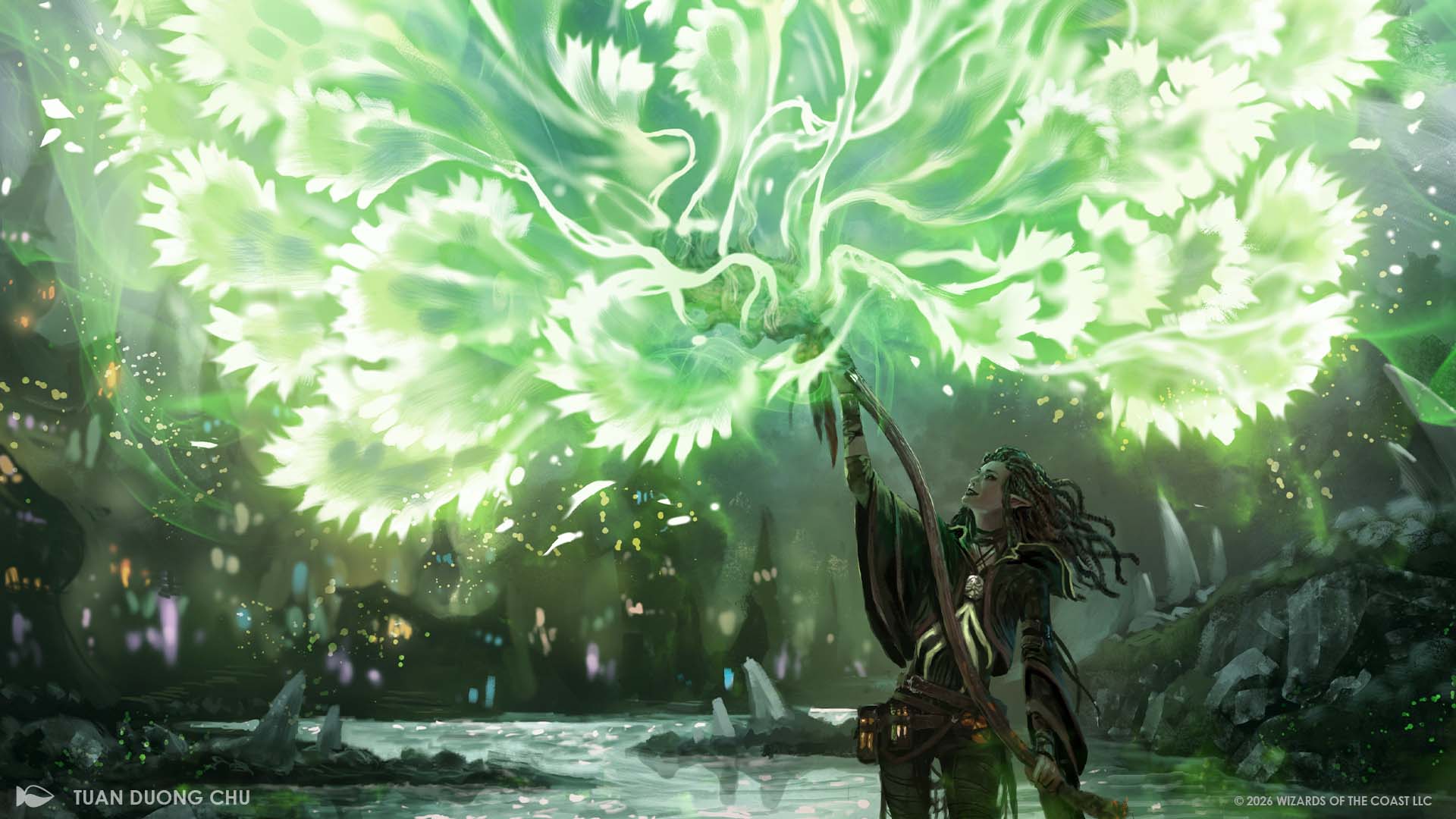
For an instant, the ray held the skull, which almost appeared to dissolve in its brightness, then the skull was falling in slow motion through the Devotion's watery body, which was itself receding into the water, taking Morphia and Lorenin with it. Then the lake was silent, its waters black, and the only disturbance was the two young people picking their way to shore.
The skull sat grinning in a glass vessel, surrounded by murky lake water, presiding over the little kitchen as Dina laid out her supplies for making tea. The students sat at the table in their pajamas, Morphia's hair wrapped in a towel and Lorenin's wet and spiky, as she took out her travel-sized mortar and pestle and began grinding spices. One of the things she'd learned from Willowdusk, whose thousands of years of life had taught her that most magic is unnecessary, was that the tea got more powerful when people saw you make it. In honesty, this batch wasn't even imbued with magic. The magic came from the slow thunk and twist of the mortar, the rising aroma of hot mallenthis and pauper's stars.
"I'm not here to teach you a lesson," she began, "I'm just here to help you learn one."
"Did we pass?" asked Lorenin.
"I'm not grading you. Basil—"
"No," said Basil, as fierce as he'd been by the lakeside. "No, not another Witherbloom lecture about this. We confront the people we've lost every day. Death is a part of life. I couldn't understand it better at this point."
"Morphia's learning to stave it off. Lorenin's learning to comfort the ones it leaves behind. Now, what are you going to do with death?"
He stared at her, his face pale and proud, but for the first time, she knew she had his attention.
"Let me tell you a story," she said. "You know about the Brittleblight?"
"Vaguely. Congratulations, and I'm sorry."
The words hurt; she let the movement of the pestle count off the seconds, walking her through the pain. Then she spoke calmly. "You know it destroyed my home—that it was a plague of despair. And that I was responsible for curing it, when I was still an undergraduate like you. Not because I'm a genius, although I am good, but because I devoted myself to it. Because I had no other choice. The thing is, I had to grieve my home the way it used to be, and I had to grieve the people I'd lost, and then—then I had to grieve the friendships I could have had in other groves, with people who hadn't been through what I'd been through. All of these things became ingrained in the wood of me. They are the thin rings in the tree of life, the ones that speak of plague summers and dry winters. But I'm still standing, aren't I? And I still love Witherbloom, even though I think sometimes its ideas are—trite. Sugar-coated. We repeat these lines about death and life, we make them our aesthetic, we make them beautiful. But for all that, we've never lost our ideals. We never lose touch with the real stuff, which is learning to live with it. Morphia and Lorenin, you did Witherbloom proud tonight—and Basil, I know you're still uncommitted, but you've been studying with us for a year, and I know we'd be proud to have you. Are the three of you going to stand and grow with us? Are you going to build a web that sustains each other?"
"Does 'each other' include you?" said Morphia softly. "Because if so, I'm there."
"It does include me," said Dina, and felt her own face almost crumple. It had never occurred to her that these things could move in two directions.
"I'm there, too," said Lorenin. "Damn it."
Basil was silent, and Dina let him think, spooning the tea into the pot, heating it to just short of boiling, timing out the minutes for it to steep. They were long minutes, but suddenly the three of them had very little need to speak. Lorenin put his long hand over Morphia's wrist, and she touched his knuckles lightly.
Basil took a sip of his tea and finally said, "Does the Devotion really have anything to teach us—I mean, if we take it back?"
"I think it has a good deal to teach us. It's grieving, too, but we don't know what."
The elf said nothing, but drained the cup.
The next morning, Dina awoke to find Lorenin and Morphia halfway out the door and Basil gone. Without even speaking, she hurried after them down to the lake. Basil stood there in ankle-deep water, the Devotion's mossy skull held in his hands.
"After all that," began Morphia, then trailed off.
Willowdusk had told her once, "You're going to lose students—lose the pith of them, I mean, the heart. You'll know when it happens. Remember, it's not because they're rejecting your teaching. It means they've learned all they can from you. Try to take it with good grace. You can't guide a person somewhere they don't want to go."
She'd thought, then, that she knew what Willowdusk meant. But looking at Basil's face, its expression as opaque as the skull's, she realized that she hadn't. This, then, was her lesson. It was the thing that hurt. She felt her shoulders tighten, then slump, and she asked, "What do you need that I haven't given you?"
Basil shook his head. "You've given me a lot."
"Then why?"
"I just don't want to be a mage anymore," he said, and gently placed the skull into the water. As the three of them watched, he waded back to the shore, the water shining on his boots, and nodded to them once before walking back—alone—toward Titan's Grave.