
Planeswalker's Guide to Secrets of Strixhaven


Welcome, students of Magic, to your first lesson on Secrets of Strixhaven! The greatest academic institution in the known Multiverse is proud to open its doors to a new crop of students. But admission into Strixhaven doesn't come lightly. As we prepare for the start of classes (have you completed the preliminary reading?), our finest scholars have prepared a guide to the campus, characters, and coursework you'll find in this set.
Your first assignment will be published on March 23, 2026: the first episode of Secrets of Strixhaven's story! The six-episode main story will take us right up to the set's debut on March 31, where we'll be unveiling some of the true secrets of this set. During preview season, you can look forward to furthering your Magic Story education with five side stories, one for each of the five colleges.
Your next academic year has begun, and it's time to dive into your syllabus for Secrets of Strixhaven. The set releases on April 24, 2026, and is available for preorder now from your local game store, TCGplayer, Amazon, and elsewhere Magic is sold.
 YOUR LOCAL STORE
 TCGPLAYER ↗
 AMAZON ↗
We are delighted to welcome the next incoming class to Strixhaven University as you embark upon your academic adventure and follow in the footsteps of many mages before you. This is not a journey you will take alone; your professors, mentors, and fellow students will be beside you every step of the way. At Strixhaven University, we are committed to excellence; our graduates will make Arcavios and the Multiverse a better place.
The rest of your welcome packet contains important information about the university; consider it your first suggested reading. Peruse introductions to the various colleges—one of which you will choose to join in your second year—explore extracurricular offerings, and perhaps uncover a few secrets.
—Professor Mavinda and the Welcoming Committee
Strixhaven University
Founded over 700 years ago by five spellcasting dragons, Strixhaven University is Arcavios's premier institution of magical learning, drawing promising young mages from all across the Multiverse to study in its halls.
Strixhaven is divided into five colleges, each with their own campus, faculty, and academic fields of study. Each college focuses on the clash between two opposing colors of mana, exploring the questions and challenges that arise from these dichotomies.
To delve even deeper into Strixhaven University and its five colleges, review the following supplemental reading: Planeswalker's Guide to Strixhaven.
Though a long-standing academic institution, Strixhaven strives to be on the cutting edge of magical research. The forms of each school's magic have been known to shift and adapt as new spells and techniques are discovered and refined. These changes can also be seen outside the spheres of magic, from new student uniforms to extracurricular activities.
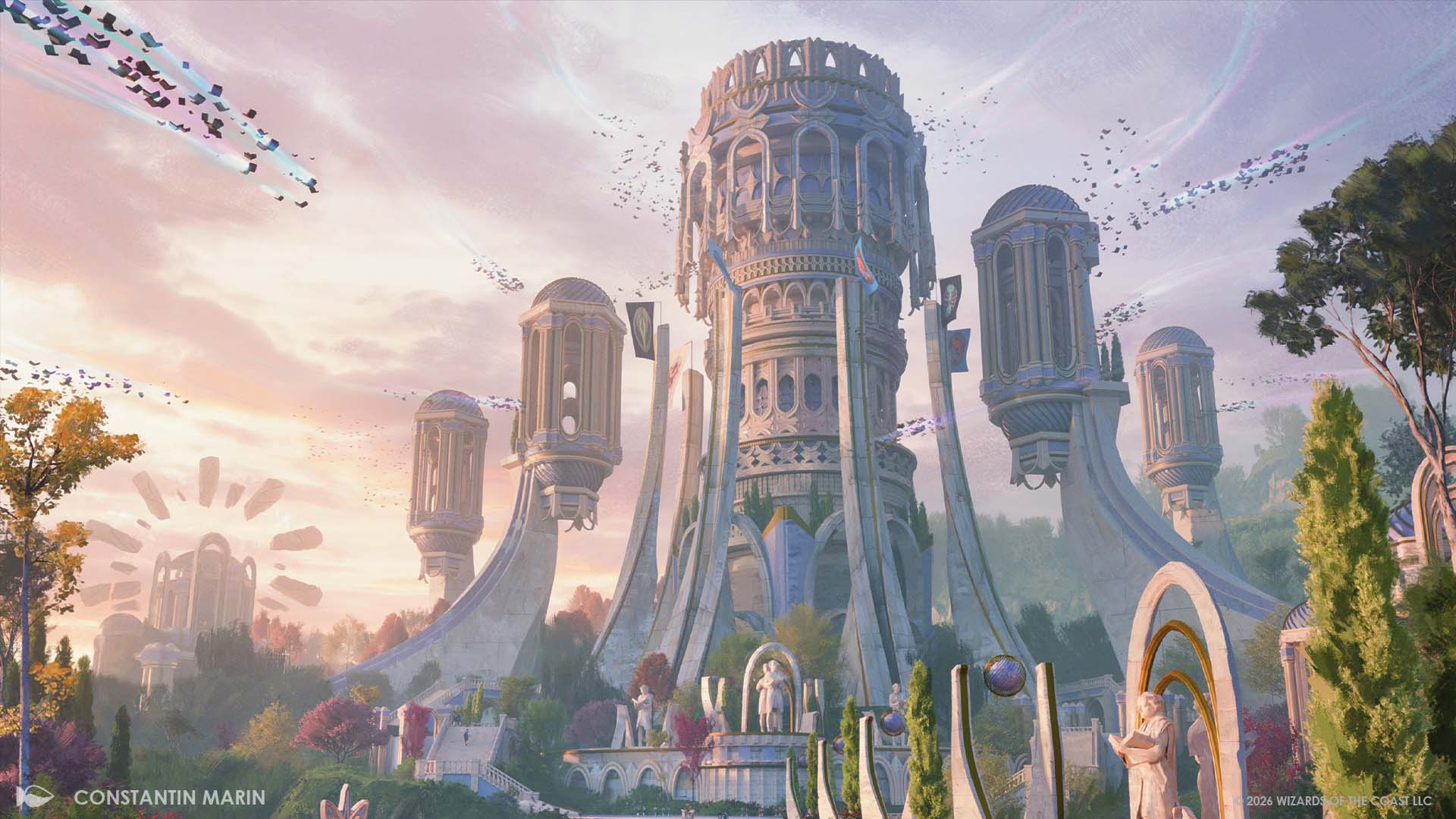
Recovering from the Invasion
During the Phyrexian Invasion, much of the university campus was damaged or destroyed, and a significant number of faculty lost their lives. Across the campus, the scars of the invasion are evident: the rebuilt Biblioplex, memorials to lost faculty and students, newly appointed deans, and new fields of research. Most students' studies were disrupted in some way by the invasion; a few truncated their academics and quickly dove into careers, while others have extended their time, seeking further knowledge.
Omenpaths and Strixhaven
The existence of Omenpaths and access to the larger Multiverse has significantly impacted Strixhaven and Arcavios. Current research also indicates that Arcavios has an unusually high number of Omenpath openings and closings, further complicating its relationship to the Multiverse. Within the university, many conflicting perspectives and proposals have emerged—some scholars view the wider Multiverse as an incredible opportunity for magical learning and development, while others consider it an impending risk of another invasion or an even worse fate.
The majority have embraced the new possibilities, with several xenoplanar fields of study springing up across all the colleges. The inaugural class of off-plane students was welcomed at Strixhaven the year after the invasion, alongside professors from a number of the Multiverse's most prestigious institutions. Strixhaven's reputation has also spawned an unofficial rivalry with off-plane institutions, including the Tolarian Academies and Prism University, as they each seek to attract the most talented mages in the Multiverse.
POL 303 Politics and Policy of Ravnican Guilds
ENV 437 Star Arches and Hedrons: Survey of Gravitational Anomalies
Though Strixhaven University has embraced the Multiverse with open arms, it does exercise an abundance of caution. For the protection of students and inhabitants of Arcavios, the university has established the Path Ward, a committee to oversee the Omenpaths. The committee approves any travel through the Omenpaths and vets any visitors that come through to ensure they are no threat to the university or plane at large. Pathwarden mages also observe the Omenpaths for changes, search Arcavios for newly opened paths, escort arrivals to the university, and prevent unwitting students and citizens from wandering into another plane. Again.
"Prevent the next invasion! Join the Arcavios Preservation Society!"
After Graduation
Graduates from Strixhaven University travel a variety of different paths. Many will return to their communities, while others will travel the plane in search of ever-greater magic. The more academically inclined will often continue their research in sanctums and laboratories or return to Strixhaven as graduate students and professors. A select few will be chosen to join the Dragonsguard.
Dragonsguard
The Dragonsguard are an elite group of mages who work directly with the five Founder Dragons to support their work throughout the plane. Their mission is to ensure the peace and prosperity of the people of Arcavios, and they use the powerful magics at their disposal to do so. Being chosen to work with the Founder Dragons is considered a great honor. Mages of the Dragonsguard are famously formidable wizards and are treated with respect across the plane.

The Colleges
Silverquill
The College of Eloquence
"I make promises, not threats."

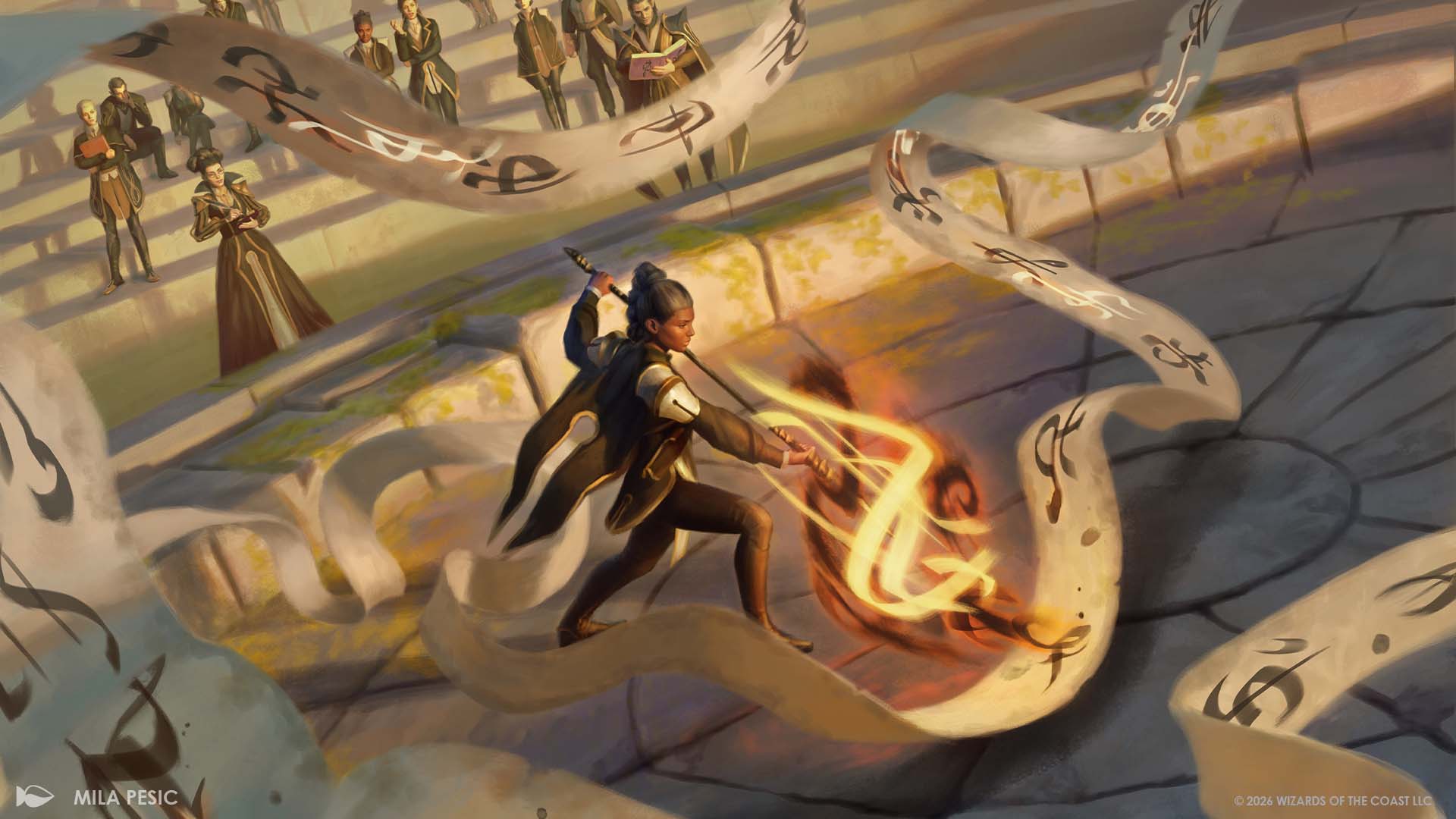
Students of Silverquill are masters of the magic of language, using it to sway emotions, boost morale, and unleash devastating insults to demoralize opponents. Silverquill wit is cutting in a literal sense; they can pierce through the strongest armor with a single critical remark. Conversely, their inspiring speeches can lift their allies from the depths of despair and hopelessness.
Silverquill magic manifests through the spoken, written, and signed word, visualized in the form of calligraphic strokes of ink and light. Silverquill mages gravitate toward leadership roles both on and off campus. They are highly competitive and driven, with a "never second place" attitude. When you see them on campus, they exude confidence with their put-together appearance and commanding presence.
Major areas of study for Silverquill include linguistics, political science, sociology, education, law, espionage, and journalism.
LING 121 Syntax and Semantics of Glyphweaving
LAW 416 Negotiation and Drafting of Demonic Contracts
Field Studies
Beyond the campus, Silverquill students often take on the roles of interns, pages, and research assistants in prestigious government organizations and businesses. They will support highly talented Silverquill lawyers and diplomats who are called upon for particularly tense or high-profile negotiations across Arcavios. Students will study alongside inquisitive sociologists who spend their time in larger cities, engaging the denizens in a wide array of research studies, interviewing them, and documenting and observing their daily lives. Others will venture with mages traveling across the plane, scouring libraries and visiting remote villages, seeking dying languages and obscure digraphs to refine their magical theories. Some of the most skilled will find themselves as poets, speakers, and sought-after guests at high-profile functions, entrancing audiences with their mastery of language.
"Calling all investigators and critics! The Strixhaven Star seeks loquacious new journalists for the upcoming academic year."
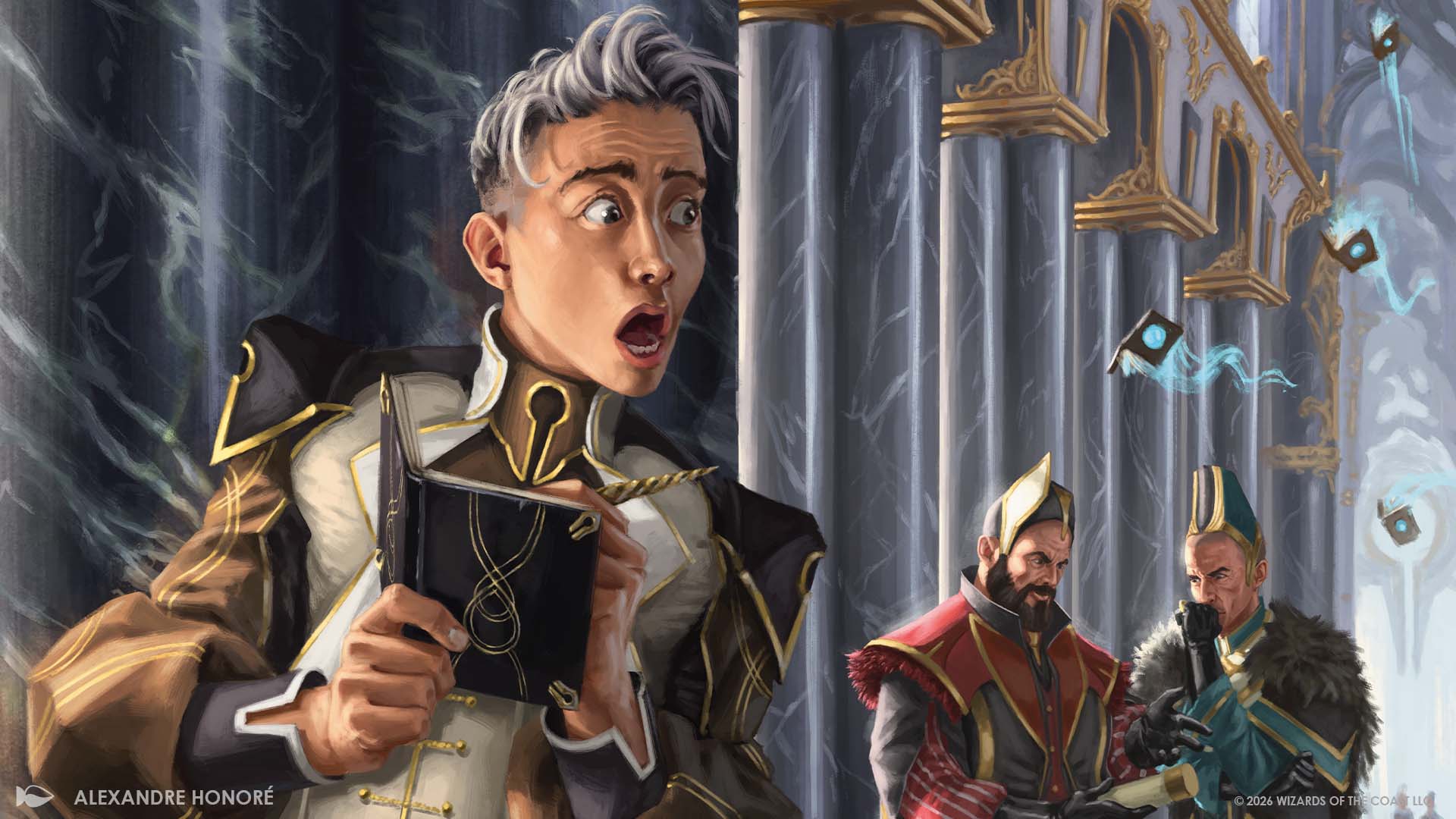
Prismari
The College of Elemental Arts
"Leave everything on the stage and give them a performance they'll never forget."
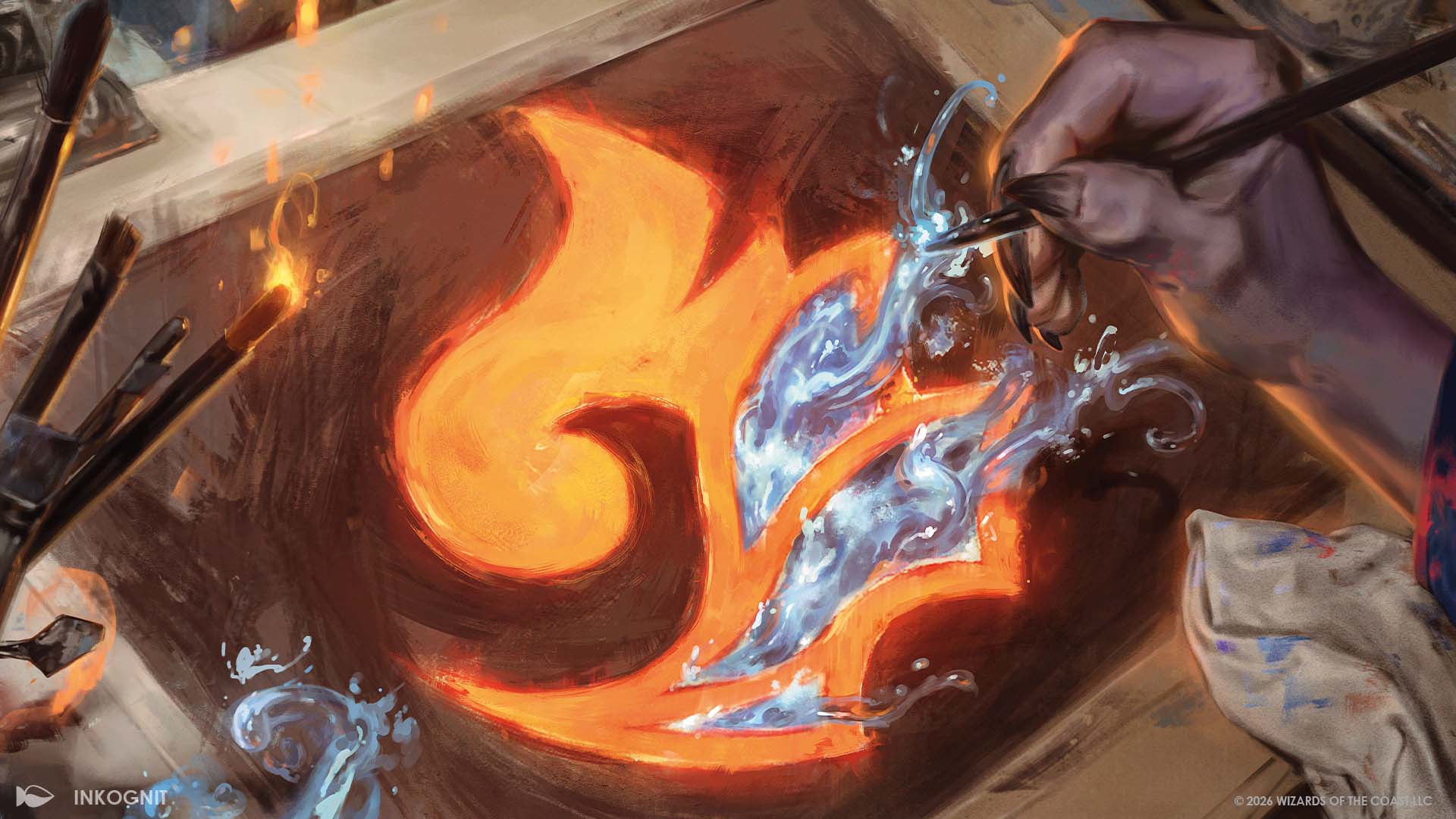
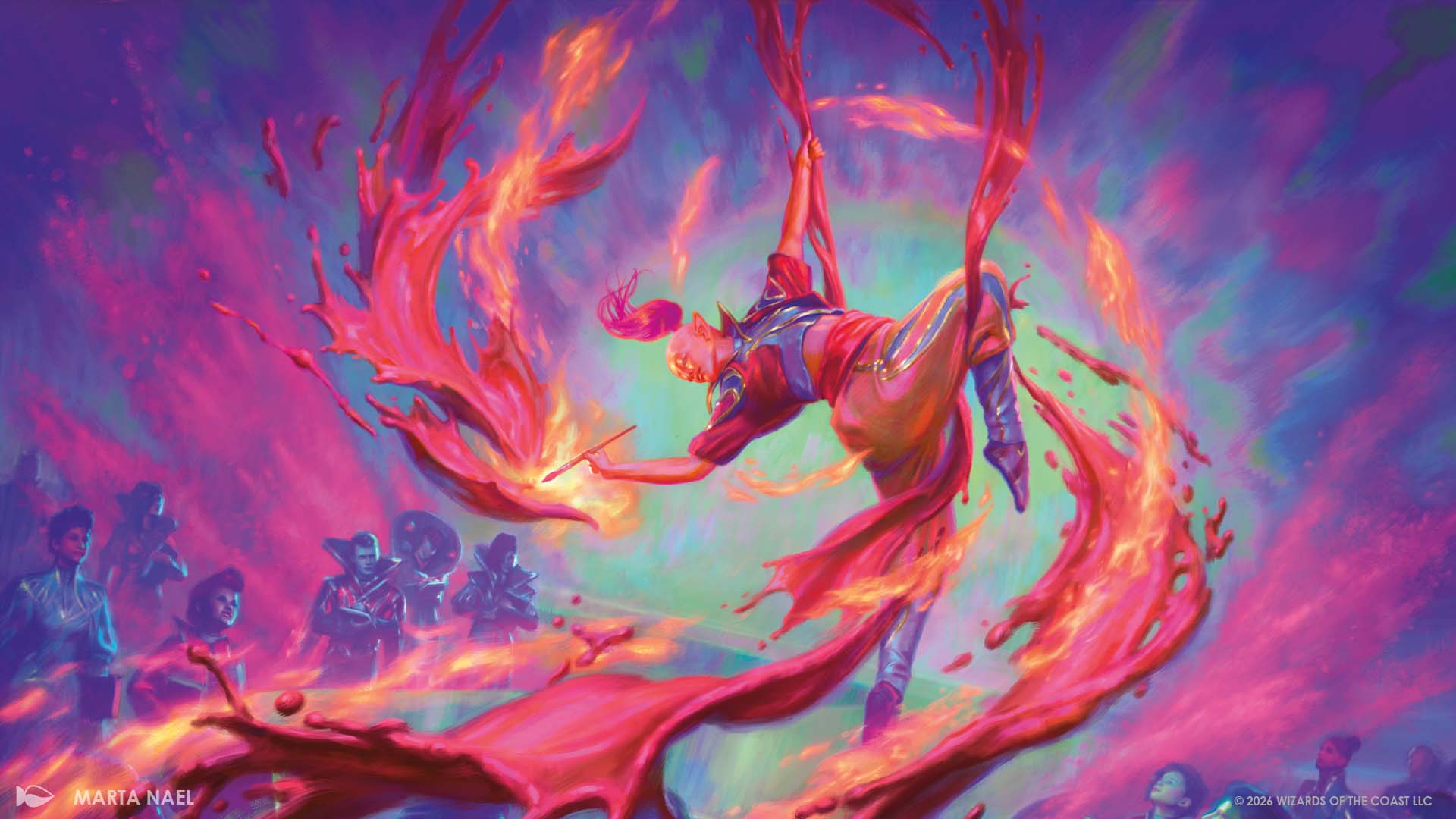
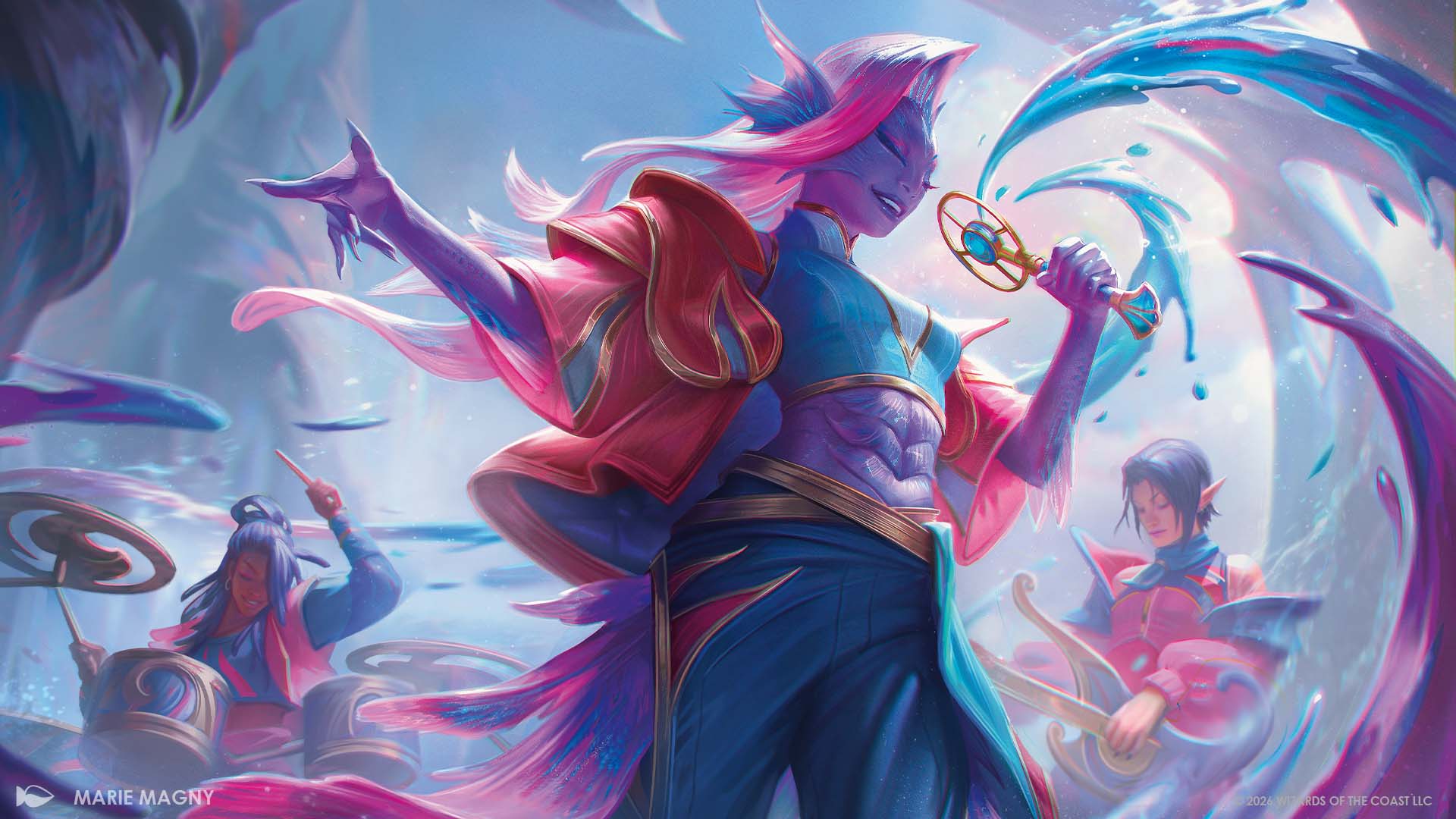
Prismari mages see no difference between magic and art. Their spells are spectacles of raw creativity—masterpieces of showy, over-the-top magic. Each Prismari student uses their own style of elemental magic to express themself and how they see the world. Fire, ice, water, wind, earth, stone, lightning, heat, cold, snow, tornadoes, earthquakes, the rumbling pulse of pure energy—any elemental force can be a Prismari muse and medium.
Prismari magic is expressed through wide and varied artistic works, from sculptures and paintings to dance and song. Prismari mages embody the contrasts of blue and red mana, some seeking to perfect the fine details of their works and technique, while others are wild expressionists of raw emotion.
Major areas of study for Prismari include art history, performance arts, philosophy, elemental theory, physical education, and psychology.
MUS 117 Elemental Music Sculpting
PHIL 395 Independent Studies in Perfectionism
Field Studies
Beyond the campus, Prismari students refine their understanding of artistic theory and technique. Many spend time in arts residencies, honing their craft from masters in the field, while others will join large artist cooperatives and communes, creating their works in close collaboration with others. Students will apprentice visionary performers traveling the plane to bring their masterworks to a wider audience.
Student sculptors and painters will submit works to galleries in major cities, carefully observing the reactions of viewers to refine their art. Others create immersive events and spontaneous performances to tantalize their participants and leave them with nothing more than a feeling. Prismari teaches that art does not exist in isolation, and those who venture beyond the campus put this belief into practice.
"Auditions for the upcoming Prismari Players production are next week. Come prepared with a short monologue and interpretive dance."
Witherbloom
The College of Essence Studies
"Nature endures and adapts, and so shall we."
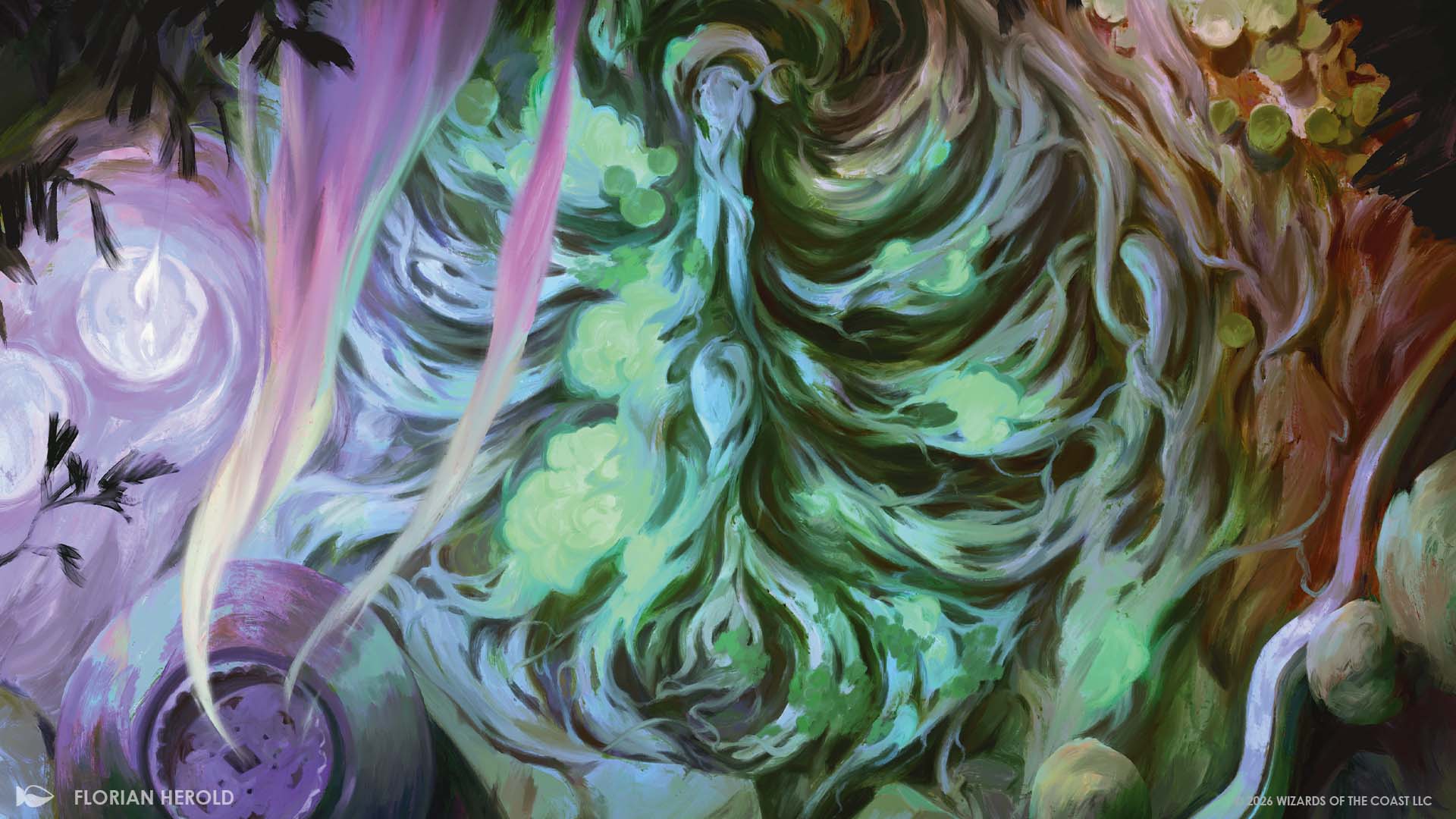
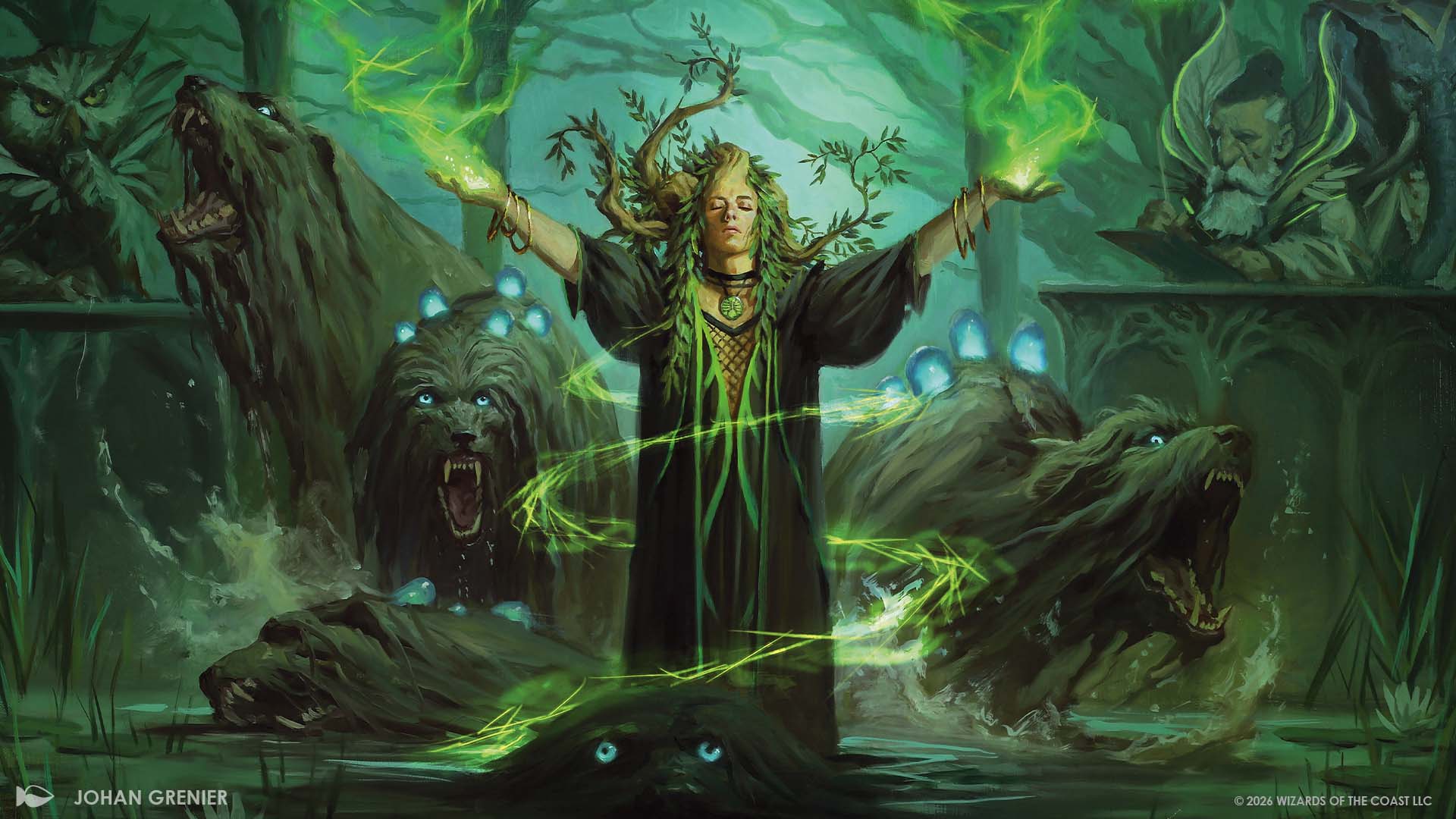
Witherbloom mages draw power from the opposing forces of life and death. They brew powerful spells from natural components and the essences of living creatures, using that power to heal or harm the living, raise or entreat the dead. They wield magic that can cause entire teeming forests to blossom out of nowhere or call down ancient druidic curses that scour flesh from bone.
Some Witherbloom mages defend ecosystems from marauding pollution, while others revel in the power of corruption and death. They're equally at home riding zombie crocodiles down a languid river, picking herbs for a potion to treat a wasting disease, brooding over a chorus of swamp frogs, or summoning fearsome, ancient embodiments of nature.
Major areas of study for Witherbloom include alchemy, medicine, biomancy, pathology and toxicology, mortuary science, and necromancy.
BOT 117 Roots of Life: Survey of the Infusion Arts
MORT 460 Advanced Osteomancy and Fleshcraft
Field Studies
Life and death cannot be understood only within the confines of the campus. As such, fieldwork is a key element of most Witherbloom academic studies. The college supports a number of semi-permanent research locations where professors and students conduct research, studying, cultivating, and putting to use the most unique flora and fauna of the plane.
More gregarious professors and students are often found within community hospitals and healing centers, supporting their work and conducting experiments of new treatments and practices. Others will immerse themselves in nature, venturing out on small group expeditions into the depths of the most isolated and dangerous wilds of Arcavios, seeking long-lost critters or fabled plants.
"Can I eat that? Learn your poisons from your potions with the Witherbloom Foraging Collective."
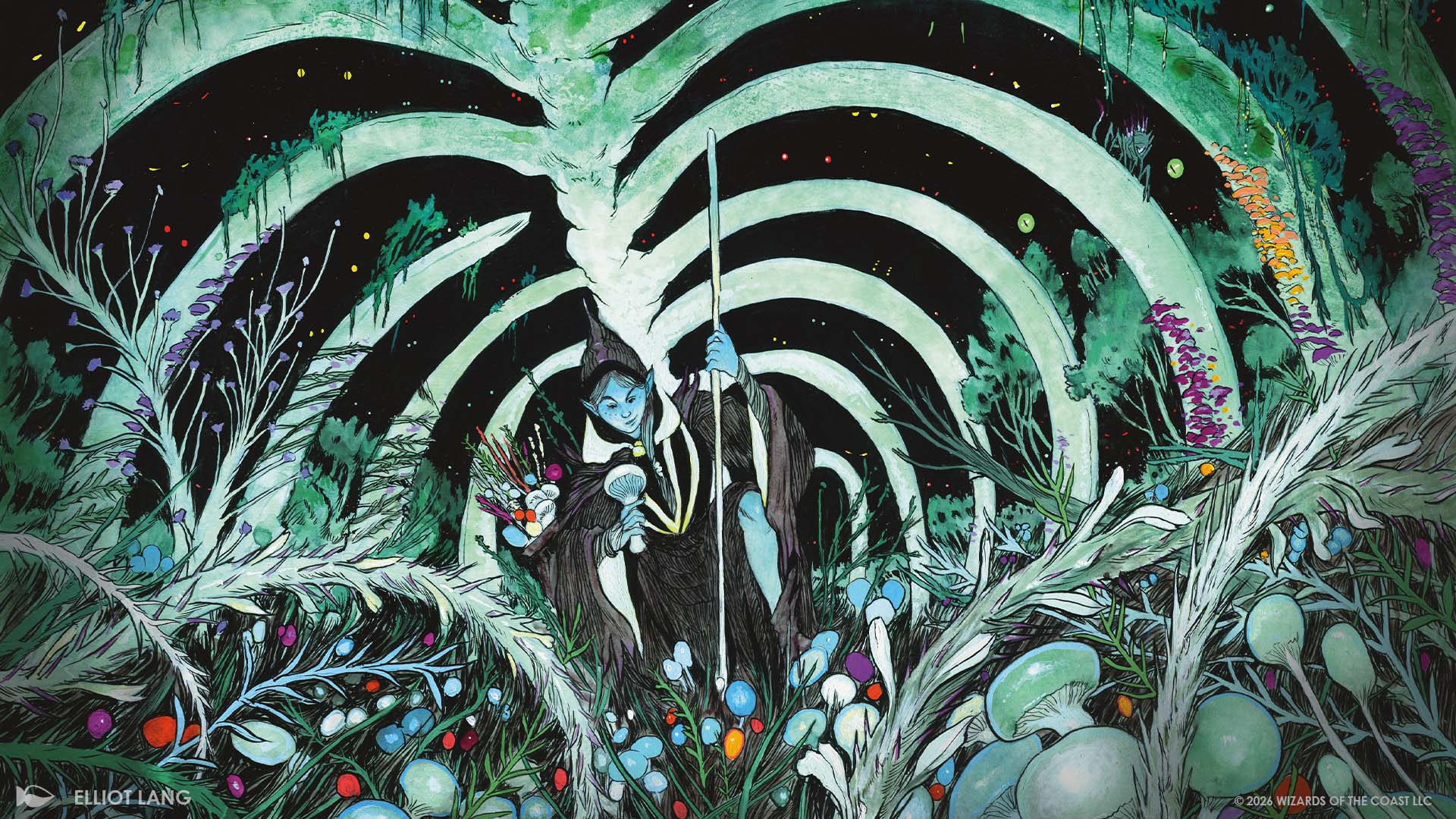
Lorehold
The College of Archaeomancy
"Stones in your path are not obstacles but discoveries."
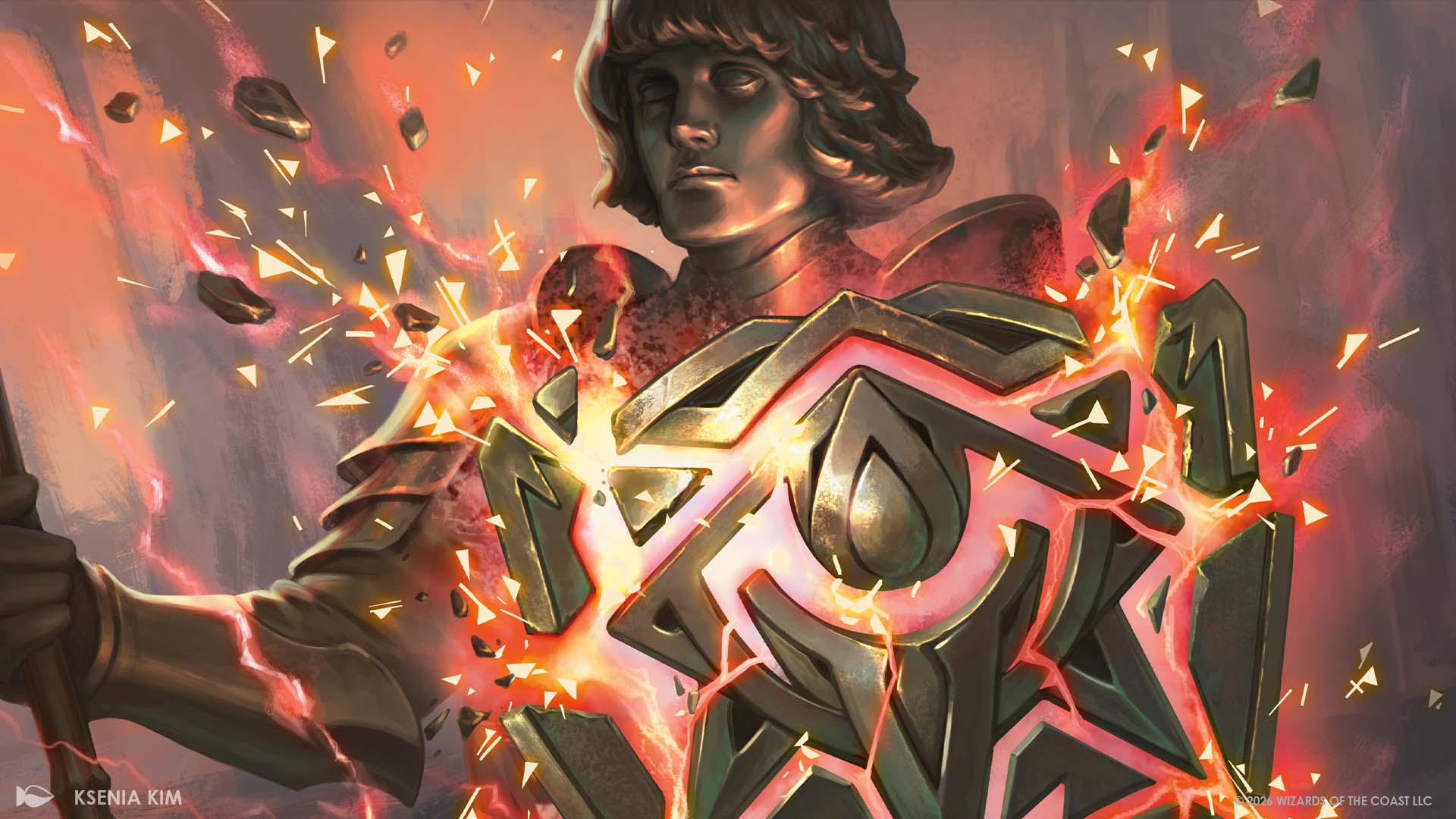
Lorehold mages are passionate scholars captivated by history, exploring the past to understand the forces that underlie and drive events. Lorehold magic is driven by the duality of order and chaos. Is the universe heading toward an ideal, well-ordered state or devolving into chaos? Are there patterns in events that can be understood and predicted, or is time a series of random occurrences and things "just happen"?
Lorehold mages are masters of living history, summoning spirits of long-dead historical figures and calling forth magic from ancient tomes. Lorehold mages gravitate toward action and adventure. They are generally cooperative and enthusiastic, though their passion can be overwhelming at times. Even on campus, they always look prepared for their next expedition, ready for whatever it takes to uncover the next historical find.
Major areas of study for Lorehold include history, archeology, anthropology, architecture, mythology, theology, and fieldwork methodologies.
HIST 220 Golwanda and Xandril: Generals of the Blood Age
ANTH 335 Restoration and Replication Comparative Studies
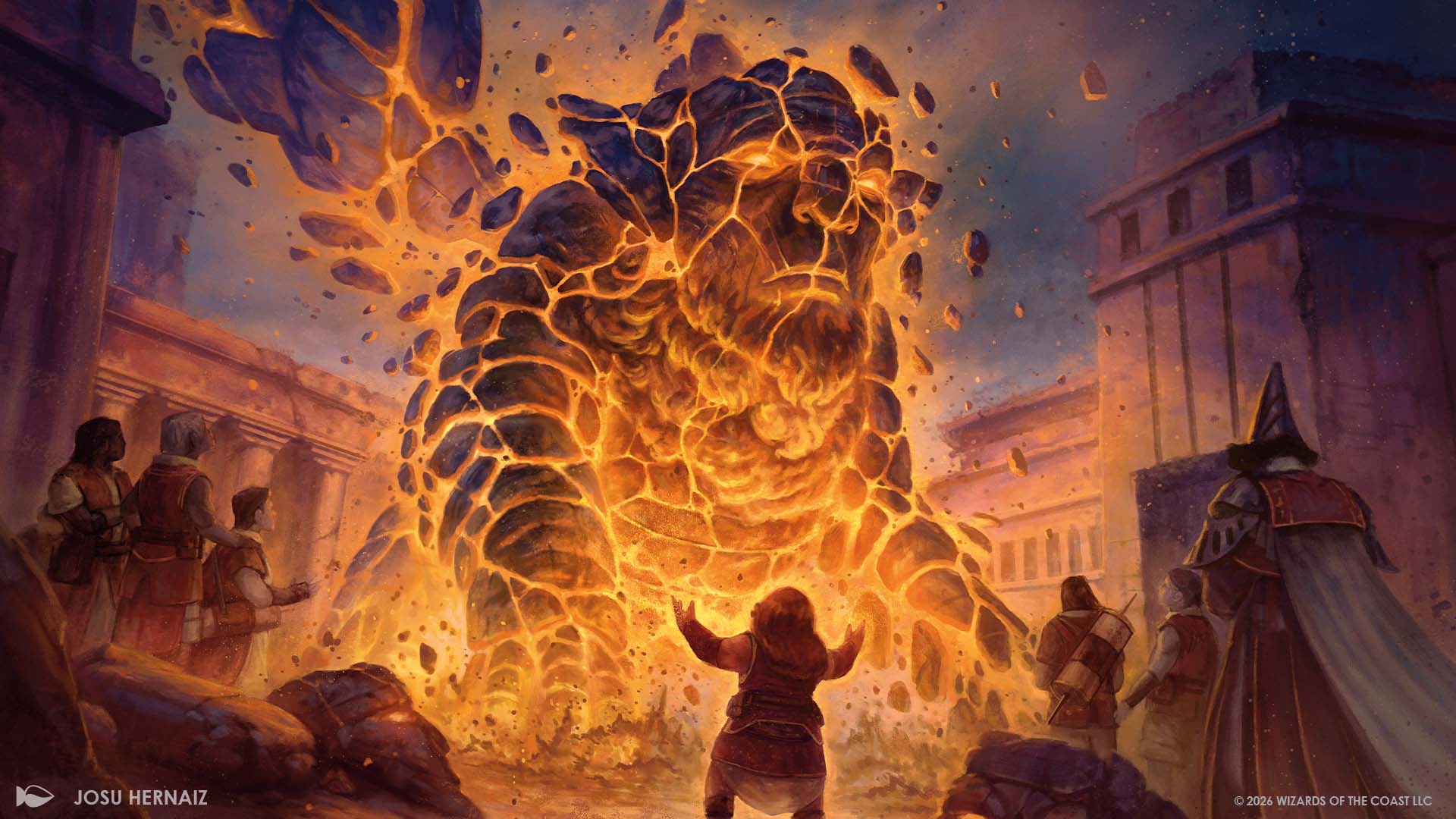
Field Studies
Venturing beyond campus is an integral part of most Lorehold studies. Professors and students embark on archeological investigations to the most remote areas of the plane, seeking relics, battle sites, monuments, lost magics, and other antiquities. The most adventurous, and some would say foolhardy, seek out vestiges of the past in the perilous and hard-to-reach places of Arcavios, honing their fieldwork skills amid the dangerous terrain.
Others who prefer the comforts of civilization focus on anthropological investigations into the past through observation of the present, spending time in cities and villages interviewing inhabitants and observing their customs. Lorehold students accompany professors working with community leaders and governments to preserve and document a region's history or uncover lost relics of the past.
"Join the winning team! Lorehold Mage Tower tryouts this week."

Quandrix
The College of Numeromancy
"Theory? Meet practice."
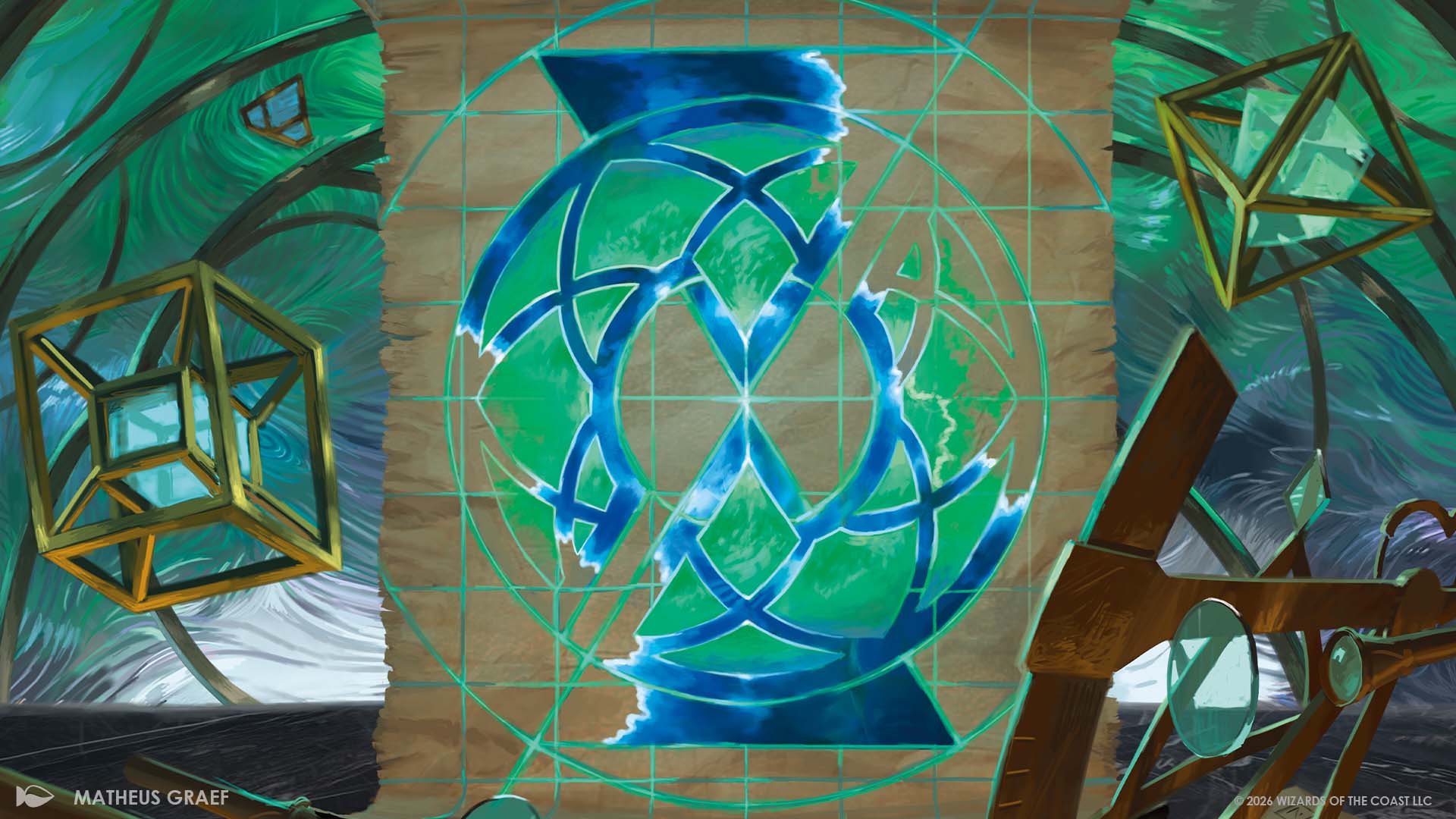
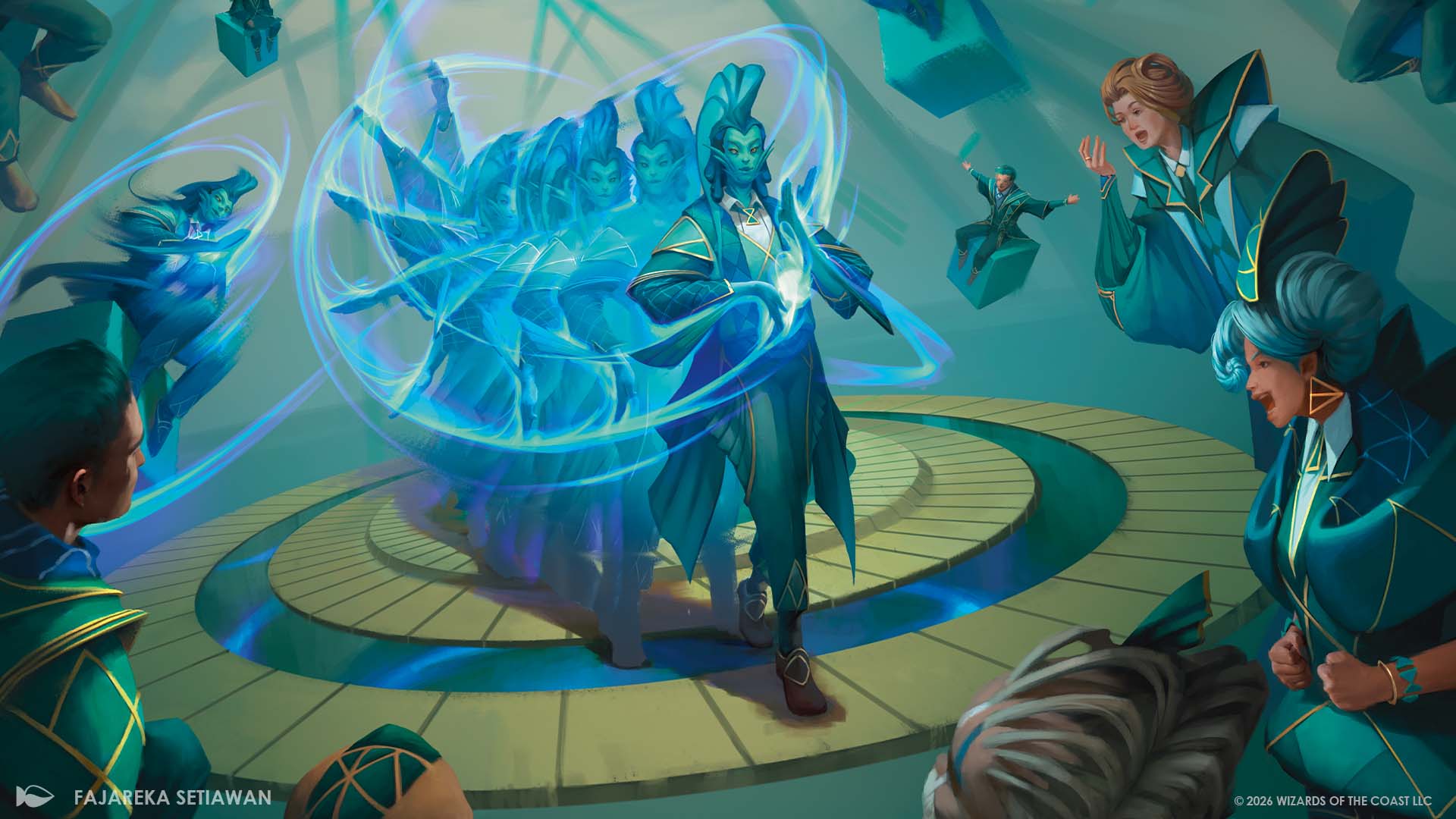
Quandrix mages are innovative nature mathematicians. They study the underlying mathematical principles of nature, the fractals, symmetry, and patterns that dictate the course and development of the natural world. Quandrix mages can render the theoretical into the physical, creating creatures made of repeating fractals or turning abstract theories into spiraling, towering constructions.
Quandrix students use their mathematical magics to bend numbers to their will—multiplying, dividing, adding, and subtracting to reshape the rules of nature. Quandrix mages are architects of the natural world; reality is merely an equation to solve. Quandrix mages can often be found in roles at the intersection of practical and theoretical, such as architects and engineers. When you see them on campus, they will often be heads-down in their latest research, more preoccupied with their thinking than the world around them.
Major areas of study for Quandrix include applied mathematics, engineering, matter sciences, fractal networking, and environmental design.
BIO 103 Introduction to Magibotanical Environments
MATH 394 Fractalization of Imaginary Number Modeling
Field Studies
Quandrix mages seek to ground theory in reality and, as such, pursue a wide array of research investigations and studies outside the campus. Observation and practical experimentation are core to Quandrix off-campus research. They have a number of sites dotted throughout the continent with different theoretical and substantive specialties, ranging from rapid-growth experiments to time-dilation studies.
Many professors and students seek out the strange natural phenomena that occur across Arcavios, places where nature rewrites its own rules. Students will work with substance professors, consulting with communities on city planning and natural restoration, and apply their theories to the real world. In contrast, the more ascetic Quandrix mages will seek out the quiet of nature, far from the bustle of campus, where they can implement their most outlandish experiments without any risk of human interference.
"Never cram for a test again! Come to the circular time weekly study club—where there is always another last minute."
Arcavios
The Dawning Age
Over 7,000 years ago
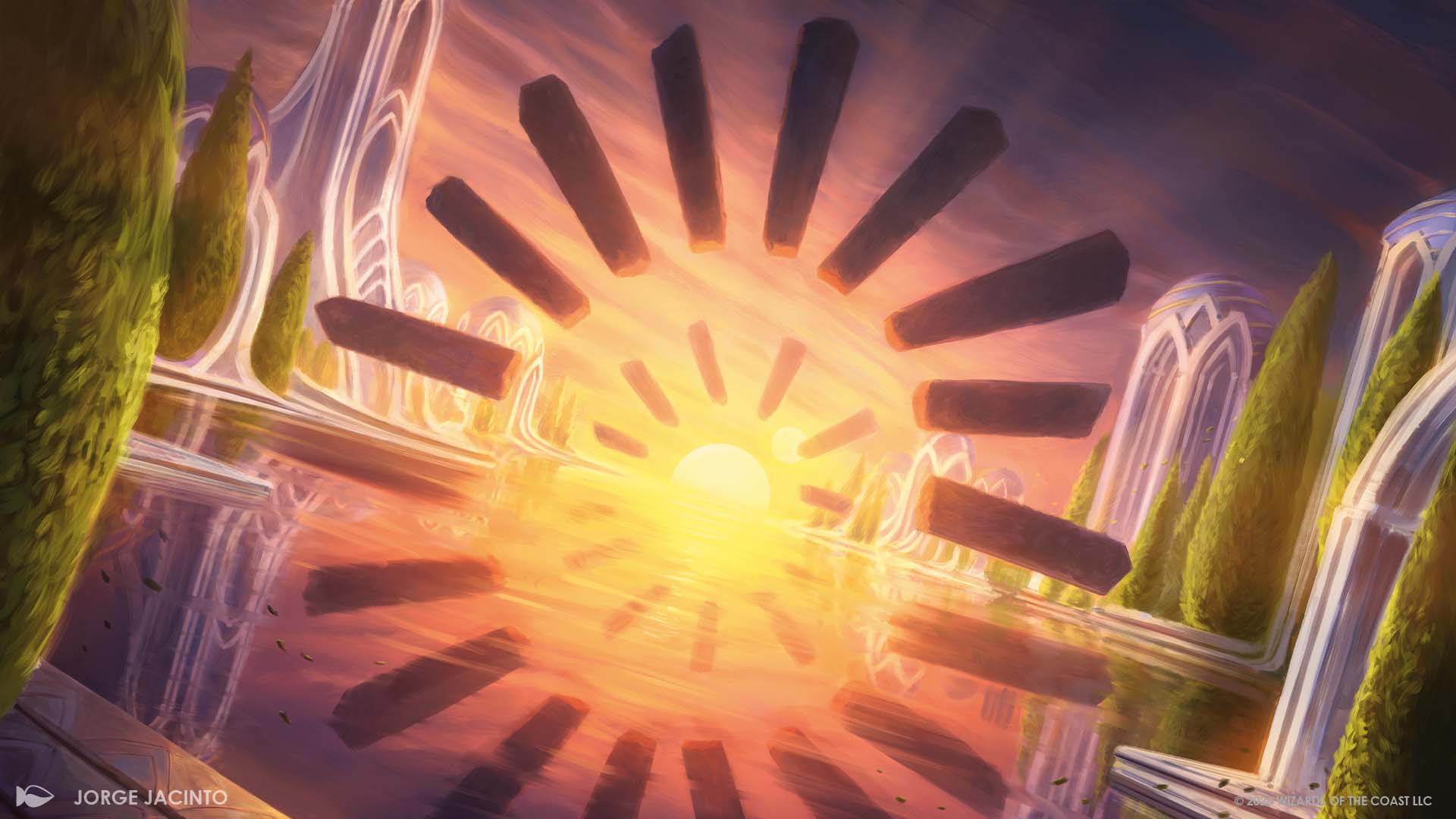
The earliest history of the plane, from the formation of the world through the emergence of humanoid species, is mostly lost to time. It is thought that the plane formed in a blinding chaos of melded worlds and twisting mana, but little unequivocal evidence of this age remains.
The most prominent theories of Strixhaven scholars suggest that two demi-planes, Ezroi and Karudis, merged as a result of an unknown cosmic event. However, instead of merging like mana, contrasting types of mana were knotted together to form the mana relationships seen on the plane today. Many of the magical forces of the world seem to be composed of two opposing colors: white-black, blue-red, black-green, red-white, and green-blue. These five forces are often called "the dichotomies."
The snarls, star arches, and archaics trace back to the Dawning Age, each of them strange and mysterious in their own way. The Dawning Age ended when younger species of humanoid creatures rose to prominence and brought with them a time of war.
MYTH 413 Snarls and Suns: Stories of the Dawn
ASTR 540 Theories of Planar Engineering
The Blood Age
7,000 to 700 years ago
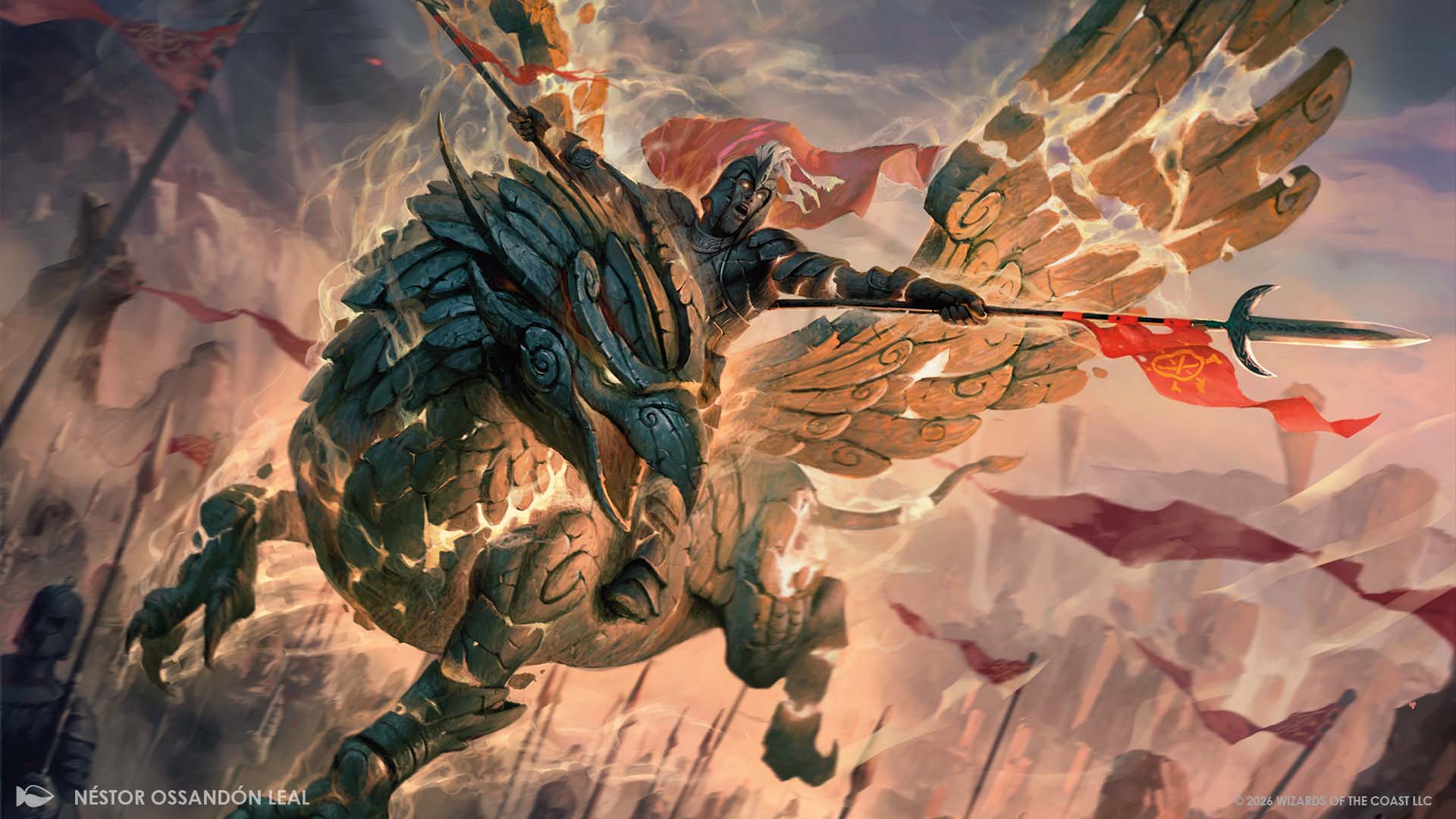
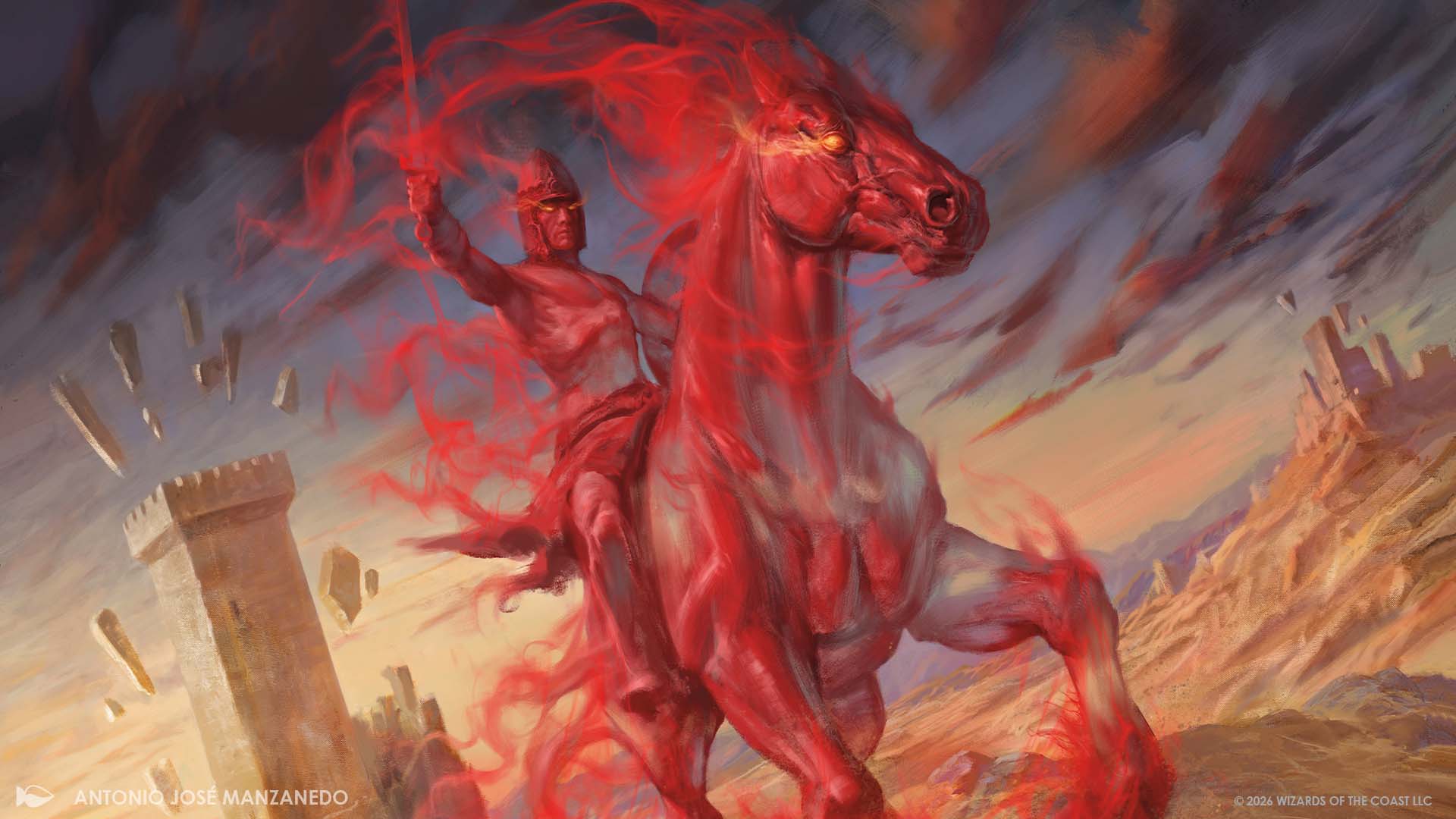
The Blood Age was a time defined by violent clashes between warring armies of the many peoples on the plane. These cultures waged grim wars on each other for centuries at a time, drenching the world in blood. There were a few voices of peace in those days; early wizards, warlocks, and other spellcasters argued for an end to the bloodshed. But since their skills in magic were rudimentary, their words went unheeded. It was only when five mighty elder dragons came together and founded Strixhaven University that the Blood Age finally came to an end and gave way to the current Mystic Age.
ETHICS 512 Justice and Justification of War
SUM 201 Intermediate Spirit Placation
The Mystic Age
700 years ago to present
The Founder Dragons rang in a new era of magical research with the founding of Strixhaven University. Each dragon consolidated the study of its two mana colors into a magical college, and spellcasters from all over the plane came to learn magic. Mages became the most powerful force in the world, quickly eclipsing the might of armies and leaving the remnants of the Blood Age behind as a ruined memory. Although artifacts and spirits from the Blood Age still surface from time to time, today, most major conflicts arise from dueling mages rather than sword-wielding armies.
More details on the early formations of snarls and arches can be found in the supplemental reading: Planeswalker's Guide to Strixhaven.
The Vastlands
Most of the known plane is broken across two huge continents—the northern continent of Orrithia, commonly known as the Vastlands, and a mysterious southern continent, Galathul. The two are linked by a land bridge called the Isthmus of Omens. Strixhaven University resides northeast of Orrithia. The Vastlands are a sprawling continent full of magic, discovery, and danger.
Many sites in the Vastlands are of great importance to one or more of the colleges of Strixhaven. These places contain sources of knowledge, spell components, or magical potential that college leaders consider vital to study. They are also often sites of conflict as mages from different colleges or traditions clash over the magic and resources located there.
Mentors needed for upcoming research practicums—venture beyond campus and put your skills to the test with the Vastlands explorers!
Northeast Region
The northeast region is known for its dryer continental climate, with cold, snowy winters and hot, dry summers. Bordered by the central mountains and southern marshes, the northeast is best known as the home of Strixhaven University, but it also features a number of other magically and culturally prominent locations.
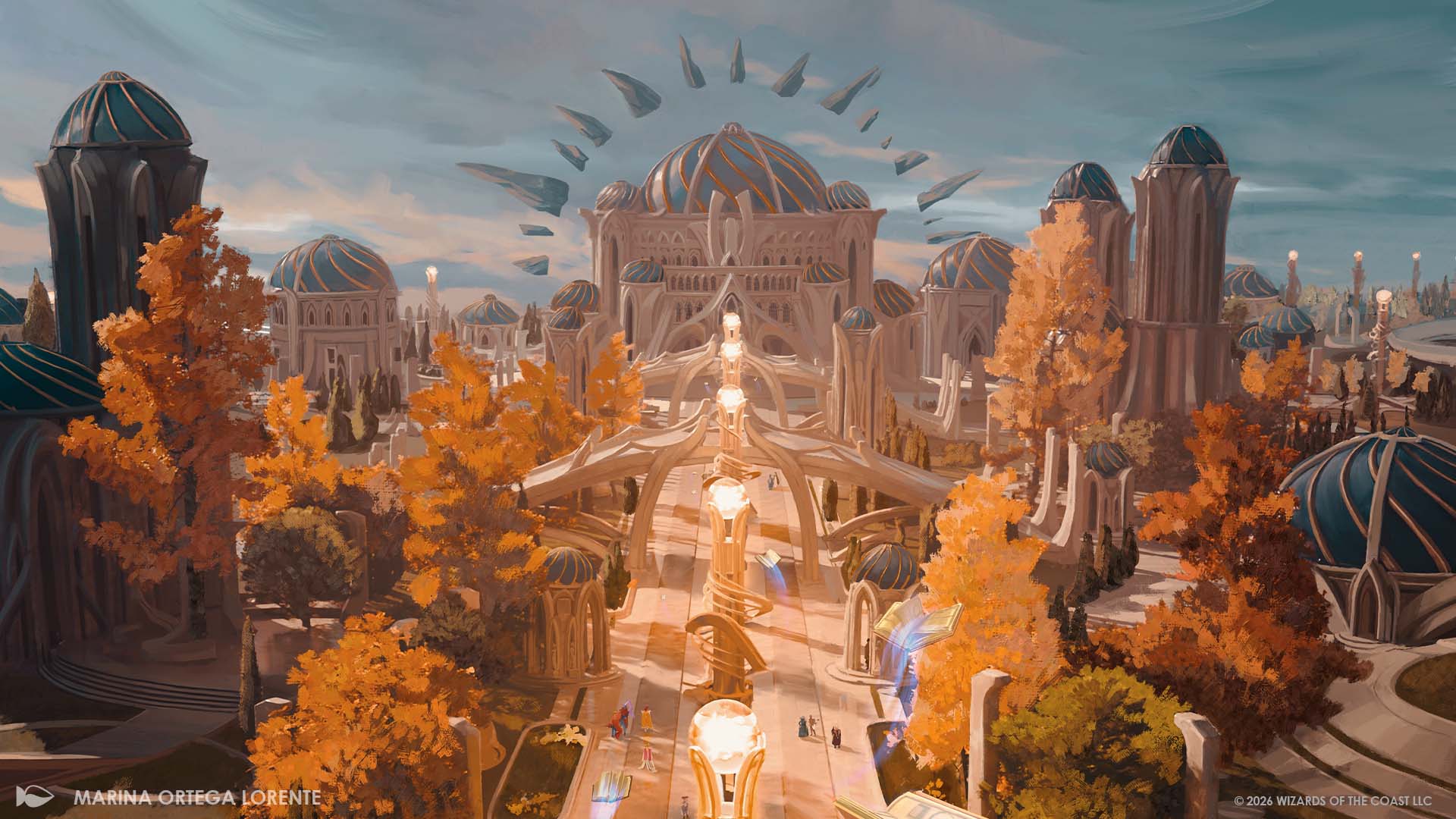
- Strixhaven University: The premier magical institution of Arcavios, with its famed Biblioplex and five distinct colleges.
- The Proximate Snarls: Five snarls that form a star pattern, with Strixhaven in the center. Each of the five snarls is considered a center of power for one of the colleges and is the site of much academic study and research.
- Zantafar: The lost, ruined city of the Zantafar loxodon before they became primarily nomadic, rediscovered by Quintorius Kand. It has since become a historical site of great interest to Lorehold mages and anthropologists.
- The Feradorn Abyss: The far north of the region is a vast, high-walled, winding chasm carved by long-gone glacial streams. The chasm echoes with the shrieks of mysterious and dangerous creatures and the eerie music of the songstone formations that are found along its cliff edges. Oggyar villages can be found dotted along the canyon, many in precarious locations.
- The Whipsteppe: The arid, tornado-afflicted steppe of the northeast is home to the Whipsteppe society of kor. Despite the treacherous climate, the region is also known for its variety of wildflowers, which are considered valuable alchemical ingredients.
Forum of Amity
"The beating heart of precedent and procedure."
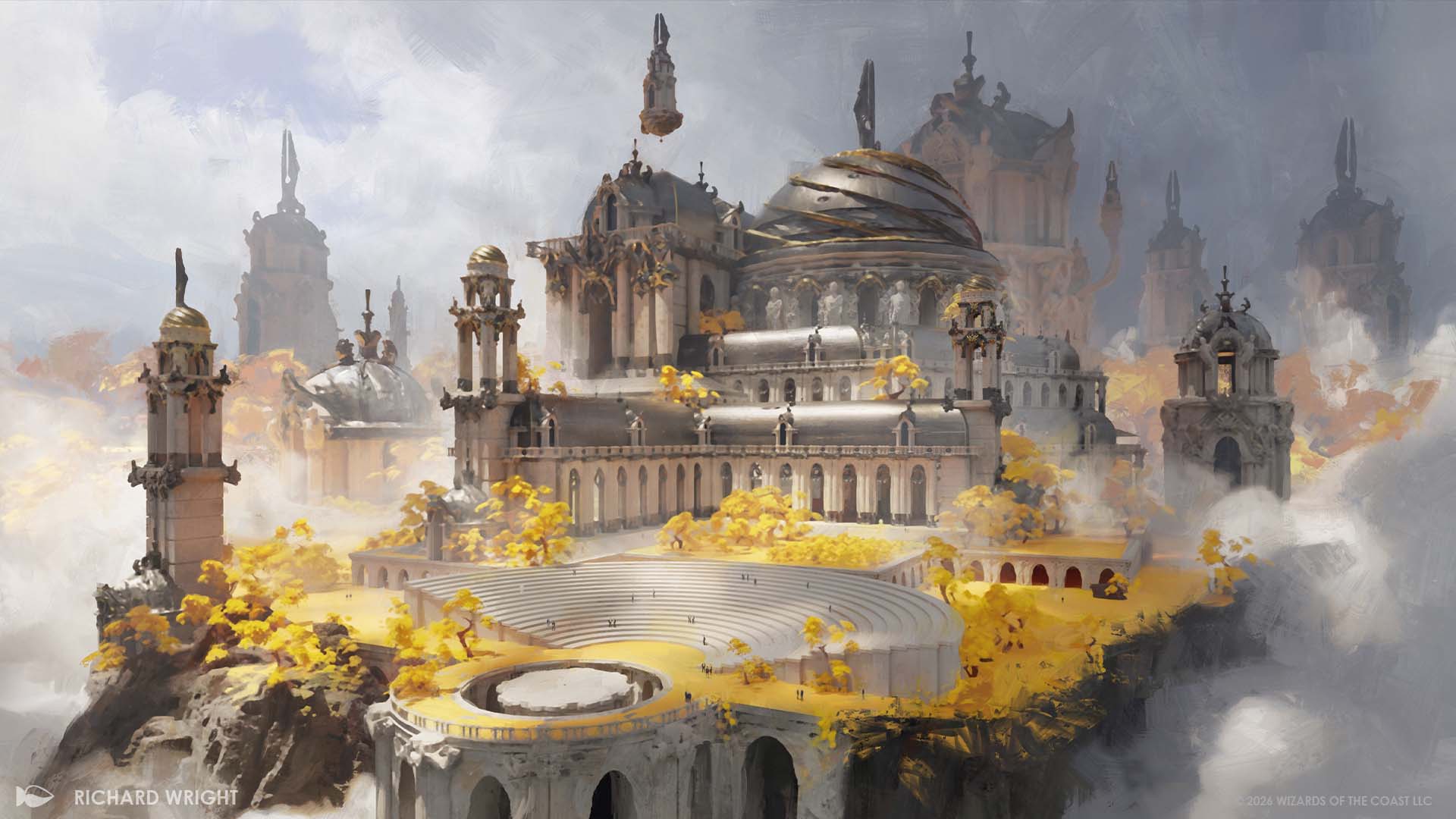
Located in the northeast region of Arcavios, the Forum of Amity was founded by Shadrix Silverquill as a center for diplomacy. Its goal is to strengthen the fragile peace on Arcavios that was formed at the end of the Blood Age. The Forum of Amity brings together diplomats, politicians, and other emissaries from the many disparate peoples of Arcavios. Here, they debate, deliberate, and negotiate, seeking solutions to all manner of disputes.
The individuals who work at the Forum of Amity are conciliators—ambassadors appointed by their respective governments or organizations. Alongside the conciliators are several visiting Silverquill faculty who act as guides and advisors, as well as a constant stream of Silverquill students who come to observe, learn, and put their magic to the test.
The Forum is governed by strict rules of order for its meetings. The customs and procedures can often seem antiquated and overly complicated to Silverquill students. Nevertheless, they serve to maintain peace, even in the most heated of discussions. Outside the formal chambers, however, informal confrontations are frequent. It is not uncommon for conciliators to immediately challenge each other to a duel as soon as they step out of the Presiding Chamber.
Don't miss the Chamber Seminar Presentations from noon 'til dusk. Featuring 'Water Right and Wrongs' presented by Nita Aroste.
Students take on several roles at the Forum of Amity. Most common for undergraduate students is serving as pages for the conciliators, running errands, taking notes, and fighting the occasional duels on their behalf (with or without permission). Graduate and fourth-year students will often support the visiting professors or might take on research projects, such as drafting and presenting their own proposals, mediating arguments, or chairing a debate. The Forum of Amity consists of an opulent manor filled with cozy salons for intimate discussions and large galleries for more formal meetings—as well as one of the most extensive libraries outside of the Biblioplex. Surrounding the manor are the Adumbral Gardens, dotted with secretive meeting spots, wide promenades, and open arenas for sanctioned (and unsanctioned) duels.
- The Dragon's Podium: A large outdoor amphitheater, where Shadrix Silverquill sits when in residence at the Forum of Amity. Many of the formal conciliator meetings will be moved to the Podium when Shadrix is present, and magical ink runes will be used to shield the space in case of inclement weather. When Shadrix is not present, the space is often used for larger ceremonies and even the occasional performance.
- The Presiding Chamber: The largest internal meeting hall of the Forum of Amity. This space is used for discussions among all conciliators. These are often lively, and at times dangerous, with heated words and charged spells flying between participants.
- The Page's Common: A dedicated space for Silverquill students. The hall is filled with study tables, spaces to relax, and a raised stage for students to practice. The Page's Common is a place where students can get away from the watchful eye of their teachers; it's not unusual for parties there to extend late into the night.
Northwest Region
A coastal region that extends into the rain shadow of the central mountains. This area of the continent has typically mild though very damp weather, supporting an abundant variety of flora and fauna.
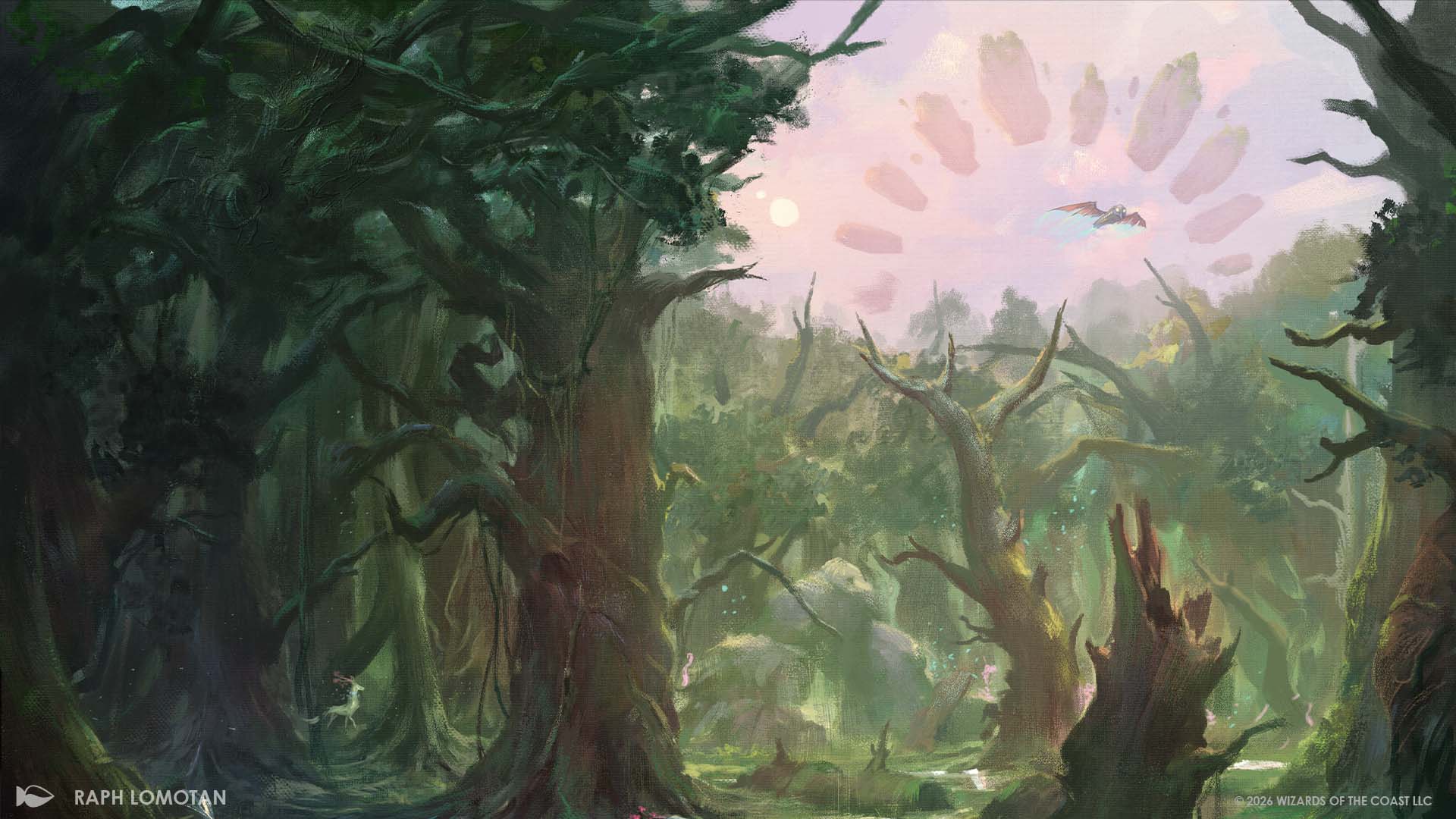
- Ruins of Caerdoon: The site of a deadly battle between human, dwarf, and orc armies during the Blood Age. Ruins of the once great dwarven Fortress of Caerdoon and the bodies of thousands of warriors have been covered over by the landscape here. Witherbloom necromancers and Lorehold archaeomancers often clash on excavation missions, and the region is a known hunting ground for Deamogoth demons.
- Wanderloch: The large, island-strewn lake called Wanderloch seems to disappear entirely at certain times of the year, only to reappear at a new location somewhere in the northwest region. Drakes are known to swarm in picturesque formations near the lake, which some mages seek out for mystical inspiration.
- Doradur: A river-crossed forest region in the west where the burrog frogfolk dwell, Doradur is known for its magical river herbs, wandering mushroomfolk, and mischievous faeries.
Titan's Grave
"A perfect unification of death and life. Verdant greens springing up to reclaim something none of us remembers."
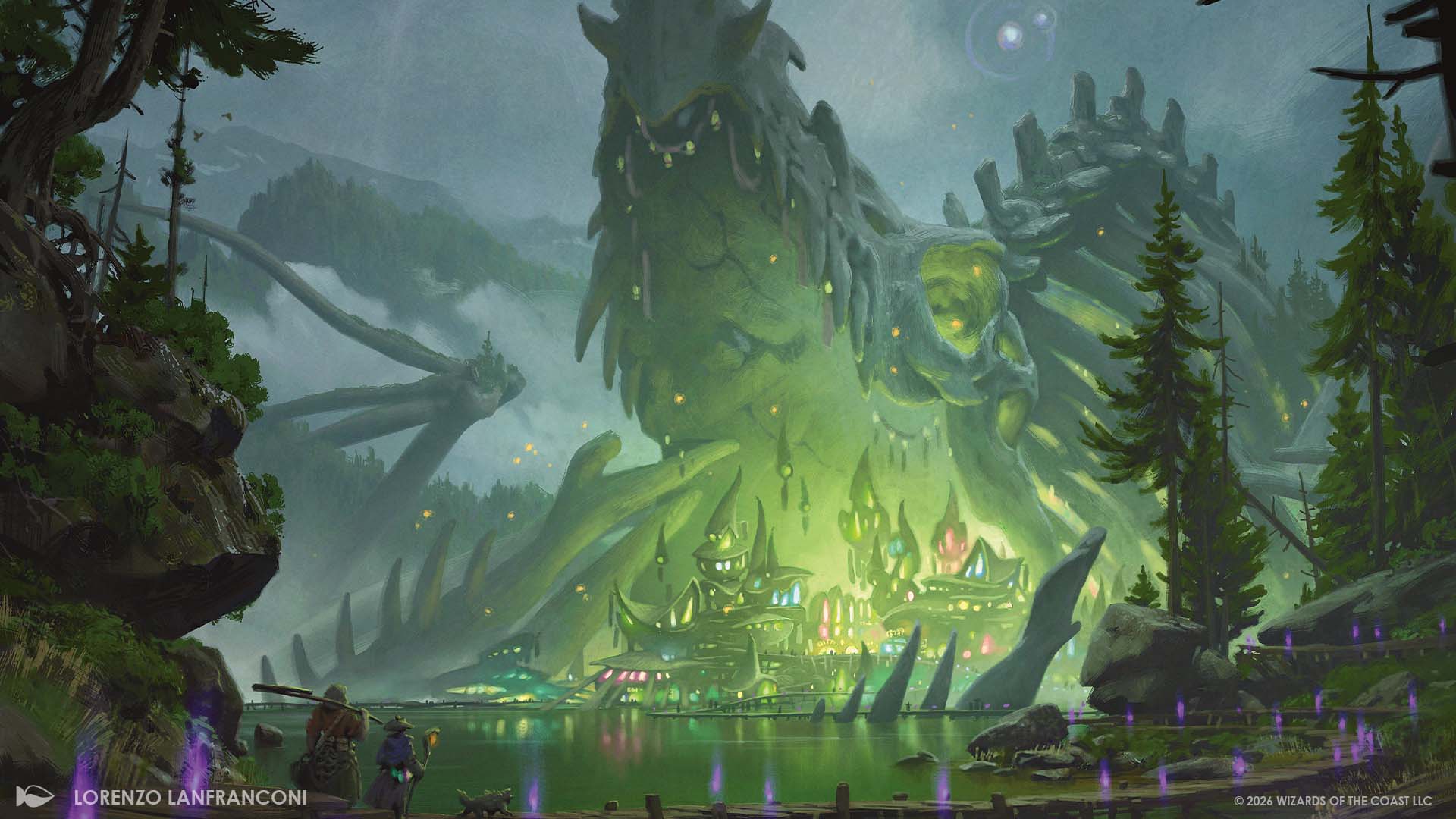
Titan's Grave is a vast forest growing inside the cavernous remains of a giant unknown titan from the dawning of the plane. Witherbloom students come here to uncover new flora and fauna to use in alchemical solutions, delving into the unexplored regions of the forest to gather the rare and the unknown. A forest of tall trees grows among the fossilized flesh and bone of the titan, and below, tight caverns carve into the underground.
The local plants and animals are unique and strange, many thriving with little outside influence. Some are comfortable with the visiting students, while others won't hesitate to make a quick meal of them. Witherbloom has set up a number of outposts within the forest that are frequently rebuilt as the terrain shifts. The village within the titan also hosts a thriving market attracting magic practitioners from across the plane to buy and sell their wares, many of which can only be found here.
"Looking for the best lotions and potions? Ask for Reva's private stock."
During their stay, students put their survival skills to the test, navigating, foraging, and tracking. They'll study specimens, harvest ingredients, and commune with wildlife. They are encouraged to attempt establishing a connection with the titan itself, though no one has managed to coax a response yet. Rangers and wildlife conservationists take students on guided tours through the safer sections of the titan. The braver of the Witherbloom mages are known to lead their own expeditions into the titan's belly. Almost all of them make it out to tell the tale.
- Jawdocks Landing: A dock that provides access across murky water to the main entrance of Titan's Grave, located within the titan's towering maw. The landing is alive with light and activity to greet newcomers.
- Ribtruss Town: A small community exists within the titan's ribcage. Small homes and shops are clustered here, some of them hanging from the ceiling of ribs to conserve space.
- Ulna Alley: An alley down the titan's arm, where specialists and academics gravitate. This alley is out of the way and tends to accrue the shadier businesses—the uncertified, unlicensed, and amoral. There are alternative medicines and all variety of potions and ingredients for purchase. While some are perfectly safe, most are dangerous, untested, or illegal.
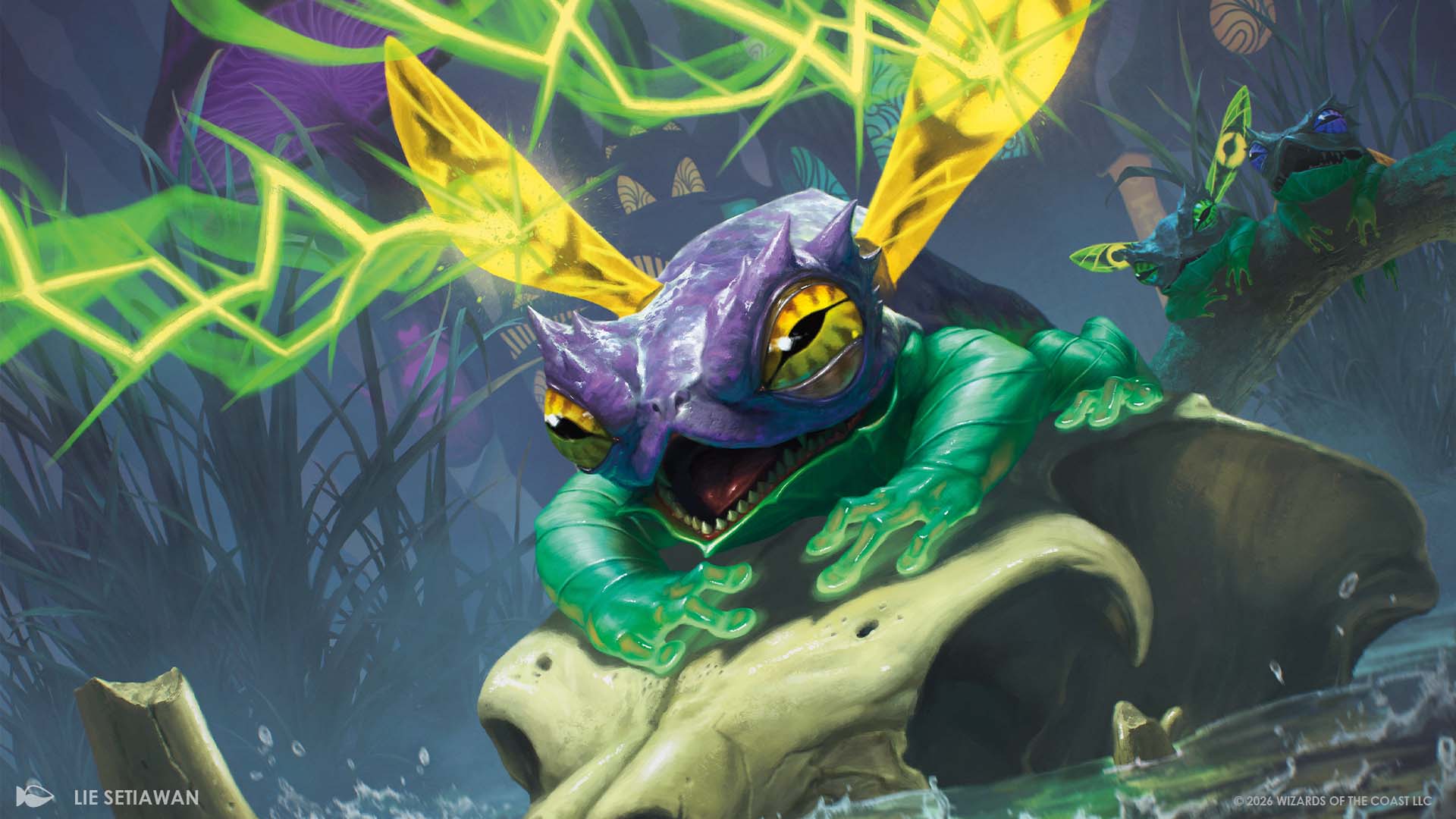
- Toadstool Copse: Tucked within the protective grip of the titan's hand is a fungal thicket formed from the symbiotic relationship between a species of mushroom and a species of spirit, the lumarets, endemic to the titan.
- The Beating Hive: A massive hive constructed by a vicious species of large, hornet-like insects can be found in one of the underground caverns, right around where the titan's heart would have been. Locals know the dangers of the hive and keep their distance; students are warned away, but every so often one will foolishly wander down and never return.
Lumarets
Small magical creatures native to Titan's Grave, the exact makeup of lumarets remains a bit of a mystery. They are believed to be a chimera of plant, insect, amphibian, and magical energy, rendering them more spirit-like and sentient than most creatures. Though largely dismissed by the academic community as "primitive," they are adept at many kinds of magic, gathering to combine their individual powers to nurture growth, healing, protection, and attack if needed. They are particularly intrigued by the people who have come to Titan's Grave and will often be found watching students intently—and causing mischief in the background.
Central Region
The center of the continent is a vast and sprawling mountain range. The peaks extend so high in some regions as to be almost impassable, were it not for the tunnels and networks that the many peoples of the plane have built underground. Overground weather varies based on altitude, while underground climates are impacted by geothermal activity and proximity.
- Grumlet: The town of Grumlet is a market hub for the trade of mining ores and mystical goods. Grumlet serves several small villages in the surrounding countryside but is also frequented by mages seeking unusual or hard-to-find spell components.
- Grove of Eljor: A dense woodland nestled in the foothills of the central mountains. Home of the Eljorin elves and Ezzaroot treefolk and known for its many magical creatures, such as basilisks and cervin. Witherbloom and Quandrix mages often quarrel over research priorities in this region.
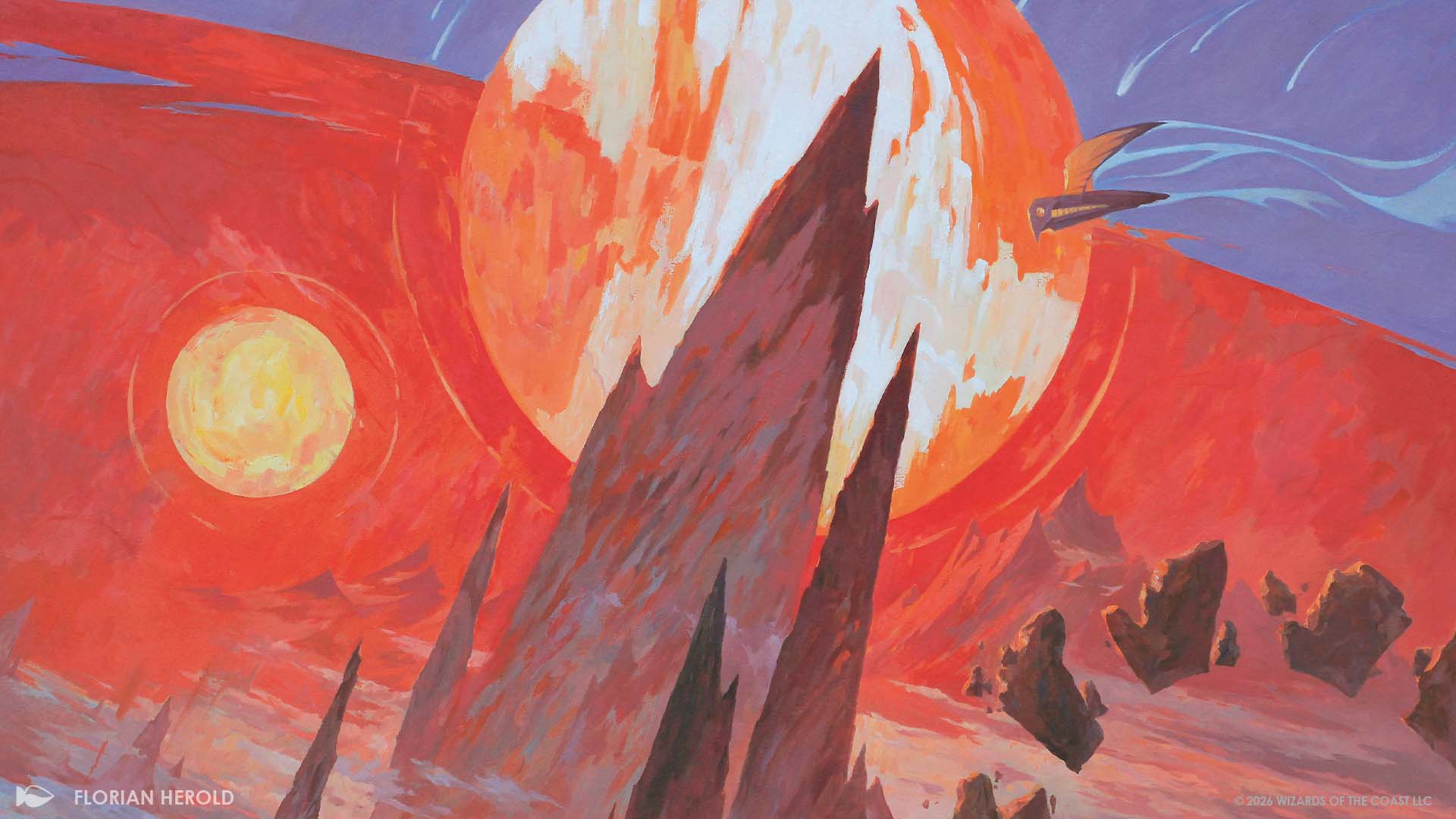
- Chimneycomb: A particularly dangerous region of the central mountain range. Chimneycomb is filled with tall, twisting, rocky spires with hollow cores. The twisting chimneys occasionally spout geysers of pure mana. Tunnel networks lace the underground, though they can be equally as treacherous at times due to the shifting leylines and mana geysers.
- Heavenfell: On the eastern edge of the central mountains, Heavenfell is a chilly mountaintop where shooting stars can be seen arcing through the night sky in obscure patterns. Many mages will travel there seeking wisdom from the stars and astronomical events.
Spectacle Summit
"Sunrise over Euphony Gorge is a tipped-over paintbox, blues and purples swirling together to meet the horizon, shimmering with the ambient magic in the air."
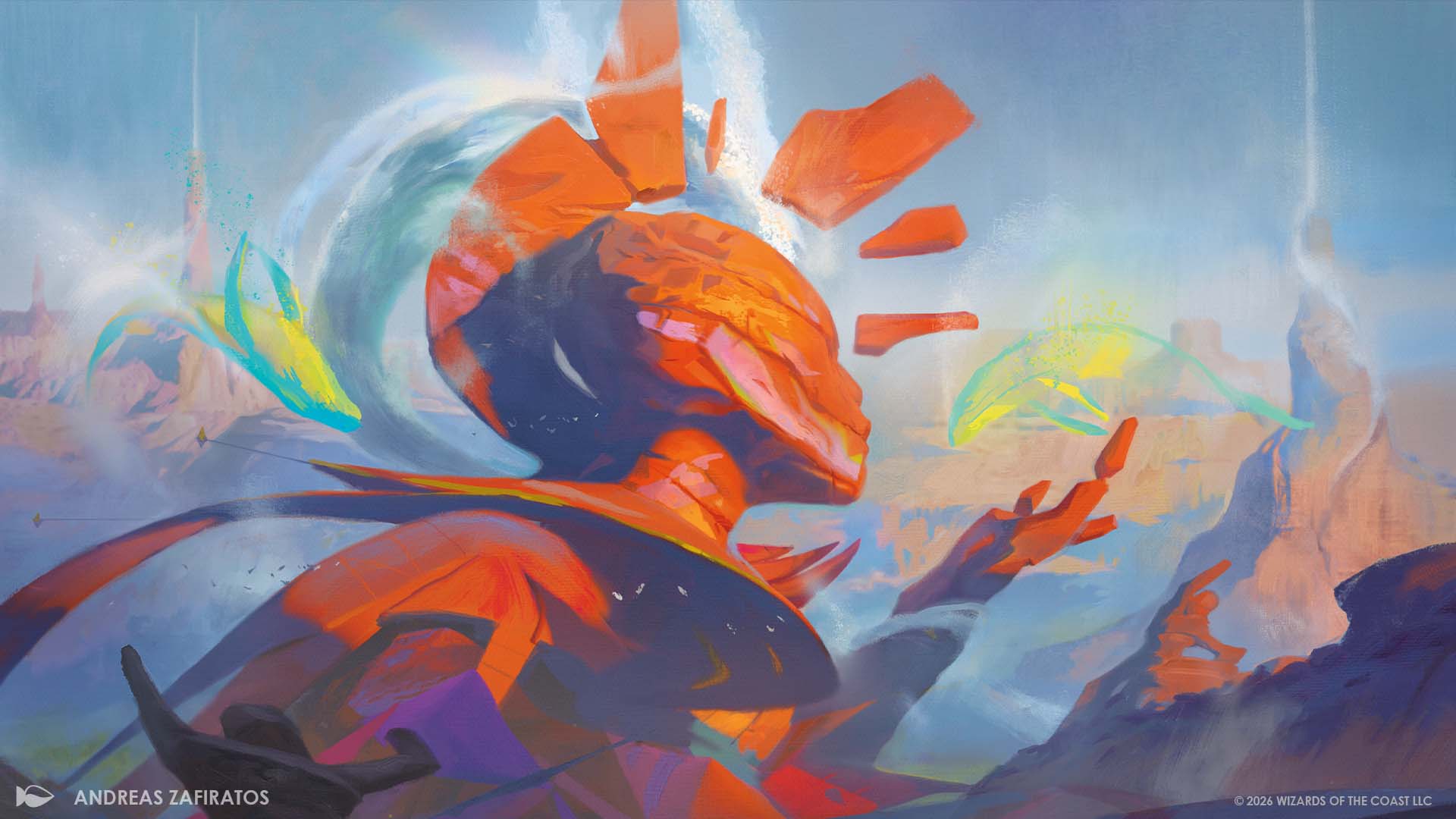
Located in the center of Arcavios near the mountains, Spectacle Summit is a rocky canyon suffused with the energies of the elements. Prismari hosts the college's annual arts festival, Summitfest, at the canyon, drawing visitors from all around Arcavios. Due to the intense elemental activity, the location is an unpredictable environment—to the extent that many mages theorize it may, in fact, be alive.
Summitfest takes place within the largest canyon of Spectacle Summit, with many of the activities extending into the surrounding cliffs, rivers, and valleys. Outside the main encampment is a gorgeous but perilous landscape. There are rivers rushing atop bright, multicolor minerals, hidden caverns dotting the slopes of the canyon, and stunning vistas to behold throughout. Wild elementals and a variety of dangerous creatures also roam the regions. Temporary structures erected by the school extend throughout the canyon as performance spaces, art galleries, dormitories, and more.
Whale-watching tours every sunrise. Start your day with nature's breathtaking display. Don't forget to bring a towel.
Students come to Spectacle Summit to be inspired, both by its natural beauty and the other artists and performers. There is no better place to practice one's elemental magic than Spectacle Summit, where magic brings the landscape to life. Summitfest is the perfect place for students to put their work in front of real people. The Prismari college hosts a number of planned events, each an opportunity for students to put their skills to the test, meet great artists, network, and receive constructive criticism. Ad-hoc activities are also common, from duels over artistic disagreements to spontaneous sunrise hikes for observing and augmenting the stunning vista.
- The Muse: The Muse is a massive, naturally occurring rock formation in the shape of a woman. She overlooks the festival and grants its attendees inspiration. It is a time-honored tradition for artists to contribute to the Muse—a mural, a carving, etc. Often, the art disappears into the ever-changing landscape of Spectacle Summit. But it is said that if the Muse likes an artist's addition, she will hold on to it.
- Capstone Stage: There are several smaller stages scattered throughout the festival grounds, but Capstone Stage is where all the biggest performances take place. Rigged with countless elemental spells for spectacle, it is a multipurpose platform for everything from fashion runways and talent shows to theatrical productions and dance-offs.
- Summitfest Gallery: The heart of Spectacle Summit, this gallery sits near the Muse under the canopy of several tents. Experimental performances and parties are a constant fixture in the gallery, alongside displays of more permanent elemental creations and art pieces. Open-air market stalls can also be found here selling trinkets, baubles, food, and souvenirs. The gallery is a fantastic opportunity for small artists to get recognized and profit from their craft.
- The Whale Trench: There is a particularly deep canyon within Spectacle Summit that serves as a popular migration route for the elemental whales endemic to the area. Summitfest coincides with their yearly migration, and the bravest artists and visitors will venture into the canyon to witness the marvel of nature and art.
- Euphony Gorge: A twisting and ever-changing river canyon that extends from the core of Spectacle Summit. The elemental energies flow freely in this area, rocks and streams spontaneously forming elementals in a dazzling display of magic. The sounds of rushing waters and cracking stones echo in a musical performance.
Southeast Region
The southeast generally remains warm for most of the year. Being largely coastal, the region's climate is mild, and the terrain is a mixture of plains, marshes, and foothills.
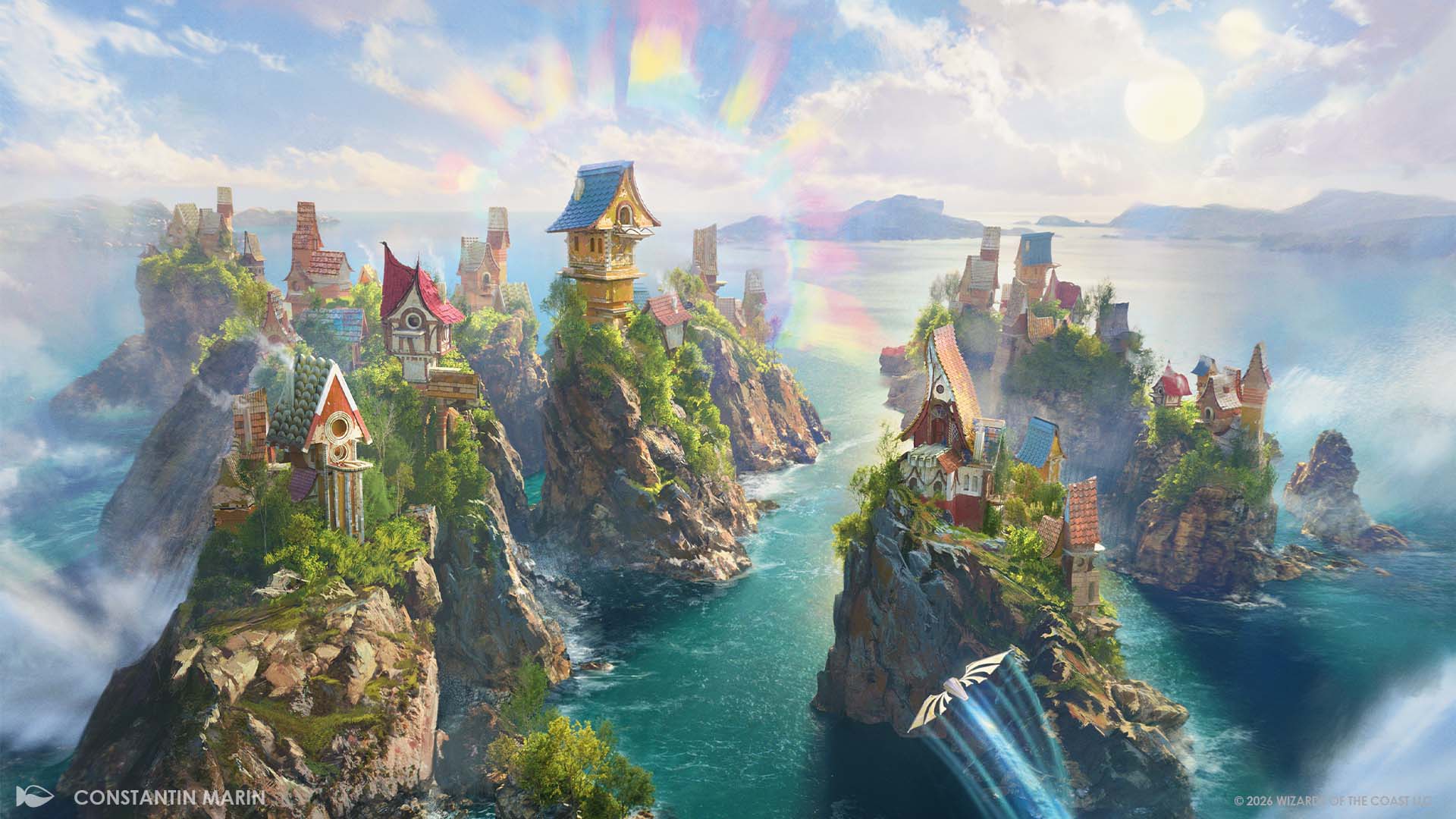
- Hookiver: A region found along the southernmost portion of the central mountains and extending along the coast. The rocky cliffside is home to Hookiver owlin villages. Some of the aerie-cities are virtually inaccessible without a method of flight.
- Vaults of Turrau: A deep underground cavern system beneath the southeastern foothills, the Vaults of Turrau are sealed behind mystical doors. It's said that the enormous stalactites of the vaults hold secret spell-rites left over from the Dawning Age.
- Rundlestrom Military Academy: Located on the plains of the southeast is a prestigious, multicultural military academy, which is not focused on training armies but rather the future leaders of the plane through disciplined physical and mental education. The "military" part of their education is largely theoretical and historical.
Paradox Gardens
"Within the twisting realities, even slight miscalculations can have startling effects."
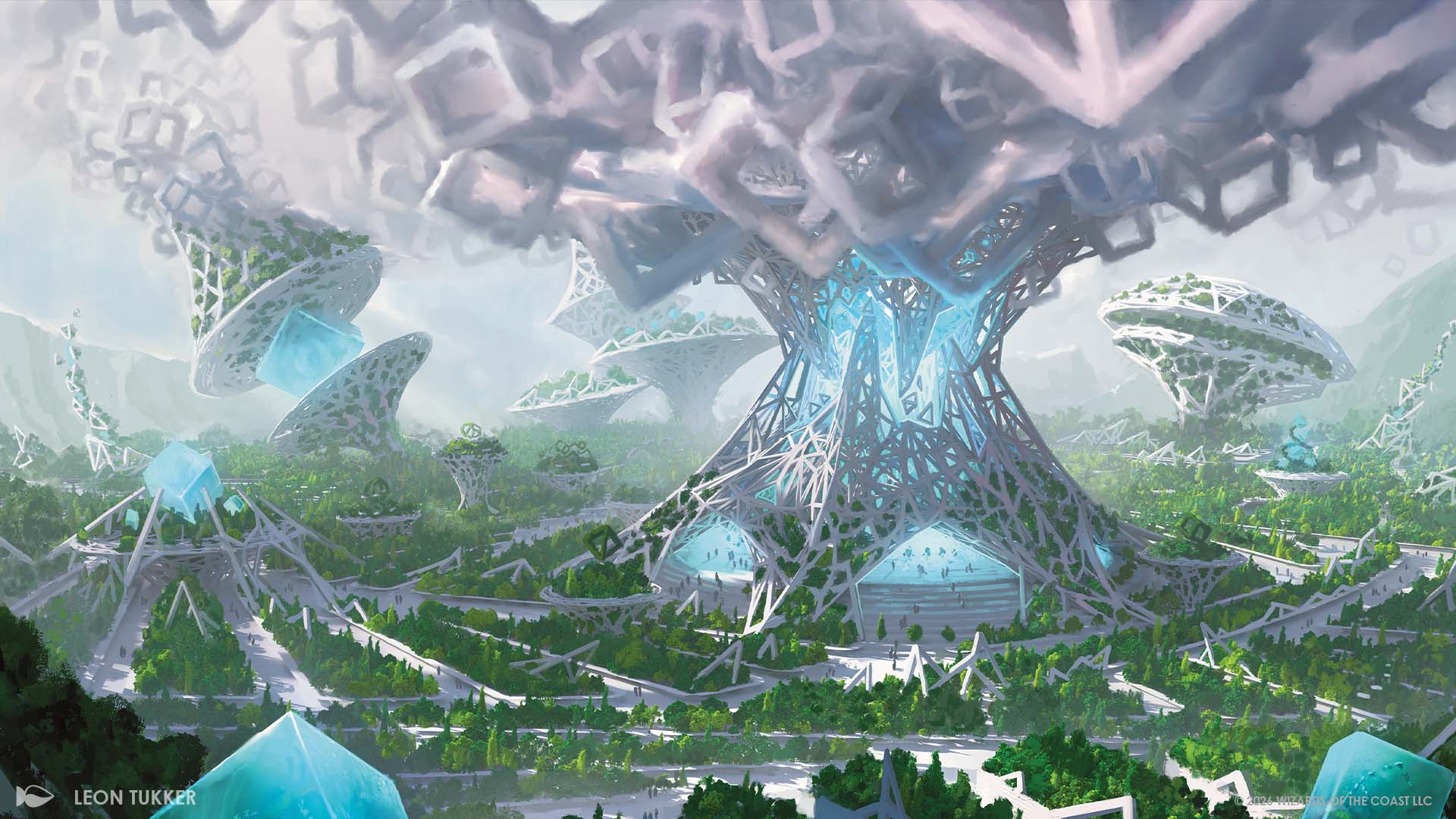
An unknown mana disturbance from the Blood Age gave rise to a magic-suffused region in the southeast known for its strange natural phenomena, haunting illusions, and metaphysical anomalies. The Paradox Gardens, a Quandrix research site, were created within the region to capitalize on the intense magical energies. The Paradox Gardens were originally designed by a Quandrix professor who wanted to create an "optimized and perfected natural environment." They have since been expanded and rendered a vast experimental testing ground.
Quandrix mages come to the gardens to push the boundaries and rules of the universe. Here, they can test the cause and effect of flexing the natural order to truly understand the underlying principles of reality. In the Paradox Gardens, the mages become their own living experiments. The gardens are divided into various regions. A central area including classrooms, offices, and accommodations serves as the hub and most "normal" region. Beyond that, spontaneous experiments, paths winding in infinite patterns, and larger structures growing from among the flora are all common hazards students might encounter.
Missing notebook. Lost next week in the Infinite Spiral. If found, please return to Erin Blake in the Geometrium at 17:59 yesterday.
The Paradox Gardens are a sprawling forest where the flora and fauna behave in strange, predetermined ways. Trees grow in golden ratio spirals, undergrowth is arranged in perfect circles, birds fly in repeating sequences, and bug colonies swarm in perfect cubes. Sections of the Paradox Gardens are known for their strange gravitational anomalies, areas where mass is lighter and students can jump and even float with ease. In others, the passage of time seems almost non-linear—you are always on time and always late. Somewhere within the gardens, any natural rule that could be restructured has been.
- Drifting Auditoriums: Located near the central hub of the gardens, the drifting auditoriums are a collection of classrooms that hang in the air, writing their own rules of gravity. Students bounce and float between lecture spaces. The auditoriums were originally created with the belief that gravity weighed students down, preventing them from truly learning, and this has expanded as an experiment into different environments and their conduciveness to study.
- Infinite Spiral: One of the most intriguing and dangerous regions of the gardens. Students venture along the Infinite Spiral to explore the depth of reality. Deep within the spiral, students encounter strange illusions, disorienting sensory experiences, dangerous creatures, and living experiments that push the bounds of possibility. More than a few students have lost their way wandering the Infinite Spiral, needing a rescue mission to bring them back, though some lucky students have reported experiencing a true epiphany while in its depths.
- Canopy Lattice: One of the grand lattice structures within the gardens that extends skyward and is above much of the landscape. Here, students have excellent views of the gardens. The interior space is a series of warping, twisted pathways, but those who manage to make it to the upper floors will find the main residences and relaxation locations for Quandrix students.
- Geometrium: The largest collection of impossible shapes within the gardens. It serves as a manifestation of theories and experiments, part archive and part living experiment. Students may enter shapes and be immersed within the collected knowledge or wind their way between them, observing from a distance. One of the greatest honors for those studying at the gardens is to have one of their theories immortalized in geometric existence.
Southwest Region
In the southwest lies sprawling island chains, vast deserts, and some of the best beaches on the plane. On the coast, the climate is warm most of the year, while the inland regions closer to the mountains can experience freezing winters.
- The Pinzari Isles: Off the coast of the Pinzari Peninsula in the southwest stretches the Pinzari Isles, home of the Pinzari merfolk. Here, striped crabs climb the sea cliffs and amass in cryptic formations. Many believe that these islands draw currents of powerful blue mana from the remote oceans; as such, mages frequently battle over the right to conduct magical research projects in the area. Pods of narwhals frequent the isles, feeding on striped crabs, schools of halibut, and the occasional unfortunate merfolk.
- Silkmeadow: A wide expanse of golden-grassed fields occupied by herds of wild horses. The unicorns of the meadow are especially talkative and highly opinionated. The glowing silk cocoons of magical moths dangle from the lush meadow grasses.
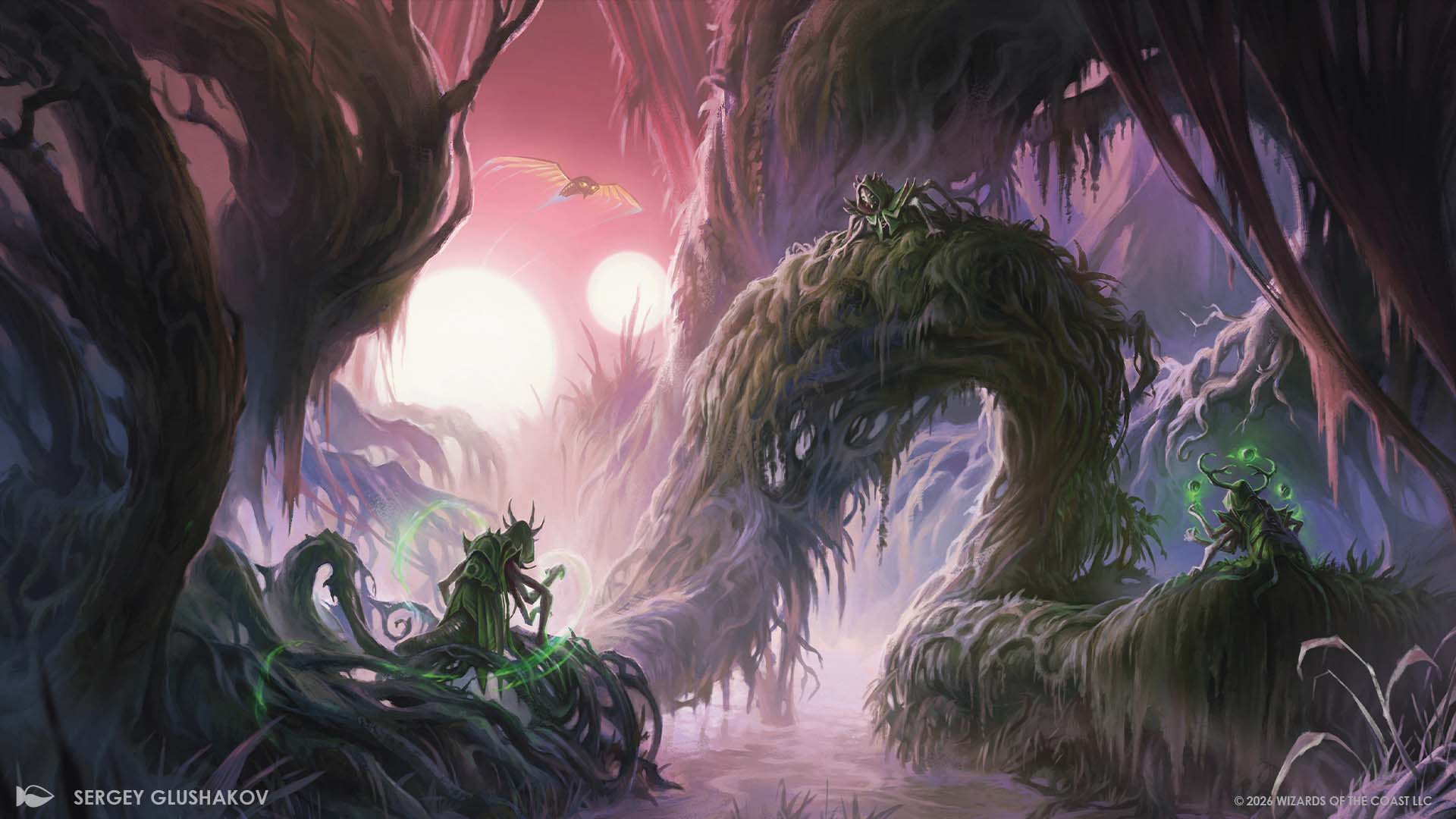
- The Fernbosk: The shady, marshy jungle region called the Fernbosk is shot through with deep pits and caves. The ground level of the Fernbosk is known for fierce monsters such as baloths, sproutboars, and wurms. Its underground areas are known for giant spiders, shriek bats, and pit horrors. This region also supports a society of mighty Fernbosk trolls.
- Tor-Kathorra Desert: A vast desert of enormous dunes and scattered oases. The Tor‑Kathorra desert is the home of the Kathorran orcs, whose villages can be found around the sparse oases and milder desert outskirts. In some parts of the desert, a convergence of sun and mana can scorch shards of sand, transforming it into a mystical substance called hexglass.
Fields of Strife
"They didn't retain the fact that their battles had ended, that regardless of who had won their wars, they had died in the process. In that regard, there were no winners."
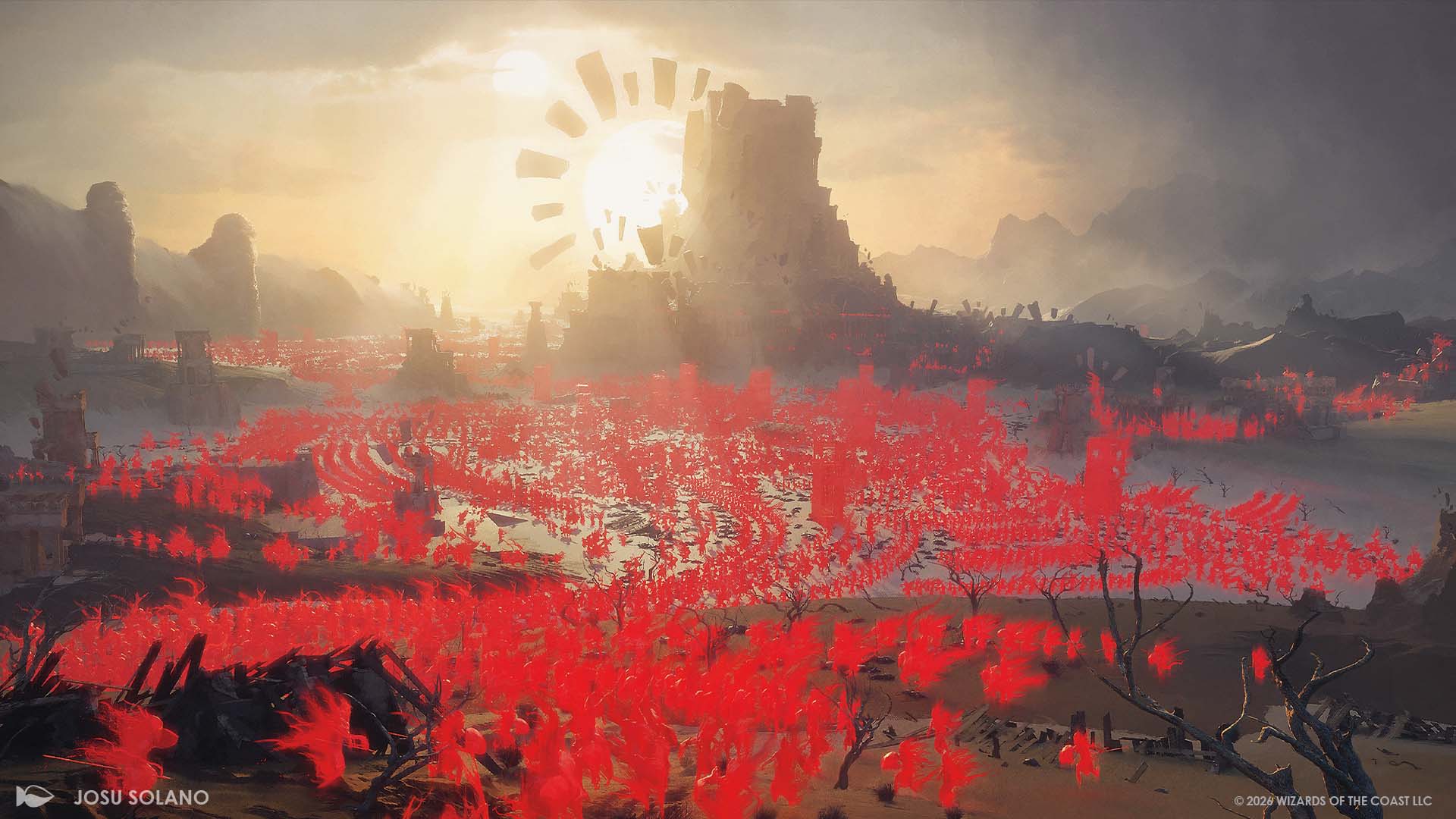
Located within the Tor-Kathorra desert, the Fields of Strife are the site of a perpetual battle waged by restless spirits of the Blood Age. The magical mechanisms and underlying reasons for the spirits' continual animation is the subject of constant study and debate within Lorehold, defying several of the known rules around spirit animation. In addition to this research, students visit the fields to observe and interview the battling spirits, seeking more insights into the Blood Age. These spirits are considered particularly excellent primary sources, since they are living their history rather than simply recounting it.
Time for the restless spirits appears to pass asynchronously across the fields. As a result, multiple overlapping snapshots in time may occur simultaneously. One area might feature a fortress under siege while another set of spirits trains and rests for the same battle yet to happen. Time is also not linear. While the spirits were all participants in the same larger conflict, they could be from any number of skirmishes that occurred in the region over the course of several decades. The battle appears slightly different each day and night cycle, making venturing into the fray extra dangerous for observers who can be surprised by unexpected attacks.
Fields of Strife excursion packing list: trowel, scrolls, sun cream, hat, pickaxe, canteen, compass, map, sturdy boots, sentimental object, up-to-date emergency contact list.
Aside from the constant battles and harsh terrain, the greatest dangers in the Fields of Strife are the almost hypnotic underlying mana currents of the region. These currents tug on the minds of those who linger. If they aren't careful, students and professors alike can be drawn into the battle and lose sight of the world around them. If left unchecked, they will eventually become restless spirits and join the battle.
On the outskirts of the ruins, Lorehold has established several semi-permanent camps, providing centralized resources for the students and professors. Within the ruins, there are also many smaller camps where research groups set up bases during longer excursions.
- Camp Herrian: Named for one of the first deans of Strixhaven and located on the outskirts of the battle, this camp serves as a place for relaxation, study, and preparation. Several semi-permanent structures have been built into existing ruins, similar to the school's main campus. Though the campsite is far enough away from the action, spirits will still occasionally wander through, scaring unsuspecting students.
- Armory Arch: One of the largest and most impressive star arches, it was formed from an ancient armory. The soldier spirits who reside here seem entirely unaware that their buildings are now floating above the battlefield, and they continue to go about their training and preparations as if their floor was not their ceiling. The most daring and adventurous students love to explore this treacherous structure.
- Pranticle Peak: A mesa outcropping that offers excellent views of the fields for those who can reach the top. Pranticle Peak was the site of one of the most famous battles that occurred on the Fields of Strife between kor and owlin forces.
- Lost Barracks: In many ways, the barracks are an oasis of calm among the many battles of the fields. Spirits here will be found primarily resting and training. But the hypnotic undercurrent of the region seems exaggerated in this area, so much so that the barracks are now considered off-limits to students, lest any more are lost to its thrall.
Restless Spirits
Outside of Lorehold mages, the restless spirits are the primary residents of the Fields of Strife. Unlike other summoned spirits, those found in the fields appear to be mostly ignorant of their dead nature. Many will ignore the students and researchers, seemingly unaware of their existence. It is theorized that they are trapped and replaying their spiritual memories, oblivious to outside events. Other spirits that do interact with the visitors seem largely unperturbed by the modern strangers in their midst, viewing them as additional members of the ongoing battles.
The Archaics
"If you take the time to listen, the archaics will tell you that this world has been torn asunder and remade many times before."
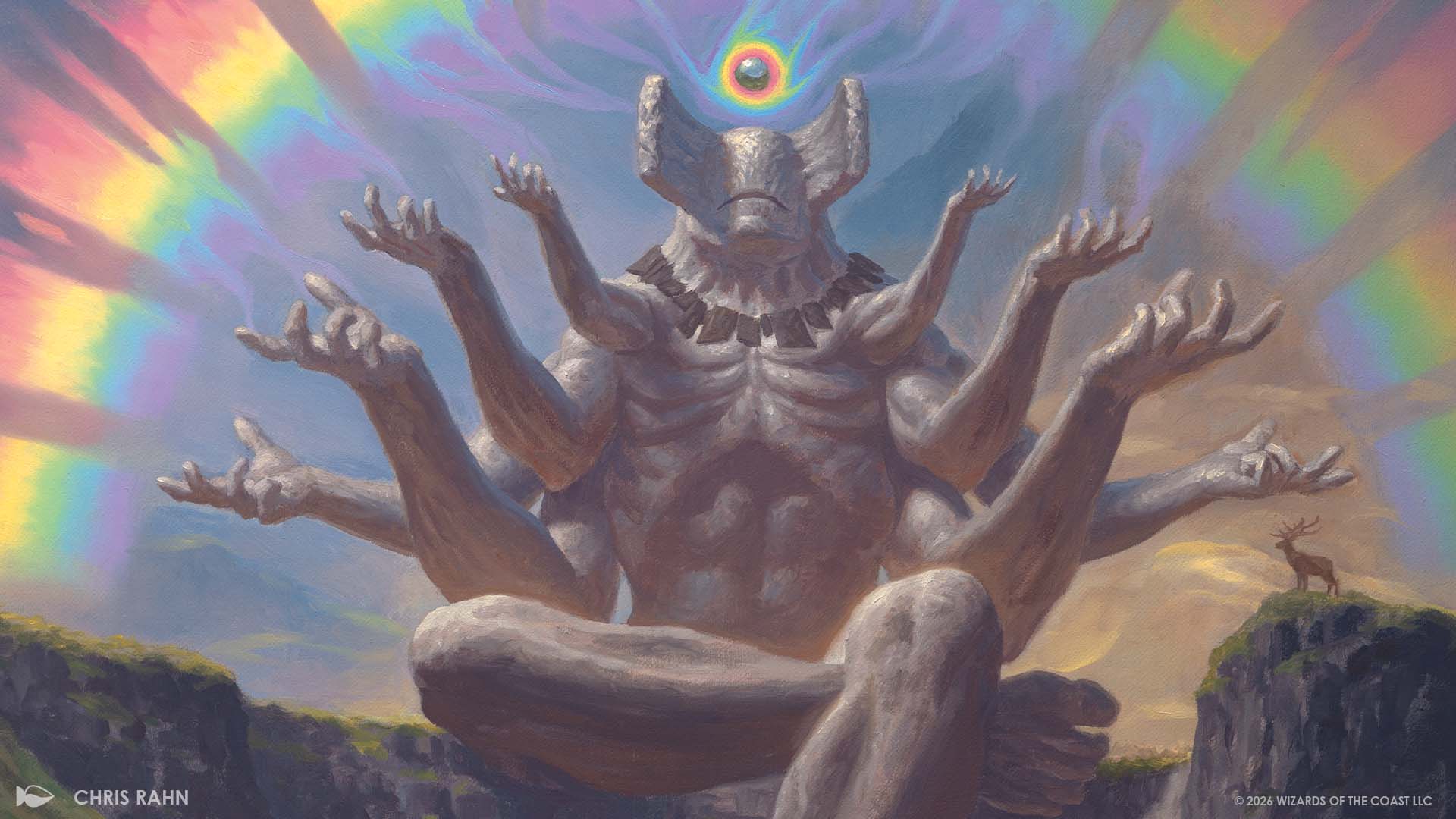
The archaics are a species of giant, wise, long-lived beings with an innate talent for magic. They can be seen striding through the Vastlands, exploring sources of magic with their many arms, or contemplating existence through their "eye," which is a magical focus of some kind. Mages seek out archaics for their vast knowledge of history and magic, but archaics tend to communicate in obscure allusions and cryptic metaphors.
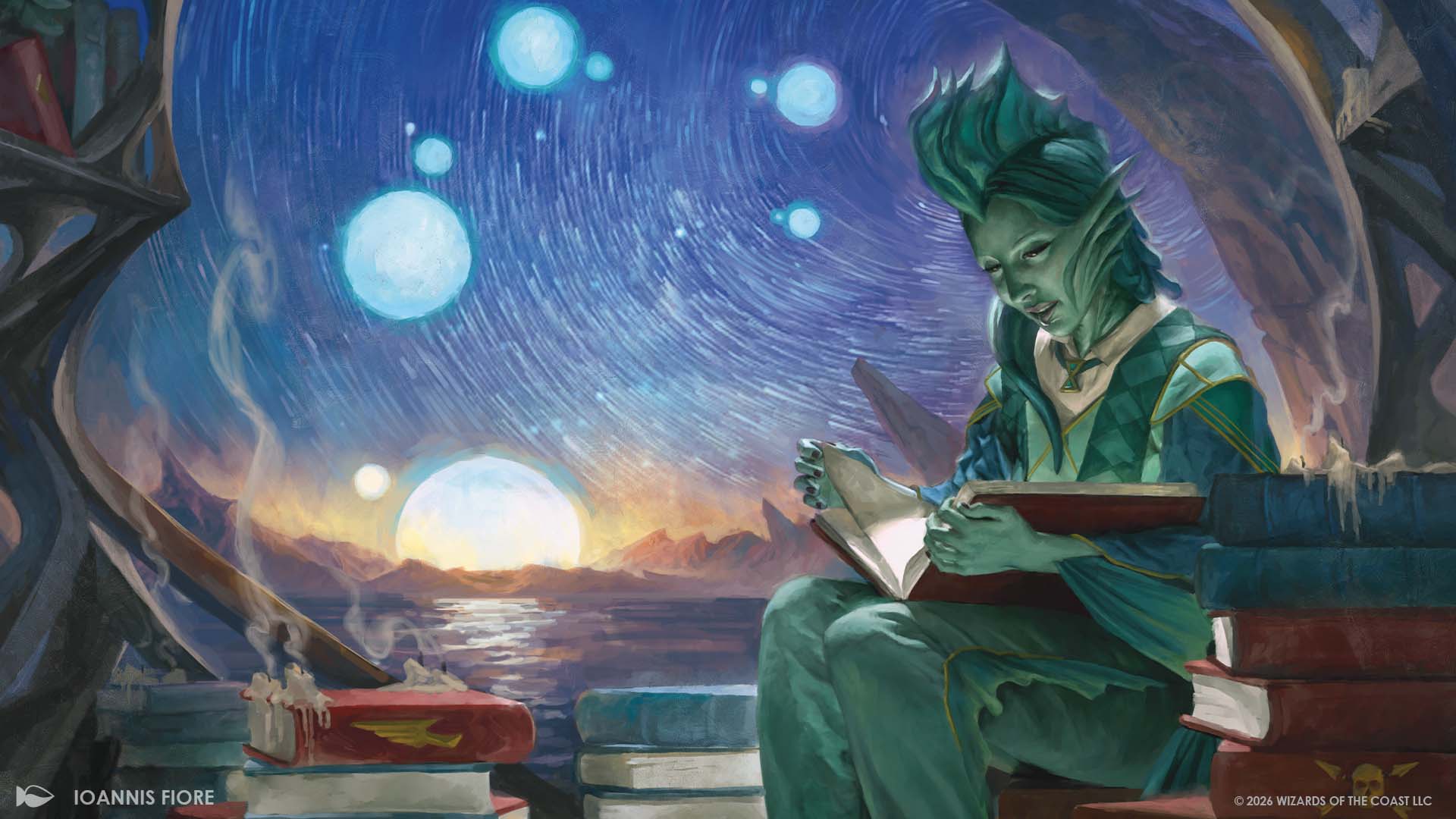
Few know the bizarre truth of the archaics: that their existence is tied to the oracles of Arcavios through a mysterious temporal phenomenon. When an oracle dies, their mind and spirit are swept off into the distant past, drawn backward through time toward the intense magical power of the Dawning Age. Splinters of that oracle's soul and its fragmented memories coalesce into a creature—and that creature is a newly born archaic.
Every archaic alive today was born at the dawn of time from the mind of one who has lived and died—or who will one day live and die—as an oracle. Archaics speak in cryptic allegories, not only to tease and test the eager minds of young mages but also to cleverly sidestep time paradoxes.
Currently, many of the normally gentle archaics have become erratic and incensed. Unpredictable, rampaging archaics have been seen across the plane, randomly attacking, unleashing spontaneous and powerful magics, and threatening the lives of those who encounter them. Jadzi and other powerful mages seek to uncover the cause of the archaics' unsetting behavior, suspecting is maybe be linked to their unconventional origins or nefarious external influences.
No matter which college you pledge your allegiance to, we look forward to seeing you in attendance for the start of Secrets of Strixhaven's story on March 23, 2026. You can read the story right here on DailyMTG or listen on The Magic Story Podcast. Your orientation continues on March 31 with the debut of Secrets of Strixhaven and the start of preview season.
Head to campus for the Magic set of the semester: Secrets of Strixhaven! This set releases worldwide on April 24. 2026, and is available for preorder now from your local game store, TCGplayer, Amazon, and elsewhere Magic is sold.